Homemade Cockroach & Ant Killer That Actually Works 🪳🛑
Nothing ruins the comfort of your home faster than seeing roaches dart across the kitchen floor or ants parading through your bathroom. While chemical sprays promise fast results, they come with strong odors, safety warnings, and sometimes, disappointing effectiveness — especially if you’re dealing with small kids or curious pets. Fortunately, there’s a smarter, safer, and surprisingly effective solution hiding right in your pantry.
This article walks you through a natural, cost-effective homemade pest spray that actually works — without the toxic fumes or pricey hardware store runs. It’s perfect for everyday use and can help you take back control of your home without compromising your health or budget.
🧪 What You’ll Need (4 Simple Ingredients)
You don’t need to be a chemist or spend a fortune. This natural cockroach and ant killer uses common household items with pest-fighting power.
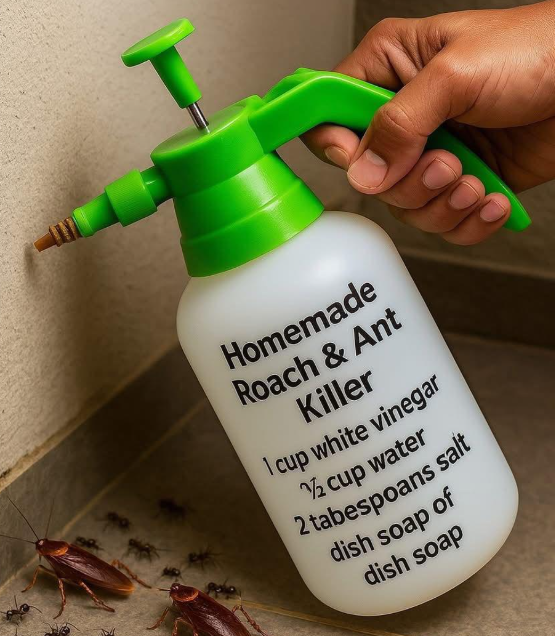
- 1 cup white vinegar – disrupts ant trails and acts as a mild acid
- ½ cup water – dilutes the solution for easy spraying
- 2 tablespoons salt – dehydrates pests and deters re-entry
- 1 tablespoon dish soap – helps stick to insect bodies and suffocate them
Instructions:
- Add all ingredients to a clean spray bottle.
- Shake well until the salt dissolves and everything is evenly mixed.
- Label the bottle clearly if you store it.
That’s it — no toxic fumes, no complicated steps. Just shake, spray, and go.
🔍 Why This DIY Pest Spray Works
This isn’t just a random kitchen experiment. Each ingredient plays a powerful role in repelling and killing small household pests like cockroaches and ants.
🍶 White Vinegar
Ants rely heavily on scent trails to navigate. Vinegar disrupts these pheromone trails, confusing ants and preventing them from finding their way back. Its acidity also weakens the outer coating of cockroach shells.
🧂 Salt
Salt absorbs moisture and dries out the exoskeletons of insects. It also makes surfaces less comfortable for pests to walk on, encouraging them to stay away.
🧼 Dish Soap
Soap breaks down surface tension and suffocates bugs by clogging their spiracles (breathing pores). It also helps the mixture stick to insect bodies for better contact.
💧 Water
Water makes the mixture easy to spray and helps distribute the other ingredients across surfaces evenly.
📍 How & Where to Apply
Use this spray directly where you see activity or suspect entry points. It works best when applied consistently.
- ✔ Directly on visible roaches or ants
- ✔ Along baseboards, under cabinets, and behind appliances
- ✔ Around window sills and door frames
- ✔ Entry points under sinks, pipes, or drains
- ✔ On visible ant trails or nests (wipe afterward)
When ants are present, clean up trails with the spray, then reapply in problem areas. For cockroaches, a direct hit usually disables them within seconds.
📊 Ingredient Breakdown & Functional Table
| Ingredient | Primary Function | Effect on Pests | Best Use |
|---|---|---|---|
| White Vinegar | Acidic disruptor | Breaks scent trails and weakens exoskeletons | Spray on ant trails & roach hotspots |
| Salt | Dehydrator | Dries out pests and deters entry | Along entry points and floor edges |
| Dish Soap | Surfactant and suffocant | Clogs breathing pores and increases contact | Direct spray on visible insects |
| Water | Carrier | Thins solution for even spray | Throughout high-risk areas |
🧼 Homemade vs Store-Bought Pest Sprays
Homemade Vinegar + Salt Spray
- ✔ Non-toxic for families and pets
- ✔ Inexpensive — uses ingredients you already have
- ✔ Safe for kitchens, bedrooms, and sensitive areas
- ✖ Requires more frequent reapplication
Commercial Insecticides
- ✔ Often stronger and longer-lasting
- ✔ May be necessary for large infestations
- ✖ Contains toxic chemicals — not always pet-safe
- ✖ Strong odors and potential side effects
Bottom Line: Use this DIY spray for everyday prevention or mild issues. For serious infestations, consult a pest professional.
🚫 Common Mistakes to Avoid
- Not shaking the bottle: Salt may settle at the bottom — always shake before use.
- Using on untreated surfaces: Spray regularly to maintain coverage.
- Not reapplying: Natural sprays fade faster than commercial products — reapply every 2–3 days.
- Over-soaking surfaces: Avoid spraying near electronics or wood without testing first.
❓Top 10 FAQs About This DIY Pest Spray
1. Is this safe for pets and children?
Yes — all ingredients are food-safe. Still, avoid direct contact or ingestion, and store the bottle safely.
2. Will it kill roaches or just repel them?
Direct spray can kill smaller roaches. Larger infestations may require additional methods.
3. Does this work on all types of ants?
It disrupts most ant species’ scent trails, but some (like carpenter ants) may require specific treatment.
4. Can I use apple cider vinegar instead?
Yes, though white vinegar is typically more effective due to its higher acidity and neutral scent.
5. How often should I spray?
Every 2–3 days, especially near problem areas or after cleaning.
6. Will this damage hardwood floors or fabrics?
Always test on a small area first. Vinegar may dull certain finishes.
7. Can I double the recipe for a larger bottle?
Yes — just maintain the same ratios and shake well.
8. Does this prevent pests from coming back?
It deters them, but sealing cracks and improving cleanliness are also key for long-term control.
9. Can I spray this outside?
Yes — it’s useful around door thresholds, patios, or garage entries.
10. What else can I do for roach problems?
Keep food sealed, clean drains, reduce moisture, and combine with traps or bait for serious issues.
🌟 Final Thoughts: Simple, Safe, and Surprisingly Effective
You don’t need to reach for harsh chemicals to keep your home pest-free. This easy homemade spray puts natural ingredients to work — fighting off roaches and ants with less risk and more convenience. It’s especially helpful for families looking for everyday pest control without the chemical cloud.
Give it a try for a few days and see how your kitchen, bathroom, and entryways respond. You might just discover a cleaner, safer way to stay ahead of those unwanted guests.