🌱 Ultimate Guide to Building & Growing a Thriving Keyhole Garden: Composting + Veggies in One Smart System
If you’ve ever wished gardening was easier — less work, less waste, more food — then you’re about to discover a system that does exactly that. Imagine a garden bed that feeds itself, breaking down kitchen scraps and yard waste right where your plants are growing. A garden that composts while you grow, transforming waste into fertility without a separate compost pile. That’s the magic of the keyhole garden.
This guide dives deep into what keyhole gardens are, how they work, how to build one step‑by‑step, and how to plant and maintain them for years of abundant harvests. Whether you’re a beginner gardener or you’ve tried composting before with mixed results, this article gives you a complete blueprint to succeed.
🌿 What Is a Keyhole Garden? The Smart, Self‑Feeding Raised Bed
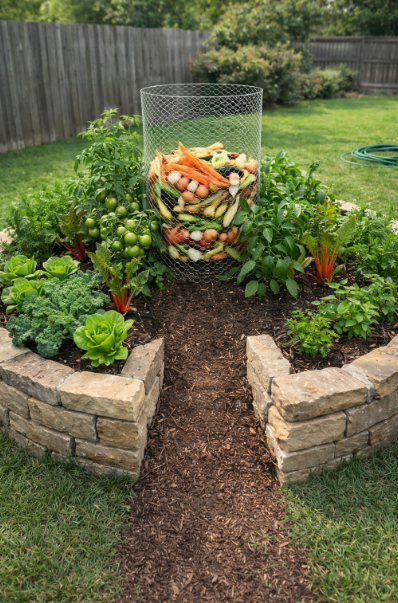
A keyhole garden is a raised, circular bed built around a central composting basket. The name comes from its shape — a circle with a wedge‑shaped opening that looks like a keyhole from above. At the center is a tall, open basket where you deposit kitchen scraps and yard waste. As those materials break down, nutrients are released directly into the surrounding soil where plants can access them.
The design is simple but powerful:
- ❗ Compact and space‑efficient — ideal for small yards, patios, and community gardens
- ♻️ Turns waste into fertility — kitchen scraps feed plants directly
- 💧 Watering through the compost speeds moisture distribution
- ✨ Improves soil health season after season
This isn’t just a raised bed, and it’s not a separate compost pile — it’s a garden system that does both at once.
🧠 Why Gardeners Love Keyhole Gardens: What Makes Them Special
Keyhole gardens combine composting and gardening into a single system for continuous nutrient cycling. Here’s why they’re gaining popularity with backyard growers:
🌟 Built‑In Fertility
Your kitchen scraps — think vegetable cores, coffee grounds, egg shells — go straight into the central basket. As they decompose, plant roots in the surrounding soil can access those nutrients. That means less need for commercial fertilizers and amendments.
💦 Efficient Water Use
Water is applied through the compost basket, helping moisture spread throughout the bed. The layered soil holds water well, reducing irrigation needs — a huge benefit in dry areas.
🌾 Perfect for Small Spaces
With a diameter of about 6 feet, most beds are reachable from all sides without stepping on the soil. That protects soil structure and makes planting, weeding, and harvesting comfortable.
♻️ Sustainable By Design
Keyhole gardens reduce waste, cut down on separate composting work, and create rich soil over time. Instead of bagging scraps for the trash, you feed the soil and your food plants.
🛠️ Planning Your Keyhole Garden: Materials & Tools You’ll Need
Before you build, gather your materials. The good news? Many items can be repurposed or inexpensive.
📦 Core Materials
- Stones, Bricks, or Logs — for building the circular walls
- Wire Mesh or Hardware Cloth — to form the central compost basket
- Garden Soil & Compost — for filling the bed
- Cardboard — for the bottom drainage layer
- Organic Matter — leaves, straw, aged compost
- Food Scraps — kitchen waste for composting
- Basic Garden Tools — shovel, rake, gloves
👉 Tip: If you don’t have access to bricks or stones, stacked branches, logs, or even recycled cinder blocks work great. The goal is a strong, stable wall that holds soil.
🧱 Step‑by‑Step Keyhole Garden Build
Ready to build? Follow these steps to create a keyhole garden that’s functional and long‑lasting.
1. Choose the Perfect Spot
Pick a sunny area that gets at least 6–8 hours of direct sunlight. Clear away weeds and grass so you’re starting with a clean foundation.
2. Lay the Foundation
- Place a layer of cardboard over the ground to suppress weeds.
- Add a thin layer of sticks or coarse material to promote drainage.
3. Build the Circular Wall
Form a circle about 6 feet in diameter. This size allows you to reach the center from the edge without stepping in. Leave a wedge‑shaped opening — the keyhole — about 2 feet wide for access to the compost basket.
4. Create the Compost Basket
Use wire mesh or hardware cloth to make a tall, cylindrical basket at the center of the circle. Make sure the basket is at least 2 feet tall and secure so it won’t collapse.
5. Layer the Soil
Keyhole gardens use a layered approach similar to composting:
- Bottom: Cardboard & sticks for drainage
- Middle: Leaves, straw, and aged compost
- Top: Garden soil mixed with finished compost
6. Water Everything In
After building and filling, water the entire bed gently to settle soil and activate microbial activity.
🌱 How the Keyhole Garden Works: Science Behind the System
What makes keyhole gardens such a productive system comes down to a few key biological and physical processes:
- 🥕 Compost Decomposition — Microbes break down organic waste in the central basket, releasing nutrients.
- 💧 Moisture Movement — Water travels outward from the center, hydrating surrounding soil.
- 🌾 Root Access — Roots grow toward the nutrient‑rich zone near the compost basket.
This creates a living soil ecosystem that strengthens over time, improving structure, fertility, and plant health naturally.
🌿 Planting Zones: What to Grow & Where
Not all plants in the keyhole garden go in the same place. Designing planting zones helps make the most of nutrients and space:
🥦 Inner Ring: Heavy Feeders
Place your nutrient‑hungry vegetables — like tomatoes, peppers, squash, eggplant — closer to the compost basket. These plants thrive on the steady nutrient supply.
🥬 Outer Ring: Light Feeders
The outer edge is ideal for leafy greens, herbs, onions, root veggies like carrots and beets, and other crops that don’t need as much nutrition.
👉 Think about plant height and spacing too — tall plants shouldn’t overly shade smaller ones.
🌼 Planting Plan Example: Seasonal Suggestions
Here’s an example of what you could plant in your keyhole garden through the seasons (varies with climate):
- Spring: Lettuce, spinach, peas, radishes, early herbs
- Summer: Tomatoes, peppers, basil, squash
- Fall: Kale, mustard greens, broccoli, cabbage
- Winter (mild climates): Garlic, onions, winter lettuce
💪 Table — Nutrient Benefits of Common Keyhole Garden Crops
| Crop | Serving Size | Key Nutrients | Garden Value |
|---|---|---|---|
| Tomatoes | 1 cup | Vitamin C, Lycopene | Fruit crop with heavy nutrient use |
| Peppers | 1 pepper | Vitamin C, Vitamin A | Great for inner ring heavy feeders |
| Lettuce | 1 cup | Vitamin K, Folate | Fast growing, good for outer zones |
| Carrots | 1 medium | Beta‑carotene, Fiber | Root crop, outer ring |
| Basil | 1/2 cup | Vitamin K, Antioxidants | Herb with fragrant value |
🌞 Watering & Maintenance: Keep Your Garden Healthy
Once planted, keyhole gardens are low maintenance — but there are a few best practices to follow:
- 💧 Water through the compost basket so moisture disperses outward.
- 🍂 Add kitchen scraps weekly to keep nutrients flowing.
- 🌿 Mulch surface to retain moisture and suppress weeds.
- 🪴 Rotate crops yearly to avoid nutrient depletion.
⚠️ Common Mistakes & How to Avoid Them
❌ Overfilling the Compost Basket
Too many scraps at once can slow decomposition and attract pests. Add small amounts weekly and cover with shredded leaves or straw.
❌ Planting Too Close to the Edge
Plants need space for roots. Leave a buffer so roots can grow without competing for limited nutrients.
❌ Skipping Watering Through the Basket
Watering only the surface doesn’t spread moisture evenly. Water through the center and check soil moisture weekly.
❓ FAQs About Keyhole Gardens
1. Do keyhole gardens really compost kitchen scraps?
Yes — the central basket allows organic waste to break down near plant roots, supplying nutrients directly where needed.
2. How big should a keyhole garden be?
Most are about 6 feet wide, but sizes can vary. Just make sure you can reach the center from the edge comfortably.
3. Can I build one on a patio or deck?
Absolutely — use raised beds or large containers with proper drainage.
4. What should I put in the compost basket?
Kitchen scraps (veggie peels, coffee grounds), yard waste (leaves, straw), and small plant clippings work well.
5. How often should I add scraps?
Weekly additions work well. Cover scraps with straw or leaves to reduce odors and deter pests.
6. Do I need fertilizer?
With regular compost additions, many gardens won’t need extra fertilizer. If plants show deficiency signs, add finished compost.
7. Can I grow flowers in a keyhole garden?
Yes! Flowers like marigolds and nasturtiums make great companions and attract beneficial insects.
8. What soil mix should I use?
A mix of garden soil and finished compost creates fertile, well‑draining conditions.
9. How long before it’s ready to plant?
If built properly, you can plant immediately. Moistening and settling the soil first helps roots establish.
10. Do keyhole gardens work in all climates?
Yes — with adaptations. In dry areas, mulch and frequent watering help; in cooler climates, season extenders like row covers help.
🌻 Final Thoughts: Why Keyhole Gardens Are a Game‑Changer
Keyhole gardens blend sustainability and productivity like no other system. They make composting easy, cut down on waste, and consistently produce fresh vegetables and herbs right where you want them. Whether you’re gardening in a small urban backyard or a sprawling rural plot, keyhole gardens offer a smart solution for modern growers looking to do more with less.
Ready to build your own? Start with the basics above, adapt to your space and climate, and enjoy watching your garden feed itself — and you — season after season.