🍋 Snake Plant & Lemon Juice: Why This Viral Trick Can Damage Your Plant (And What to Do Instead)
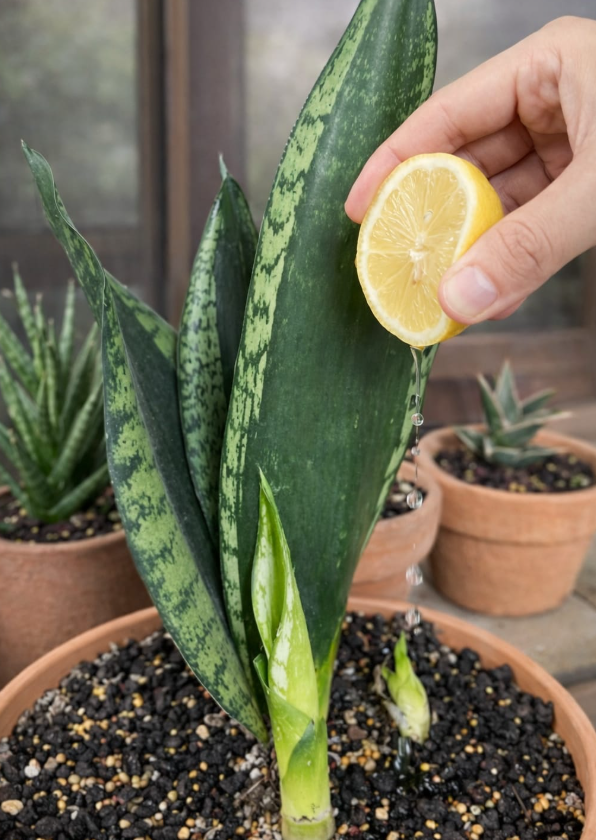
In the world of viral plant care hacks, lemon juice has recently taken the spotlight. Videos and posts claim that adding lemon juice to snake plants (Dracaena trifasciata) can boost growth, make leaves shinier, or “clean” the soil. But behind these claims lies a potentially harmful misunderstanding that could hurt your plant more than help it.
Just because something is “natural” doesn’t mean it’s safe — and lemon juice is a perfect example. While it might smell fresh and seem harmless, using it on or in your snake plant’s soil introduces levels of acidity and biological activity that your plant’s roots and soil ecosystem weren’t built to handle.
In this deep-dive article, we’ll explore why lemon juice may do more harm than good, how it affects your plant’s health, and what safe, effective alternatives you can use instead. Plus, expert advice, clear care steps, and 10 FAQs to help you protect your plant the smart way.
🧪 Why Lemon Juice Seems Like a Good Idea (But Isn’t)
Many online tips promoting lemon juice for houseplants stem from two main assumptions:
- “It’s natural, so it must be safe.” People associate natural ingredients like lemon with health — forgetting that natural substances can be powerful (and even toxic) in the wrong context.
- “Snake plants like acidic soil.” While snake plants tolerate mildly acidic soil (pH 6.0–7.0), lemon juice has a pH of around 2.0 — far more acidic than anything found in nature near these plants.
These misconceptions have led to some surprising — and damaging — results.
⚠️ The Real Impact of Lemon Juice on Snake Plants
1. It Shocks and Burns the Roots
Fresh lemon juice has a very low pH, which causes “acid shock” when applied directly to soil. Here’s what happens:
- Feeder roots burn first — these delicate roots absorb most nutrients and moisture.
- Root tips become damaged — slowing growth instead of stimulating it.
- Water uptake decreases — leading to dry, stressed foliage even in moist soil.
2. It Kills Beneficial Soil Microbes
Healthy soil is full of living organisms that support plant life. These microbes convert organic matter into nutrients the roots can absorb. Lemon juice, however:
- Destroys microbial populations with acidity.
- Interrupts nutrient cycling and mineral availability.
- Leads to nutrient deficiencies over time — even with regular watering or fertilizing.
Instead of helping your snake plant thrive, the soil becomes less biologically active and more sterile.
3. It Causes Leaf Yellowing and Soft Growth
Many snake plant owners report that lemon-treated plants look shiny or “revived” at first — but within a few weeks, the damage starts to show:
- Yellow or pale margins
- Wrinkled, soft, or floppy leaves
- No new pup growth or slowed propagation
This decline often confuses plant parents who thought they were doing something good.
💡 Can Lemon Ever Be Used Safely on Plants?
In very specific and highly diluted forms, lemon juice might be used as a foliar cleaner or pest deterrent for plants that tolerate acidity. But for snake plants — which prefer balance and stability — the risks outweigh the rewards.
Expert Insight: Plant Nutritionist Sarah Coleman
“Lemon juice is too acidic for most houseplants — especially snake plants, which thrive on consistency and minimal intervention. You’re much better off using filtered water and occasional light fertilizer than experimenting with high-acid treatments.”
— Sarah Coleman, Certified Plant Nutritionist
✅ Better Alternatives to Lemon Juice
Instead of acidic shock treatments, here are simple, plant-safe ways to support your snake plant’s health:
✔️ 1. Use a Damp Cloth to Clean Leaves
Wipe leaves gently with a microfiber cloth and lukewarm water. This removes dust and keeps the plant breathing efficiently.
✔️ 2. Add Worm Castings for Nutrients
These offer slow-release nutrients and help enrich soil microbes, without shocking the roots.
✔️ 3. Use Diluted Seaweed Extract
A weak solution of liquid kelp provides trace minerals and encourages root health — without altering pH significantly.
✔️ 4. Let Soil Dry Between Waterings
This natural cycle supports stronger root systems and mimics the snake plant’s native habitat.
📊 Comparison Table: Lemon Juice vs. Safe Soil Boosters
| Substance | Effect on pH | Impact on Roots | Long-Term Benefit |
|---|---|---|---|
| Lemon Juice | Severely lowers (pH ~2.0) | Burns feeder roots, kills microbes | Weakens plant over time |
| Filtered Water | Neutral (~7.0) | Gentle on roots | Maintains hydration balance |
| Worm Castings | Slightly acidic (pH ~6.5) | Encourages root and microbial health | Boosts soil fertility slowly |
| Seaweed Extract | Neutral to slightly alkaline | Promotes growth & stress resistance | Supports balanced nutrition |
🚫 Common Mistakes with Snake Plant “Hacks”
- Using lemon juice as a soil amendment — acidifies soil too rapidly.
- Applying lemon for pest control — may burn leaves and roots.
- Mixing lemon with vinegar or baking soda — chemical reactions can damage soil biology.
- Trying to “flush” plants with acidic water — roots can’t process extreme pH swings.
- Focusing on shiny leaves over root health — superficial shine doesn’t reflect real vitality.
❓ FAQ — Snake Plants & Lemon Juice
1. Can I use lemon juice to remove hard water stains on leaves?
It’s safer to use diluted vinegar or just a soft cloth with water. Lemon juice can cause leaf burn if not properly diluted.
2. What happens if I already poured lemon juice in the soil?
Flush the soil with clean, room-temperature water several times. Let the plant dry thoroughly before resuming normal care.
3. Why do some videos say lemon juice helps plants?
Short-term effects like shine or scent may look appealing, but long-term damage often isn’t shown or addressed.
4. Is lemon water safer than pure lemon juice?
Slightly — but it’s still unnecessary for snake plants. Use distilled or filtered water for best results.
5. Can lemon kill pests like mealybugs?
Yes, but it can also burn leaves. Neem oil or insecticidal soap is a much safer option.
6. Do snake plants like acidic soil?
They tolerate slightly acidic to neutral soil (pH 6.0–7.0), not extreme acidity.
7. Will lemon juice affect pups or new growth?
Yes — it can halt propagation by damaging root tips and reducing energy availability.
8. Is it okay to clean leaves with lemon-infused water?
Only if extremely diluted and wiped off immediately. Even then, it’s not recommended.
9. How do I restore my snake plant after lemon damage?
Flush soil, stop all acidic treatments, and resume gentle care with filtered water and light.
10. What’s the best long-term care strategy?
Consistency. Snake plants thrive on stable light, moderate watering, and minimal interference.
🌟 Conclusion: Love Your Snake Plant with Smarter Care
Lemon juice might look like a miracle solution online, but for your snake plant, it can cause more harm than good. Remember — just because something is natural doesn’t mean it’s plant-safe. The key to healthy growth is consistency, not viral shortcuts.
Skip the acid shock. Stick to smart watering, healthy soil, and light — and your snake plant will reward you with strong roots, crisp leaves, and maybe even a flower stalk when conditions are just right.
Looking for more helpful indoor plant care tips and soil-safe solutions? Explore related recipes and plant projects at gentplu.com — trusted by plant lovers who care deeply about doing it right.