🌵 The Complete Guide to Propagating Christmas Cactus Step by Step
Propagating a Christmas cactus is one of the most rewarding and accessible gardening projects you can do at home. Whether you’re a beginner plant lover or an experienced gardener, multiplying your Christmas cactus from stem cuttings is a cost‑free way to grow new plants to share with friends or expand your indoor garden.
This guide will walk you through every step — from choosing the best mother plant, taking cuttings, rooting options, planting, care after propagation, and common mistakes to avoid. You’ll also learn expert tips, helpful comparison charts, and answers to frequently asked questions to ensure your success.
Let’s dig in! 🌿
🌟 Why Propagate Christmas Cactus?
Christmas cactus (Schlumbergera spp.) is beloved for its vibrant blooms and trailing stems that cascade beautifully from hanging baskets and shelves. Unlike many succulents, Christmas cactus appreciates bright, indirect light and regular watering — but does not like standing wet soil. This makes it ideal for indoor environments.
Propagating Christmas cactus offers many benefits:
- 🌱 Create new plants without buying more.
- 🎁 Share cuttings with friends and family.
- 📈 Improve the health and growth of the original plant.
- 💡 Learn essential plant care skills through hands‑on experience.
Propagation also helps rejuvenate older plants by encouraging new growth and keeping your collection vibrant year after year.
📌 When Is the Best Time to Take Cuttings?
The ideal time to take cuttings from a Christmas cactus is after the plant has finished flowering. This typically occurs between January and March for most varieties, though exact times can vary slightly based on your environment and care routine.
Choosing cuttings when the plant is in active growth (but not actively blooming) helps them root more readily because the plant is already in a developmental phase geared toward new growth. Cooler months with less sunlight can slow rooting, while warm, bright conditions encourage healthy root formation.
🌿 1. Choosing the Right Mother Plant
Selecting a healthy mother plant is the first and most important step in successful propagation. A healthy Christmas cactus will have firm, plump segments (the flat, leaf‑like parts), vibrant color, and no signs of rot, discoloration, or pest damage.
Look for these key signs of a strong mother plant:
- ✔ Even, bright green stems.
- ✔ No yellowing or browning segments.
- ✔ Fleshy segments that feel firm to the touch.
- ✔ A history of healthy growth and past flowering.
If your plant has soft, mushy, or spotted segments, it may be suffering from overwatering, disease, or pests. In those cases, propagate only the healthiest parts of the plant, and ensure you treat any underlying issues before taking cuttings.
✂️ 2. Taking the Cuttings
Once you’ve chosen a healthy Christmas cactus to propagate, it’s time to take stem cuttings. Here’s how to do it properly:
✍️ Step‑by‑Step Cutting Technique
- Select a stem with at least 3–4 connected segments. Each connection between segments looks like a little joint.
- Holding the stem gently but firmly, twist the section at a joint until it detaches. You do not need scissors or blades if you can twist it off cleanly.
- Place your cuttings on a clean surface and label them if you want to track several varieties.
Pro tip: Take more cuttings than you think you need. Not all cuttings will root, so having extra increases your chances of success.
🪶 3. Drying Cuttings (Callusing)
Before putting cuttings in water or soil, allow them to dry for 24–48 hours. This drying period helps the cut ends form a protective “callus,” which reduces the risk of rot and fungal problems.
Here’s how to let your cuttings dry:
- Place the cuttings on a clean paper towel or tray in a warm, dry spot.
- Keep them out of direct sunlight during this period to avoid burning the exposed ends.
- Avoid watering during this window — dry air is what promotes callusing.
Once the ends feel firm and slightly hardened, they’re ready for rooting.
🌱 4. Rooting Cuttings: Water vs. Soil
There are two popular and effective ways to root Christmas cactus cuttings: rooting in water and rooting directly in soil. Both methods work well — it comes down to your preferences and how you like to observe plant growth.
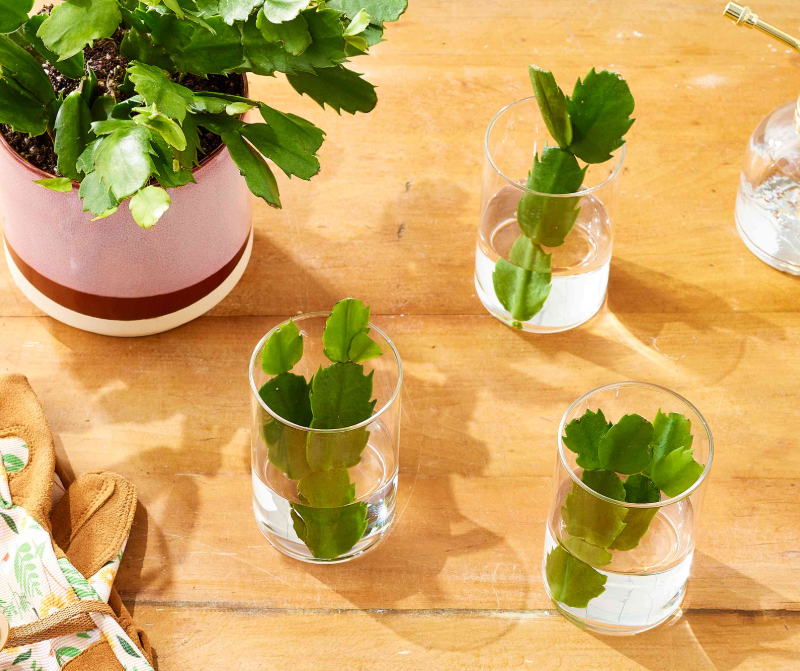
💧 A. Rooting in Water
Rooting in water is a great choice if you want to watch roots develop. This can be an exciting part of the process, especially for new gardeners.
Steps for Water Propagation
- Choose a clear glass or jar your cuttings can stand in upright.
- Fill the jar with fresh water and place only the bottom of the cuttings in the water (submerged about ½ inch).
- Place the jar in a bright spot with indirect light — avoid direct sunlight.
- Refresh the water every few days to keep it clean and oxygenated.
- Watch for roots to begin forming — this usually takes 2–4 weeks.
Once roots are a couple of inches long, your cuttings are ready to plant in soil.
🌿 B. Rooting Directly in Soil
Soil propagation skips the water phase altogether. This method is ideal if you want to minimize transplanting and introduce cuttings straight into a growing medium.
Steps for Soil Propagation
- Prepare a well‑draining soil mix: cactus/succulent soil blended with perlite and a bit of sand.
- Plant each cutting about ½–1 inch deep, pressing the soil gently around the base.
- Water lightly to settle the soil without soaking it.
- Keep in bright, indirect light and maintain evenly moist (but not soggy) soil.
Soon you’ll see tiny roots and eventually new segments forming.
🌞 5. Post‑Planting Care
Whether you rooted your cuttings in water and transferred them to soil or planted them directly, post‑planting care is essential for healthy growth.
💦 Watering
- Keep the soil lightly moist — not dry, not soggy.
- Let the top inch of soil dry before watering again.
- Overwatering is the #1 cause of root rot, so always check soil moisture before watering.
🌤 Light
- Provide bright, indirect light.
- Avoid direct midday sun, which can scorch delicate new stems.
- Too little light slows growth and weakens the plant.
🌡 Temperature
- A stable, warm environment (65–75°F / 18–24°C) is ideal.
- Avoid cold drafts and sudden temperature swings.
Young cuttings are more delicate than mature plants — be patient and consistent with care.
🌱 6. When to Transplant Again
After your cuttings develop new segments and show visible growth, they’ll benefit from being transplanted into a slightly larger pot. Christmas cactus enjoys being a bit root‑bound, so don’t rush into oversized containers.
Rootball expansion and new segment growth are good indicators that the plant is ready for its next home.
📊 Christmas Cactus Benefits Table
| Feature | Description | Practical Value | Care Tip |
|---|---|---|---|
| Blooming | Produces vibrant flowers in winter | Brightens indoor spaces | Provide cooler nights in fall for best blooms |
| Propagation | Easy from cuttings | Expands collection for free | Use well‑draining soil |
| Light Needs | Bright, indirect sunlight | Supports healthy growth | Avoid direct midday sun |
| Watering | Moderate — avoid overwatering | Prevents root rot | Let top soil dry before watering |
| Temperature | Prefers steady warmth | Encourages growth | Avoid drafts |
⚠️ Common Mistakes to Avoid
Even experienced gardeners slip up sometimes. These common pitfalls can delay or even stop rooting:
- ❌ Planting cuttings too deep — ensure just ½–1 inch in soil.
- ❌ Overwatering — soggy soil leads to rot quickly.
- ❌ Leaving cuttings in direct harsh sunlight.
- ❌ Skipping the drying (callusing) stage.
Remember, patience and consistent conditions are key.
❓ 10 FAQs About Propagating Christmas Cactus
1. Can I propagate Christmas cactus at any time of year?
Yes, but the best time is after flowering — usually late winter to early spring — because the plant is actively growing and roots form most easily then.
2. Should I use hormone rooting powder?
It’s optional. Many gardeners have success without it, but a rooting hormone can sometimes speed up root development.
3. How long does rooting take?
Water rooting usually shows roots in 2–4 weeks; soil rooting may take several weeks longer — from 3–6 weeks.
4. What kind of soil is best?
A mix for cacti and succulents with good drainage, often mixed with perlite or coarse sand.
5. How do I know roots are forming?
In water propagation, you’ll see small white roots. In soil, gentle tug resistance and new segments appear.
6. Do cuttings need fertilizer?
Not immediately. After established roots and growth resume, a balanced water‑soluble fertilizer diluted to half strength can help.
7. Can I root multiple cuttings in one pot?
Yes, but give them a little space so roots aren’t crowded as they grow.
8. My cutting turned yellow — what happened?
Yellowing often means too much water or direct sunlight. Reduce watering and move to gentler light.
9. Can I propagate from only 1 segment?
While possible, 3–4 segments give a higher success rate and more vigor as the plant grows.
10. Should I mist my cuttings?
Misting is optional. Focus on keeping soil lightly moist; misting may help humidity but is not necessary if roots are established.
🌼 Final Thoughts
Propagating your Christmas cactus is a satisfying way to grow your plant collection — and it teaches you essential plant care skills along the way. With a bit of patience, bright indirect light, and sensible watering, your cuttings will develop into healthy new plants that can bloom for years to come.
Start today by choosing a healthy stem, taking your cuttings, and deciding whether you’ll root them in water or soil. With this thorough guide and care tips, you’re well on your way to success!
Happy gardening! 🌱