The Spoon Trick That Makes Snake Plants Grow More Pups Naturally
Snake plants are famous for being tough, low-maintenance, and nearly impossible to kill.
But when it comes to growing pups (baby snake plants), many indoor growers struggle.
The truth is simple:
Snake plants don’t need heavy fertilizer — they need gentle signals that conditions are right to multiply.
That’s exactly why this spoon trick with worm castings works so well.
Why Worm Castings Trigger Snake Plant Pup Growth
Most fertilizers fail because they overwhelm the plant.
Worm castings work differently — they support growth without stress.
1️⃣ Slow, Gentle Feeding (No Burn Risk)
Worm castings release nutrients gradually.
There’s no sudden shock to the roots, which is critical for indoor plants.
Snake plants respond better to steady nutrition, not strong doses.
2️⃣ Healthier Soil Microbes = Stronger Roots
Worm castings are rich in beneficial microbes.
These microbes improve root efficiency, water balance, and nutrient uptake.
And here’s the key rule:
Strong roots lead to pups.
3️⃣ Rhizome Support (Where Pups Are Born)
Snake plant pups grow from underground rhizomes.
Worm castings strengthen this zone naturally, encouraging new shoots to form.
No chemicals. No forcing. Just healthy growth.
Step-by-Step: How to Do the Spoon Trick Correctly
This method works best for indoor snake plants.
What You Need
1 tablespoon
Organic worm castings
Optional: chopstick or small fork
Step 1: Find the Pup Zone
Look at the base of your snake plant.
The pup zone is usually:
Near the soil surface
Slightly away from the main stems
Where tiny green tips may begin to appear
Step 2: Apply the Spoon Ingredient
Add 1 tablespoon of worm castings.
Spread it in a thin ring:
About 2–3 inches away from the main stem
On top of the soil, not buried deep
⚠️ Never place worm castings directly against the stem.
Step 3: Light Mixing (Optional)
If your soil is compact:
Gently loosen only the top 1 inch
Avoid digging deep — snake plant rhizomes are sensitive.
Step 4: Water the Right Way
This step is critical.
After adding worm castings:
Water lightly, just enough to moisten the top soil
Do not soak the pot
Too much water + rich soil = root rot.
Best Time to Use This Trick
Timing matters more than people realize.
Best Indoor Seasons
Spring
Early summer
Warm fall (bright rooms)
Ideal Temperature
70–85°F (21–29°C)
Cold rooms slow down pup formation.
How Often Should You Do It?
More is not better.
Safe Schedule
Once every 6–8 weeks
That’s it.
Snake plants thrive when feeding is minimal.
How Long Until You See Results?
If the plant has healthy roots, expect:
Early signs: 2–4 weeks
Visible pups: 4–10 weeks
Strong pups: 2–4 months
Hidden pups often appear faster once conditions improve.
5 Common Mistakes That Stop Pup Growth
Even with the spoon trick, these mistakes block results:
❌ 1) Pot Is Too Large
Snake plants produce pups when roots feel slightly crowded.
✔ Use a snug pot.
❌ 2) Overwatering
The #1 cause of failure.
✔ Water only when the soil is completely dry.
❌ 3) Low Indoor Light
No light means no energy.
✔ Bright, indirect light works best.
❌ 4) Strong Chemical Fertilizers
They burn rhizomes and slow growth.
✔ Stick to worm castings or very diluted feed.
❌ 5) Poor Drainage
Dense soil suffocates roots.
✔ Use fast-draining soil:
Cactus mix + perlite
Want Even Faster Pup Growth?
Combine the spoon trick with:
Bright indirect light near a window
Warm indoor temperature
Fast-draining soil (50% cactus mix + 50% perlite)
This creates the perfect environment for pups.
FAQ
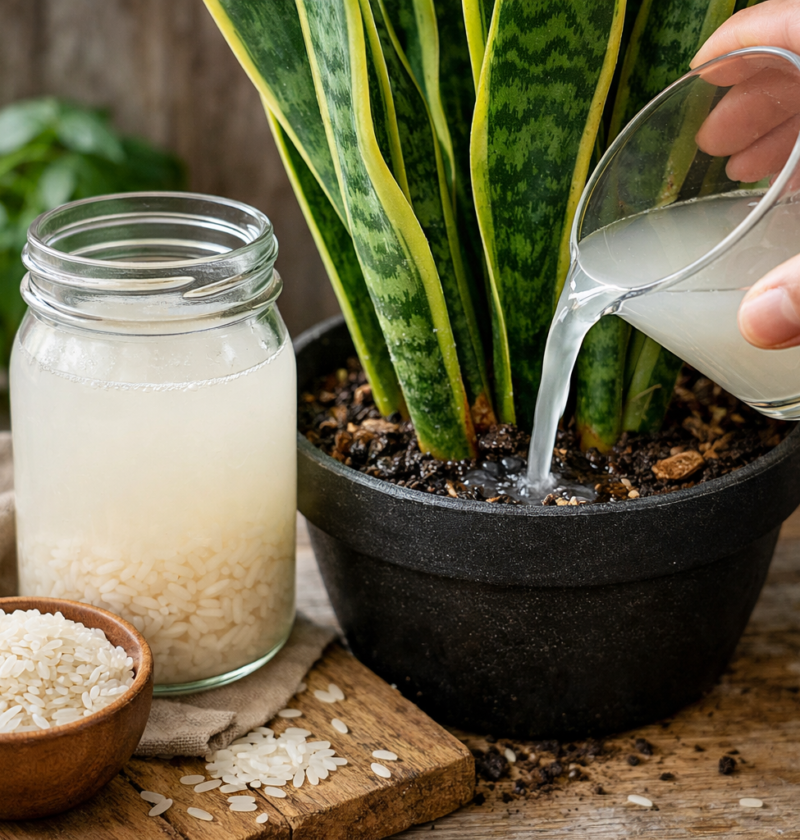
Can I use rice water instead?
Yes, but only occasionally and diluted. Worm castings provide longer-lasting benefits.
Can I use coffee grounds?
Not recommended indoors. They trap moisture and attract fungus gnats.
Is this safe for variegated snake plants?
Yes. Variegated types often respond even better to healthier soil.
Does this work in winter?
Yes, but results are slower unless the room is warm and bright.
Final Thoughts
Snake plants don’t need complicated hacks
They need: