🌵 The Best Fertilizer Routine for Christmas Cactus (Month‑by‑Month Guide)
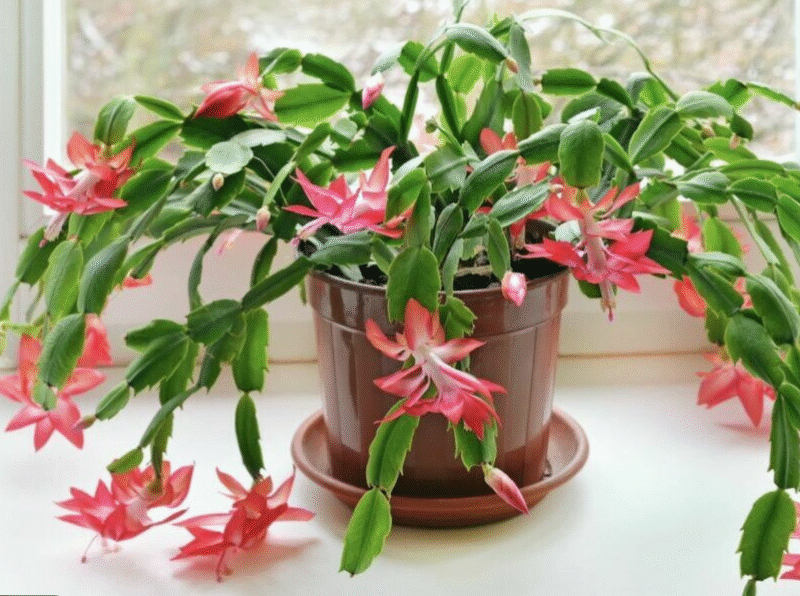
Your Christmas cactus — aka Schlumbergera — is a plant that rewards thoughtful care with spectacular blooms, and one of the most important pieces of that care puzzle is nutrition. Unlike many garden plants, Christmas cactus evolved as an epiphyte — growing on trees in tropical forests — which means it’s adapted to **light, frequent nourishment rather than heavy doses of fertilizer**.
This guide gives you a **gentle, month‑by‑month fertilizer routine** so your plant builds strong roots, lush segments, and abundant flowers — without the common mistake of overfeeding, mineral buildup, or leaf burn that happens when well‑meaning growers feed too much or at the wrong time.
Think of it like the ultimate plant diet schedule: not too rich, just right, and aligned with what your cactus needs each month of the year 💚.
🌿 Why Fertilizer Matters (and How Christmas Cactus Differs)
Christmas cactus is a “light feeder.” In nature it gets nutrients from decomposing organic matter on tree branches and in leaf litter, not from rich soil. Too much fertilizer — especially at full strength — leads to **mineral salt buildup**, which damages roots and scorches leaves.
Instead, we use a **diluted, consistent approach** that:
- Supports root health
- Encourages lush growth in spring and summer
- Prepares the plant for abundant fall/winter bloom
- Minimizes the risk of fertilizer burn and salt accumulation
You’ll also see that timing — not just quantity — is critical. Like elite athletes, holiday cacti respond best when nutrients are matched to their seasonal needs.
📅 Month‑by‑Month Fertilizer Plan for Christmas Cactus
Below is a simple month‑by‑month routine that balances feeding with resting periods so your plant thrives and flowers reliably.
| Month | Fertilizer Type | Application & Strength | Purpose |
|---|---|---|---|
| January | None | Skip feeding | Rest after blooming; avoid shock |
| February | Balanced houseplant fertilizer | ¼ strength, once this month | Support gentle post‑bloom recovery |
| March | Balanced fertilizer (e.g., 10‑10‑10) | ¼ strength, every 3–4 weeks | Encourage new segment growth |
| April | Balanced fertilizer | ¼ strength, every 3–4 weeks | Maintain steady vegetative growth |
| May | Epsom salt (optional) | 1 tsp per gallon (once this month) | Boost magnesium & chlorophyll production |
| June | Balanced fertilizer | ¼ strength, every 3–4 weeks | Support summer growth |
| July | Balanced fertilizer | ¼ strength, every 3–4 weeks | Last growth feeding before bloom prep |
| August | Bloom booster (higher phosphorus) | ¼ strength, every 3–4 weeks | Encourage bud initiation |
| September | Bloom booster | ¼ strength, one early application | Support developing buds |
| October | None | Skip feeding | Reduce nutrients as plant enters bloom phase |
| November | None | Skip feeding | Let natural bloom energy shine |
| December | None | Skip feeding | Holiday blooms are finishing |
💡 Note: “Balanced fertilizer” refers to a general houseplant formula, such as 10‑10‑10 or 20‑20‑20. “Bloom booster” formulas have a bit more phosphorus (middle number), such as 10‑20‑10.
🌿 How Much Fertilizer Should You Use?
The most important rule with Christmas cactus is: **never apply fertilizer at full strength.** Always dilute.
Here’s a simple watering‑to‑fertilizer ratio you can use year‑round:
- 💧 ¼ strength: Mix ¼ of the label‑recommended dose into your watering can.
- 🕐 Timing: Apply only when the soil is moist (not dry) to reduce salt stress.
- 🚿 Flush periodically: Once every 1–2 months, run plain water through the pot to wash away built‑up salts.
This micro‑dosing approach mimics how epiphytic plants receive nutrients naturally — in small amounts tied to rainfall rather than large, infrequent doses.
🌞 Optional Epsom Salt Treatment
Epsom salt (magnesium sulfate) isn’t a substitute for fertilizer, but a **single application in late spring or early summer** can help if your plant shows signs of magnesium deficiency (pale leaves, slow growth).
Recipe: Mix 1 teaspoon of Epsom salt per gallon (about 4 liters) of water and use this solution once during the active growth period instead of plain water.
This provides magnesium to support chlorophyll production and improved leaf health — but don’t overuse it. Too much magnesium can interfere with other nutrients.
🌱 Common Feeding Mistakes & How to Avoid Them
- 🚫 Overfertilizing: Causes mineral salt buildup, brown tips, and root damage. Always dilute and water in thoroughly.
- 🚫 Feeding in winter: During bloom and dormancy, don’t feed — the plant shifts energy toward flowers, not leaf growth.
- 🚫 Using strong formulas: Avoid concentrated “big plant” fertilizers — they’re too rich for epiphytes.
- 🚫 Pouring on dry soil: Fertilizer salts can burn roots. Water lightly first, then apply diluted fertilizer.
❓ Frequently Asked Questions (FAQs)
1. Do I have to fertilize every month?
Not necessarily. In winter and late bloom phases (October–January), skip feeding altogether. During active growth (spring–summer), feeding every 3–4 weeks at ¼ strength is ideal.
2. Can I use slow‑release fertilizer?
Slow‑release pellets generally aren’t recommended for Christmas cactus because the plant prefers light, consistent nutrient availability rather than concentrated granules that release unpredictably.
3. What if my cactus has brown leaf tips?
This is often a sign of fertilizer burn or salt accumulation. Flush the pot with plain water, reduce feeding strength, and ensure good drainage.
4. Should I fertilize more during flowering?
No — during flowering, avoid fertilizer. Your plant redirects energy into blooms, and extra nutrients can stress it.
5. Can I use cactus‑specific fertilizer?
Yes — but make sure it’s a **diluted, balanced cactus formula** and not a high‑strength blend designed for outdoor succulents.
6. How do I flush excess salts?
Once every 1–2 months, thoroughly water the plant until water runs out the drainage holes. This leaches accumulated salts from the soil.
7. What are signs of nutrient deficiency?
Pale leaves, slow growth, or small segments can indicate low nitrogen or magnesium — a light feed or optional Epsom salt treatment can help.
8. Can I combine fertilizer with watering?
Yes — always dilute fertilizer into your regular watering routine, never add fertilizer to dry soil.
9. Does light affect fertilizer needs?
Plants in lower light grow more slowly and need less frequent feeding, while well‑lit plants use nutrients more quickly.
10. What if I skipped feeding for months?
Your plant can usually bounce back if you resume light feeding at the appropriate seasonal phase — just start slowly at ¼ strength.
🌟 Final Thoughts — Feed Smart, Bloom Bright 🌟
The best fertilizer routine for Christmas cactus isn’t about heavy doses or complex mixtures — it’s about **timing, consistency, and light feeding** that matches the plant’s seasonal rhythm. Use this month‑by‑month plan as your roadmap, and your cactus will reward you with lush, healthy segments and spectacular seasonal blooms.
Remember: diluted fertilizer, proper soil moisture, good drainage, and balanced nutrients are the keys to success. Take care of the roots, and the flowers take care of themselves ✨🌸.