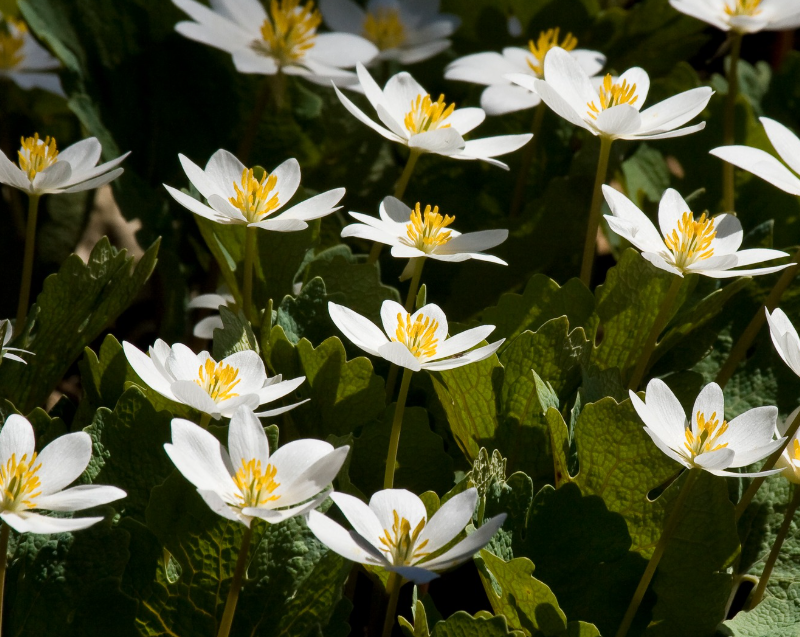
Bloodroot (Sanguinaria canadensis): The Hidden Power of a Small Forest Flower
In the shaded forests of eastern North America, a small, early-spring flower quietly emerges long before most plants awaken. This delicate white bloom — known as Bloodroot — hides a deep red sap within its rhizome, a pigment that gave the plant both its name and its long-standing reputation among Native American healers. 🌿✨
Despite its delicate appearance, Bloodroot is a powerful and potentially dangerous medicinal plant. Indigenous groups such as the Cherokee, Meskwaki, and Algonquin used it with knowledge passed down over generations, applying it for skin issues, warts, respiratory support, and ceremonial painting. Today, herbalists continue to respect Bloodroot’s strength, but modern safety guidelines emphasize extreme caution — because incorrect or unsupervised use can cause serious harm.
This comprehensive guide explores the history, chemistry, benefits, precautions, and responsible understanding of Bloodroot. It is written for gardeners, foragers, herbal scholars, and anyone curious about traditional forest medicines — without encouraging unsafe or unsupervised use.
What Is Bloodroot? 🌼
Bloodroot (Sanguinaria canadensis) is a woodland perennial belonging to the poppy family. It blooms in early spring with white eight-petaled flowers and produces a red-orange sap that stains the skin. The plant thrives in hardwood forests, growing alongside trillium, mayapple, and ramps.
The name “Bloodroot” comes from the vibrant red sap released when the root is cut. Historically, this pigment was used for dyes, paints, and ceremonial symbolism.
Botanical Characteristics
- Leaves: Blue-green, round, deeply lobed, emerging curled around the flower stem.
- Flower: White petals, golden center, blooming for only a few days.
- Root: Thick, creeping rhizome filled with red sap.
- Habitat: Moist deciduous forests, rich soil, dappled light.
Traditional & Historical Uses of Bloodroot
Bloodroot was highly valued by Native American tribes for both medicinal and cultural purposes. Most uses involved minimal amounts, carefully prepared and often combined with milder herbs.
Important: Modern herbalists emphasize that these traditional uses represent knowledge passed through trained healers — not safe DIY home remedies.
1. Wart Removal & Skin Applications (Historical Use Only)
Bloodroot has long been associated with topical use for warts, skin growths, and fungal issues due to its strong escharotic (tissue-destroying) alkaloids. However, misuse can lead to chemical burns and permanent scarring.
Historical practices:
- Applying a tiny drop of sap onto a wart
- Covering with cloth or a bandage for a short period
- Repeating sparingly for a few days
⚠️ Modern Safety Warning:
Dermatologists and clinical herbalists strongly advise against applying fresh Bloodroot sap directly to the skin, as it can cause painful burns, necrosis, or deep tissue injury.
Insight from toxicology specialist Dr. Lila Mendez:
“Bloodroot is not a casual home remedy. Unregulated topical use can lead to severe damage. Anyone considering its medicinal potential should consult a trained clinical herbalist or medical professional.”
2. Respiratory Support (Traditional Indigenous Use)
Several Native tribes used Bloodroot in extremely small, precisely measured amounts to support breathing, reduce mucus, and soothe irritated throats. It was sometimes blended with honey, mullein, or wild cherry bark.
Historical preparation (for educational purposes only):
- Boiling a small piece of dried root in water
- Straining and sweetening with honey
- Taking only a tiny spoonful occasionally
⚠️ Modern Safety Warning:
Internal use of Bloodroot is not considered safe today. Overuse can cause nausea, fainting, vomiting, heart issues, or toxicity.
3. Blood “Purification” & Liver Support (Historical Interpretation)
Many traditional healers believed Bloodroot supported circulation and helped the body release impurities. Though this is a traditional concept rather than a scientifically defined process, Bloodroot was used in tiny doses as a cleansing herb.
Historical methods:
- Creating mild tinctures
- Adding 1–2 diluted drops to water
- Using only occasionally
⚠️ Modern Safety Warning:
Internal tinctures of Bloodroot should be avoided without clinical supervision. The active alkaloid, sanguinarine, is powerful and potentially toxic.
4. Tooth & Gum Health (Historical Roots of Modern Products)
Bloodroot extract was once used in early dental formulas because it helps fight oral bacteria and reduce gum irritation. Today, some commercial toothpaste companies still use purified sanguinarine — in carefully regulated, safe concentrations.
Historical background:
- Bloodroot infused rinses
- Pastes blended with minerals or honey
- Very diluted preparations
⚠️ Modern Safety Warning:
Homemade Bloodroot toothpaste or mouth rinses are unsafe. Use only commercial, professionally formulated products.
How Bloodroot Works: Active Compounds
The power of Bloodroot comes from its unique alkaloids — especially sanguinarine, a compound with potent antimicrobial and escharotic effects.
Primary Compounds
- Sanguinarine – antimicrobial, escharotic, anti-inflammatory
- Chelerythrine – antimicrobial and cytotoxic
- Protopine – analgesic and antispasmodic properties
These compounds explain Bloodroot’s strong traditional uses — and also why inappropriate use can be dangerous.
Expert insight from pharmacognosy researcher Dr. Aaron Kelby:
“Bloodroot’s chemistry is remarkable but unforgiving. It demands accurate dosing, careful preparation, and respect for its potential toxicity.”
Safety: The Most Important Part
Bloodroot is a powerful herb — one that borders medicinal and toxic. While historically respected, modern herbalists treat it as a restricted-use plant appropriate only for trained professionals.
Major Safety Considerations
- Topical use can cause burns or tissue necrosis.
- Internal use may lead to toxicity, nausea, or heart issues.
- \It should never be used by pregnant or breastfeeding individuals.
- Never ingest fresh sap. The concentration is unpredictable.
- Avoid DIY bloodroot salves, black salves, or home wart treatments.
- Keep away from children and pets.
⚠️ Legal Note: In some regions, Bloodroot is regulated due to misuse of homemade “black salves.”
Nutritional & Chemical Overview
| Component | Primary Effects | Notes |
|---|---|---|
| Sanguinarine | Antimicrobial, escharotic | Potent; unsafe without professional guidance |
| Chelerythrine | Anti-inflammatory, cytotoxic | Concentration varies by plant age |
| Resins & essential oils | Topically stimulating | Responsible for warming sensation |
| Poppy-family alkaloids | Analgesic effects | Require precise dosing |
Non-Medicinal Uses of Bloodroot
1. Natural Dye
The vivid red-orange sap is an excellent pigment for natural dyes, used historically for:
- Fibers
- Body paint
- Baskets
- Decorative symbols
2. Ornamental Woodland Plant
Bloodroot is prized in native plant gardens for its early spring flowers and attractive leaves.
3. Ecological Importance
Bloodroot provides early-season nectar for insects and plays a role in forest-floor biodiversity.
Frequently Asked Questions (FAQ)
1. Is Bloodroot safe to use at home?
Not generally. Unsupervised use can cause burns, toxicity, or serious injury.
2. Can Bloodroot remove warts?
Historically yes, but modern experts advise against DIY use because of the risk of tissue damage.
3. Can you ingest Bloodroot?
Only under the guidance of a trained clinical herbalist. Fresh sap should never be swallowed.
4. Is Bloodroot the same as black salve?
Bloodroot is a major ingredient in many homemade black salves, which are not safe for home use.
5. What does Bloodroot look like?
A single white flower emerges wrapped in a rounded, lobed leaf. The root contains red sap.
6. Can Bloodroot harm the skin?
Yes. Unregulated sap can cause burns, scarring, or necrosis.
7. Where does Bloodroot grow?
In rich, moist hardwood forests across eastern North America.
8. Is Bloodroot endangered?
Not everywhere, but it is declining in some areas due to overharvesting.
9. Can Bloodroot be used on pets?
No. It is unsafe for animals.
10. Are Bloodroot supplements safe?
Only products made by reputable companies and taken under professional guidance.
Bloodroot is one of North America’s most fascinating — and misunderstood — woodland plants. Its beauty hides a powerful chemistry that Indigenous healers understood deeply and used with skill, intention, and respect. Modern herbal education continues to value the plant, but emphasizes extreme caution, sustainable harvesting, and the importance of trained guidance.
🌼 Bloodroot is a plant to admire, study, and respect — not one to experiment with casually.