Master Container Gardening: Top Tips to Grow Potatoes Like a Pro! 🥔🌱
Growing potatoes in containers is one of the most rewarding gardening methods—perfect for small spaces, balconies, patios, or anyone who enjoys a cleaner, more controlled harvest. With the right techniques, you can produce an impressive yield of fresh, flavorful potatoes right at home. This comprehensive guide—packed with expert insights, safety tips, a benefits table, and helpful FAQs—will walk you through every step of the process.
Let’s dive into the art and science of container potato gardening and learn how to grow potatoes like a true pro!
🥔 Understanding the Potato Lifecycle
The journey of a potato plant is fascinating. It begins with a humble “seed potato” and ends with a flourishing container full of delicious golden tubers. Understanding this lifecycle is essential for getting the best results.
🌱 From Sprout to Tubers: The Growth Stages
Potatoes grow from “eyes”—small buds located on the potato skin. Once planted, these eyes sprout stems that grow above the soil while developing stolons underground. These stolons eventually swell into the tubers you harvest.
Dr. Leila Nour, a plant physiologist at the Mediterranean Institute of Agriculture, explains: “Potatoes are one of the few crops where understanding early sprouting and tuber formation significantly impacts yield. Proper preparation and soil management are the key influencers.”
🌿 Key Stages of the Potato Lifecycle
- Sprouting: The eyes begin developing shoots.
- Vegetative Growth: Lush green foliage forms to support energy production.
- Tuber Initiation: Stolons start forming small tubers beneath the soil.
- Tuber Bulking: Tubers grow larger as the foliage matures.
- Senescence: Plants yellow and die as potatoes reach full size.
🥔 Choosing the Right Potato Variety
The success of your harvest also depends on choosing the right potato variety for your climate and goals. Potatoes are typically categorized into three groups: early, mid-season, and late varieties.
🌤 Early Varieties
These mature quickly (around 70–90 days) and are ideal for shorter growing seasons or impatient gardeners. Great options include:
- ‘Yukon Gold’
- ‘Red Norland’
- ‘Swift’
☀️ Mid-Season Varieties
These take 100–120 days and work well in moderate climates.
- ‘Kennebec’
- ‘Gold Rush’
- ‘Carola’
🌞 Late Varieties
If you live in a warm region with a long growing season, late varieties (130–150 days) are excellent for larger yields.
- ‘Russet Burbank’
- ‘Butte’
- ‘Fingerling’ types
Prof. Mark Benson, an agricultural sciences lecturer at Pacific Green University, notes: “Matching the potato variety to your region’s frost dates is one of the smartest steps a container gardener can make. It ensures steady development and reduces crop stress.”
🌱 Prepping Seed Potatoes: The Chitting Process
Before planting, seed potatoes benefit greatly from “chitting”—allowing them to sprout in controlled conditions.
💡 What Is Chitting?
Chitting encourages sprout development before the seed potatoes contact soil. This gives your plants a head start and can increase yields by up to 20%.
🏡 How to Chit Properly
- Place seed potatoes in a single layer with eyes facing upward.
- Store them in bright, indirect light.
- Keep temperatures between 10–15°C (50–59°F).
- Allow 2–3 weeks for sturdy, short sprouts (not long and leggy).
Once sprouts reach about 1–2 cm (½ inch), they’re ready for planting.
🌦 Potato Planting Time
Planting at the right time is critical to avoiding frost damage and ensuring optimal growth.
📅 When to Plant Potatoes in Containers
The golden rule: Plant 2 weeks before your region’s last expected frost date. This works because containers warm up faster than garden soil.
If you’re in a cold climate, consider using frost cloth or moving containers indoors during unexpected cold snaps. Potato foliage is highly frost-sensitive, and damage can significantly delay growth.
🪴 Selecting Containers
Potatoes can grow in almost any container as long as it’s deep, wide, and drains well.
📌 Recommended Container Types
- Grow Bags: Flexible, breathable, and ideal for root health.
- Large Buckets (10–15 gallons): Easily accessible and portable.
- Half-Barrels: Great for large yields if you have the space.
🚰 Drainage Matters
Poor drainage leads to rot—a common mistake among beginners. Make sure your container has several holes or add more if necessary.
🌿 Planting and Soil Preparation
The foundation of a thriving container crop is the soil. Potatoes prefer light, fluffy, and slightly acidic soil.
🌏 Ideal Soil Mix
- 40% high-quality potting mix
- 40% compost
- 20% coconut coir or peat moss
Mix in a handful of organic fertilizer formulated for root crops for a powerful start.
📥 How to Plant Potatoes in Containers
- Add 4–6 inches of soil to the bottom of the container.
- Place sprouted seed potatoes sprout-side up.
- Cover with 2–3 inches of soil.
- As stems grow, continue adding soil (“hilling”) to encourage more tuber production.
This layering technique leads to healthier plants and larger yields.
💧 Watering and Fertilization
Potatoes are thirsty plants, especially during the tuber-bulking stage.
💦 Watering Guidelines
- Keep soil consistently moist—but never waterlogged.
- Use drip lines or slow watering to prevent surface runoff.
- Water early in the morning to reduce fungal risks.
Containers dry out faster, so check moisture daily during warm months.
🌱 Best Fertilizers for Potatoes
Potatoes prefer slightly acidic soil (pH 5.5–6.5). A fertilizer rich in phosphorus and potassium but moderate in nitrogen works best.
- Organic bone meal
- Fish emulsion
- Composted manure
Add fertilizer every 3–4 weeks for continuous support.
☀️ Sunlight Requirements
Potatoes thrive with ample sunlight. Aim for 6–8 hours of direct sun daily. If growing on a patio or balcony, rotate your containers every 1–2 weeks to promote balanced foliage growth.
If sunlight is limited, choose early varieties—they tolerate partial sun better than late-season types.
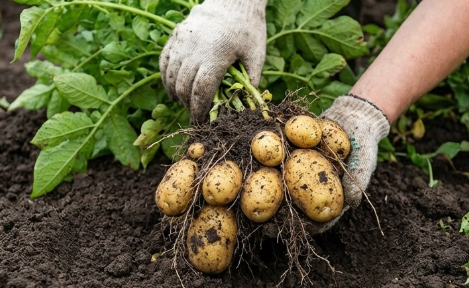
🧺 Harvesting Potatoes
When you harvest depends on whether you want tender “new potatoes” or fully mature storage potatoes.
🥔 Harvesting New Potatoes
New potatoes can be harvested 2–3 weeks after the plants begin flowering. These thin-skinned tubers are deliciously tender but don’t store long.
🧺 Harvesting Mature Potatoes
For full-size potatoes, wait until the foliage has completely yellowed and died back. This indicates that tubers have fully developed.
📦 Storage Tips
- Cure potatoes for 7–10 days in a cool, dark place.
- Store at 4–7°C (39–45°F) with good ventilation.
- Never store potatoes in the refrigerator—it alters flavor and texture.
🥗 Nutrition & Health Benefits of Potatoes
| Benefit | Description | Serving Size (100g) | Nutrition |
|---|---|---|---|
| High in Vitamin C | Supports immunity and skin health. | 100g boiled | 19.7 mg Vitamin C |
| Rich in Potassium | Helps regulate blood pressure. | 100g baked | 544 mg Potassium |
| Energy Boosting | Excellent source of complex carbs. | 100g steamed | 87 calories |
| Fiber Friendly | Aids digestion and gut health. | With skin | 2.2g fiber |
🍽 Related Potato Recipes
Explore delicious potato-based recipes here:
Visit Nisbah.com for Potato Recipes
❓ Top 10 FAQs About Container Potato Gardening
- Can I grow potatoes indoors? Yes—just ensure strong grow lights and proper ventilation.
- How many potatoes can I plant in a 10-gallon container? Typically 2–3 seed potatoes.
- Do potatoes need fertilizer? Yes, especially phosphorus and potassium for tuber development.
- Why are my potato plants turning yellow early? Possible overwatering, nutrient deficiency, or early blight.
- Can I reuse soil from last year? Not recommended—disease risk is high.
- Do I need to chit potatoes? It’s optional but boosts yields.
- Why are my potatoes small? Often due to lack of sunlight or inconsistent watering.
- Can I grow potatoes from store-bought potatoes? Only if organic and untreated; otherwise yields suffer.
- How long do potatoes take to grow? Between 70–150 days depending on the variety.
- What’s the best soil pH for potatoes? Slightly acidic, ideally 5.5–6.5.
🌟 Final Thoughts
Container potato gardening is an exciting way to grow nutrient-rich food, even in limited spaces. With the right combination of soil preparation, watering habits, sunlight, and harvesting techniques, you can enjoy plentiful harvests of delicious homegrown potatoes.
Whether you’re a beginner or a seasoned gardener, these expert-backed tips will help you master potato container gardening like a true professional. Happy planting! 🥔🌿