7 Secrets to Grow Avocados and Achieve Big Harvests Fast
Growing avocados can be a deeply rewarding—and delicious—endeavor 😋. Whether you’re planting a single tree in your backyard or managing a small orchard, following the right practices can dramatically improve your chances of healthy growth and a bountiful harvest. Below, you’ll discover seven essential “secrets” to help you cultivate avocado trees effectively, along with expert‑style insights, practical tips suited for Mediterranean and semi‑arid climates (like in parts of Morocco), and a helpful FAQ section to guide you from seedling to fruiting. 🥑🌱
Secret 1: Choose the Right Variety & Site — Know Your Climate and Soil
The foundation of a successful avocado harvest begins long before you even plant a tree. The variety you select and the planting site you choose make a massive difference.
✔️ Pick a Variety That Fits Your Climate
Not all avocados are equal. There are tropical varieties (e.g., “Hass,” “Fuerte,” “Bacon,” “Zutano”) and subtropical ones. If you live in a region with mild winters and limited frost, tropical varieties might thrive. In areas with occasional mild cold or light frost, subtropical varieties are often more resilient.
Dr. Leila Nour, Horticulturist & Climate‑Smart Farming Specialist, advises: “In semi‑arid, Mediterranean‑type climates, go for drought‑tolerant, heat‑resistant varieties, and plant in protected spots — for example, near a south‑facing wall or where soil warms quickly.”
✔️ Choose Soil with Good Drainage & Organic Matter
Avocados dislike “wet feet”. Heavy clay soils or areas with poor drainage often result in root rot and weak trees. Ideal soil is well‑drained loamy or sandy‑loam — enriched with organic matter.
- Ensure soil pH is slightly acidic to neutral (around 6–7). If needed, amend soil with well‑rotten compost or aged manure to improve structure.
- Avoid low‑lying areas where water accumulates — even occasional waterlogging can be harmful.
- For sloped land, consider contour planting or raised beds to enhance drainage.
Tip: Do a simple “percolation test” — dig a hole about 30–40 cm deep and fill with water. If water drains within 12–24 hours, drainage is likely good. If it takes days, reconsider that spot.
Secret 2: Plant at the Right Time & Prepare the Tree Properly 🌿
Timing and preparation around planting significantly influence early growth, root development, and long‑term health.
✔️ Best Time to Plant
In Mediterranean or subtropical climates, the ideal time to plant an avocado is in late winter to early spring — once the risk of severe cold has mostly passed. This gives the tree time to establish before hot, dry summers.
✔️ Acclimate and Handle with Care
If you purchase a young avocado sapling (in a pot), it’s crucial to acclimate it gradually to full outdoor conditions:
- Start by placing it in a sheltered, partially‑shaded spot for 1–2 weeks.
- Avoid transplanting on extremely hot, dry, or windy days.
- Dig a hole roughly twice the width and just as deep as the root‑ball. Loosen surrounding soil to allow roots to spread.
- After planting, water deeply to settle soil — but don’t overwater. Mulch around the base with compost or organic mulch to conserve moisture & regulate soil temperature.
Prof. Mark Benson, Arboriculture Specialist, stresses: “Many early failures stem not from wrong care, but from stress during transplanting. Gentle handling + good soil preparation often mean the difference between a tree that thrives and one that struggles.”
Secret 3: Water Deeply, Infrequently — But Don’t Let the Tree Go Thirsty 💧
Water management is one of the toughest yet most critical aspects of avocado cultivation: too much, and roots rot; too little, and the tree suffers, yielding poor fruit or none.
✔️ Understand Water Needs by Growth Stage
Young trees need shallow but frequent watering to encourage root establishment. Mature trees benefit from deep watering that encourages roots to grow deeper and more robust.
- Seedling / Year 1–2: Water once or twice per week (depending on heat and soil), shallow soak.
- Young Tree (Years 3–5): Water every 7–10 days deeply; ensure top 30–40 cm of soil dries slightly between waterings.
- Mature Tree (5+ years): Water deeply every 2–3 weeks (in dry, hot weather), or less frequently during rainy season. Always monitor soil moisture — avoid waterlogging.
✔️ Mulch & Prevent Surface Evaporation
Applying a 5–10 cm layer of organic mulch (compost, leaf‑mold, aged manure) around the drip-line helps retain soil moisture, regulate temperature, and feed soil life. Keep mulch 10–15 cm away from the trunk to avoid rot or pests.
Safety & Practical Tip: When irrigating, avoid over‑saturating foliage or trunk to minimize risk of fungal disease. Use drip or soak‑hose irrigation rather than high‑pressure overhead sprinklers.
Secret 4: Nutrient Management — Feed Right, Feed Light 💪
Even the best soil eventually depletes nutrients. Regular, moderate fertilization — aligned with tree development — supports healthy growth and fruiting.
✔️ Use Balanced Fertilizer & Organic Matter
In early years, apply a balanced, slow‑release fertilizer (for example N-P-K ~ 10-10-10) two to three times a year. As the tree matures, switch to a fertilizer higher in nitrogen and potassium (e.g., 8-3-9) to support foliage and fruit production.
Complement chemical or commercial fertilizer with organic amendments once per year — add compost or well‑rotted manure around the drip line (not near the trunk). This enriches soil microfauna and improves soil structure over time.
✔️ Watch for Micronutrient Deficiencies — Especially Zinc & Iron
In alkaline or calcareous soils (common in dry regions), avocados may show signs of micronutrient deficiency — yellowing leaves, stunted growth. A foliar spray or soil drench with chelated micronutrients (Zn, Fe, Mn) once a year during spring can remedy this.
✔️ Sample Soil & Adjust Annually
Every 2–3 years, perform a soil test to check pH, nutrient levels, and organic matter. Adjust fertilization accordingly — over‑fertilizing can lead to excess vegetative growth at the expense of fruit, or salt buildup that harms roots.
Secret 5: Prune Smart — Shape for Sunlight, Airflow & Pollination ✂️
Proper pruning supports tree structure, encourages healthy shoots, boosts fruit set, and reduces pest or disease problems.
✔️ Start Pruning Early, Lightly — Form a Strong Structure
During the first 2–3 years, shape the tree to a central leader (or a vase shape), removing weak or crossing branches. Aim for a sturdy framework that can support future fruit weight.
✔️ Thin for Light Penetration & Air Circulation
Avocado trees are dense. Once mature, thin inner branches periodically to allow sunlight and air — which promotes flowering, reduces fungal disease risk, and helps fruit mature evenly. Do pruning just after harvest or in late winter, before new growth begins.
✔️ Encourage Pollination — Use Multiple Trees or Varieties
Some avocado varieties are “Type A” (flowering behavior) and some “Type B.” Planting at least one of each near each other can enhance pollination and fruit yield. Even if your variety is self‑fertile, a second avocado nearby increases chances of fruit set.
Secret 6: Protect from Pests, Diseases & Environmental Stress 🛡️
With avocados, pests, root diseases, and environmental stress (frost, wind, drought) are common challenges. Being proactive is key.
✔️ Prevent Root Rot — Don’t Overwater, Ensure Drainage
The fungus :contentReference[oaicite:0]{index=0} is a major threat. Avoid waterlogging; ensure soil drains well; treat soil with a preventive fungicide or “bio‑fungal” soil amendment if you suspect past issues. Raised beds or mounded soil helps in wetter climates.
✔️ Guard Against Frost and Cold — Use Windbreaks or Microclimates
In regions prone to occasional cold snaps: consider planting near a sun‑facing wall, using frost cloth, or surrounding young trees with windbreaks (hedges, fences). For very young plants, moveable containers offer flexibility.
✔️ Watch for Pests — Scale, Mites, Borers — Inspect Regularly
Do regular inspections of leaves and trunk. For minor infestations, insecticidal soap or neem‑oil sprays can help. Avoid overuse of chemicals; maintain good biodiversity (companion plants, beneficial insects) to keep pest pressure low.
Gardening Safety Tip: Always wear gloves and eye protection when handling pesticides or pruning, and avoid working directly under strong midday sun for long periods — especially in hot climates.
Secret 7: Be Patient, Observe & Adjust — Treat the Tree as a Living Project 🌳
Avocados don’t become “fruit machines” overnight. Success is often a result of patience, observation, and adapting care to the needs of the tree over time.
✔️ Understand the Time to First Harvest
From seed, an avocado tree may take 7–15 years to produce fruit. From a grafted sapling, often 3–5 years if well cared for. Accept that early years are foundational — focus on root development, healthy foliage, and structural strength rather than quick harvests.
✔️ Keep a Gardening Journal — Track Water, Growth, Fruit Sets
Document watering schedule, pruning dates, fertilization, flowering, fruit sets — this helps identify patterns (e.g., fruit drop after a dry spell) and improve care each season. Over time, you’ll know exactly what your land and trees need.
✔️ Adapt to Local Conditions — No One‑Size‑Fits‑All
Every site is unique — micro‑climate, soil, rainfall, sun exposure differ. What works in one orchard may fail in another. Be flexible: if the tree shows signs of stress (leaf yellowing, slow growth, premature leaf drop), revisit water, soil, sun, or nutrient regimes. Responding to your tree’s signals is the mark of a good grower.
Growth Stage & Care Guidelines: Water, Fertilizer & Pruning Schedule 📆
| Growth Stage | Watering Frequency | Fertilizer / Soil Amendment | Pruning / Maintenance |
|---|---|---|---|
| Seedling / Year 1–2 | 1–2× per week (shallow soak) | Balanced fertilizer (10-10-10) every 3–4 months; light compost mulch | Minimal — remove damaged stems; shape lightly |
| Young Tree (Years 3–5) | Deep water every 10–14 days | Balanced → switch to N-K elevated fertilizer; compost annually | Train structural form; thin crossing branches |
| Mature Tree (5+ years) | Deep water every 2–4 weeks (depending on climate) | Fertilizer higher in N and K, micronutrients if needed; compost annually | Annual thinning, prune dead/diseased wood, promote airflow |
Note: Adjust frequency and amounts depending on rainfall, soil type, and local climate. Always monitor soil moisture and tree health.
Expert‑Style Reflections: Why These “Secrets” Matter for Big Harvests
Dr. Leila Nour summarizes: “Growing avocados successfully isn’t about a single trick — it’s about establishing a healthy foundation: suitable soil, good drainage, adequate sun and water, and feeding the tree well. Once these basics are mastered, fruiting comes as a natural result.”
Prof. Mark Benson“Farming — even on a small scale — is a long game. The most impatient growers often end up disappointed. But the grower who watches carefully, adjusts practices season after season, and treats the orchard as an ecosystem usually gets reliable yields — and healthier, more resilient trees.”
10 Frequently Asked Questions (FAQs) About Growing Avocados
1. How much space does an avocado tree need to grow properly?
A mature avocado tree typically spreads 6–10 m across. For optimal air circulation and sunlight, plant trees at least 7–9 m apart (center to center). In smaller gardens, consider dwarf or container varieties.
2. Can I grow an avocado from seed and still get fruit?
Yes — but be aware that seed‑grown trees take longer (7–15 years) to fruit, if at all. Grafted saplings are recommended for predictable fruit quality and earlier production.
3. Will a single avocado tree produce fruit, or do I need more for pollination?
Some avocado varieties are self‑fertile and will produce fruit alone. However, having a second tree — ideally of the opposite flowering type (Type A vs Type B) — significantly increases fruit set and yield.
4. How can I tell if my avocado tree is thirsty or overwatered?
Signs of underwatering: wilted leaves, dry soil 5–10 cm below surface, slowed growth. Overwatering/root rot: yellowing leaves, leaf drop, soggy or foul‑smelling soil, poor growth. Use soil moisture check or probe before watering.
5. Is avocado suitable for dry climates like Morocco’s interior?
Yes — many avocado varieties tolerate drought and heat, provided they have good drainage, occasional deep watering, and are protected from extreme cold. Heat‑resistant varieties and mulching help retain soil moisture.
6. When will my tree produce a full crop?
From grafted sapling: often 3–5 years until first fruit; full production usually by years 6–8 if well nurtured. From seed: 7–15 years or more. Consistency depends on climate, care, and variety.
7. What pests or diseases should I watch out for?
Common problems: root rot (Phytophthora), scale insects, mites, borers, fungal leaf spots. Regular inspection, good drainage, airflow through pruning, and cautious use of organic or biological controls help manage risks.
8. Can I grow avocado in a large pot or container?
Yes — dwarf or slow‑growing varieties can do well in large containers. Use high‑quality potting soil with good drainage, water more frequently but avoid waterlogging, and consider seasonal watering changes. Benefits include frost protection and mobility.
9. Does the tree need fertilizer during the fruiting phase?
Yes, but the balance shifts: Nitrogen is still important for foliage, but potassium becomes crucial for fruit development and quality. Also ensure micronutrients are sufficient. Monitor soil and leaf health to guide fertilization.
10. Can I speed up fruiting with growth boosters or special treatments?
While certain techniques (grafting, graft‑type selection, stress‑management) can slightly accelerate fruiting, there’s no magic shortcut. Over-fertilizing or overstressing the tree usually backfires. Consistent care, patience, and adapting to the tree’s needs remain the most reliable “boosters.”
When to Celebrate Success — Signs of a Healthy Avocado Tree Ready to Harvest 🎉
Here are some encouraging signs that your avocado tree is on track for a good harvest:
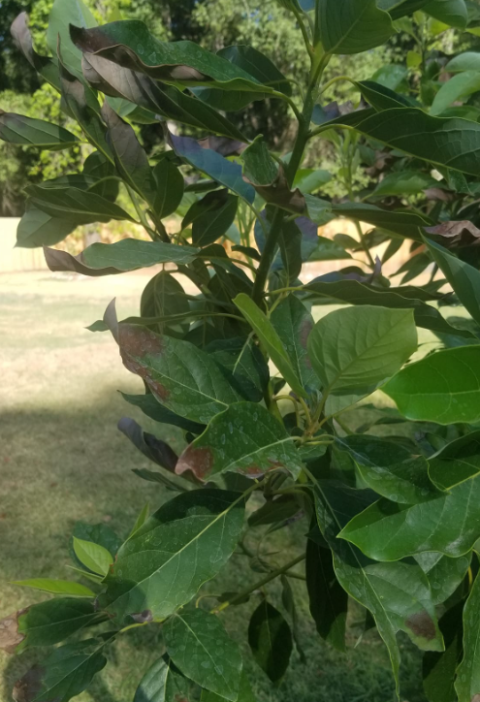
- Glossy, deep-green leaves without yellowing or spots. 🍃
- Strong shoot growth each spring, with new branches forming evenly. 🌱
- Even canopy that allows light penetration — indicative of good pruning and airflow. ☀️
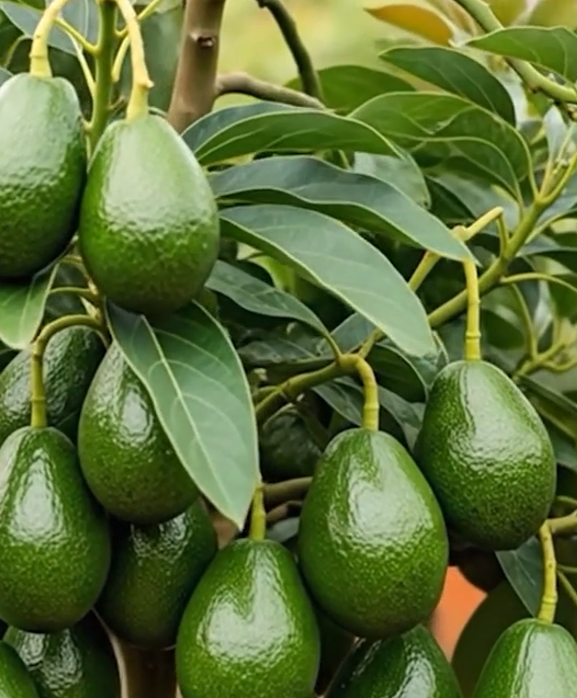
- Flowers appear in spring (or season depending on variety), followed by small fruit that remain attached and begin swelling. 🥑
- Regular fruit set on multiple branches — avoid overloading early trees; allow gradual buildup. 🏗️
When you see these signs, you can begin to expect your tree to produce avocado after avocado — a rewarding cycle that reflects seasons of care and patience.
Conclusion — Grow with Patience, Care, and Respect for Nature
Growing avocados is not an overnight success story. It’s a journey — one that rewards gardeners who plant thoughtfully, water mindfully, feed wisely, prune with care, protect from stress, and most of all, observe closely. 🧑🌾
By mastering the seven secrets laid out above — the right variety and site, proper planting, water management, nutrient care, smart pruning, pest and disease prevention, and patient observation — you give your trees the best possible chance to flourish. Over time, with consistency and care, you’ll enjoy not only the green beauty of avocado trees but also the joy of harvesting your own creamy, nutritious fruit. 🥑🌞
Note: Growing fruit trees may involve risk — frost, pest outbreaks, or unexpected droughts. Always adapt practices to your local climate, soil, and environmental conditions. When in doubt, consult a local horticultural expert or agricultural extension service.