🧊 Storage and Hygiene Matter
If someone makes a homemade face cream, hygiene matters.
Use clean tools.
Use clean hands.
Use a clean bowl.
Avoid dipping dirty fingers into the container.
Do not share the cream with other people.
Do not keep homemade creams for weeks.
If it changes smell, color, or texture, throw it away.
If it contains water, aloe gel, fresh fruit, yogurt, milk, or tea, it can spoil faster.
A safer option is to make very small amounts and use them quickly.
But even then, sensitive skin may still react.
🧴 What Ingredients Are Usually Gentler?
Some ingredients are commonly used for moisture support.
They may be gentler for many people, but reactions are still possible.
Examples include:
Plain petroleum jelly
Fragrance-free moisturizer
Shea butter
Plain aloe vera gel
Oat-based products
Glycerin-containing products
Simple plant oils if tolerated
Ceramide creams
Fragrance-free creams for sensitive skin
For very sensitive skin, store-bought fragrance-free products may be safer because they are made with proper preservation and testing.
Homemade is not always safer.
🔥 Acne-Prone Skin Caution
If you have acne-prone skin, be careful with heavy oils and thick homemade creams.
Some oils may feel moisturizing but can clog pores for some people.
This may lead to breakouts.
Be careful with:
Coconut oil
Thick butters
Heavy homemade balms
Greasy mixtures
Kitchen oils
If your skin breaks out easily, choose non-comedogenic products when possible.
A dermatologist can help choose a safer routine.
🧬 Eczema and Sensitive Skin Caution
People with eczema or sensitive skin should be extra careful.
Even gentle-looking natural ingredients can trigger irritation.
Fragrance, essential oils, citrus, spices, and homemade extracts may worsen sensitive skin.
If you have eczema, rosacea, psoriasis, dermatitis, or frequent rashes, avoid experimenting with random recipes.
Use simple fragrance-free products.
Ask a dermatologist if irritation continues.
☀️ Sun Protection Still Matters
A homemade cream does not replace sunscreen.
This is important.
Many people use anti-aging creams but forget sunscreen.
Sun exposure is one of the biggest causes of visible premature skin aging.
Dark spots, uneven tone, fine lines, and texture changes can worsen with unprotected sun exposure.
A safe mature skin routine should include:
Gentle cleanser
Moisturizer
Sunscreen in the morning
Avoiding harsh scrubs
Dermatologist advice for strong concerns
No homemade cream can replace daily sun protection.
🛒 What to Look for When Buying Moisturizers
If you want a safer face cream, look for:
Fragrance-free
Made for sensitive skin
Dermatologist-tested
Non-comedogenic if acne-prone
Ceramides
Glycerin
Hyaluronic acid
Petrolatum
Niacinamide if tolerated
Clear ingredient list
No “instant facelift” claims
No “look 30 years younger” promises
AAD recommends fragrance-free creamy moisturizers for older adults with dry skin and says moisturizers help ease dryness and support the protective barrier.
A good moisturizer should sound realistic.
Not magical.
🛍️ What to Look for When Buying Anti-Aging Products
Anti-aging products can be useful, but the claims should be honest.
Look for:
Retinol or retinal if tolerated
Peptides
Niacinamide
Vitamin C in stable packaging
Sunscreen
Ceramides
Gentle exfoliants used carefully
Dermatologist-backed brands
Clear instructions
Avoid products that promise:
Instant wrinkle removal
Permanent age reversal
“Look 30 at 60”
Plastic surgery results
No need for sunscreen
Guaranteed results overnight
Miracle transformation
Before-and-after images can be misleading.
Real skin care takes time.
🚫 Mistakes to Avoid
Do not put lemon juice on your face.
Do not use baking soda as a face scrub.
Do not apply toothpaste to pimples.
Do not use undiluted essential oils.
Do not use raw egg masks.
Do not store homemade cream for weeks.
Do not ignore burning or itching.
Do not use one recipe on broken skin.
Do not believe “look 30 again” claims.
Do not skip sunscreen.
A simple routine is usually safer than a viral recipe.
🧠 The Real Skin Care Takeaway
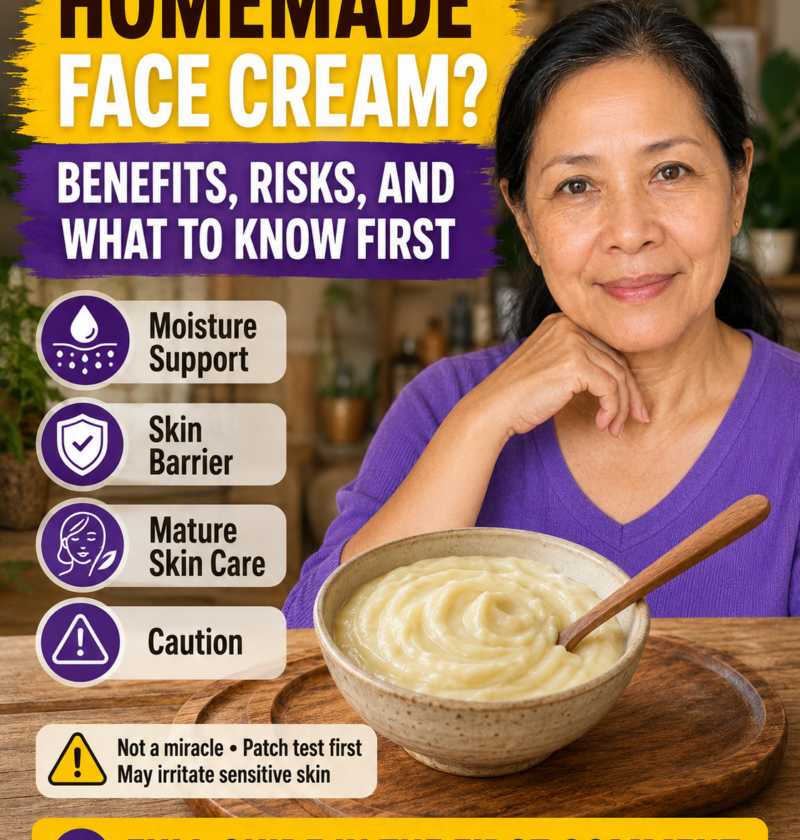
Homemade face cream can be interesting.
It may help some people moisturize.
It may feel comforting.
It may support a simple self-care routine.
But it is not a miracle.
It cannot reverse age.
It cannot erase all wrinkles.
It cannot replace sunscreen.
And it may irritate sensitive skin or become contaminated if made or stored improperly.
The safest skin care routine is gentle, consistent, and realistic.
Moisturize.
Protect your skin barrier.
Use sunscreen.
Avoid harsh ingredients.
Ask a dermatologist if you have irritation, acne, eczema, pigmentation, wounds, or sudden changes.
✅ Final Answer: Should You Try Homemade Face Cream?
You can try a very gentle homemade face cream if your skin tolerates it.
But patch test first.
Keep the ingredients simple.
Avoid lemon, baking soda, toothpaste, raw egg, spices, and undiluted essential oils.
Do not store homemade creams for a long time.
Do not use them on broken or irritated skin.
If you have sensitive skin, acne, eczema, rosacea, allergies, or ongoing irritation, choose a fragrance-free dermatologist-recommended moisturizer instead.
Homemade face cream may support moisture.
It is not a miracle.
Healthy skin needs care, patience, and protection.