✅ The Safer Way to Make Herbal Drinks at Home
A homemade herbal drink does not need to be extreme.
It does not need 15 ingredients.
It does not need to be very strong.
And it should not be treated like medicine.
The safest approach is simple:
Use food-safe ingredients.
Keep the recipe mild.
Store it properly.
Drink it in moderation.
And stop using it if your body reacts badly.
A wellness drink should support your routine, not create new problems.
🧊 Step 1: Use Clean Jars
Start with clean glass jars.
Wash them with hot soapy water.
Rinse well.
Dry them properly.
Make sure the lids are clean and not rusty.
This is important because herbal drinks often sit in the fridge for hours or days.
A dirty jar can affect the drink faster.
💧 Step 2: Use Safe Water
Water is the base of the drink.
Use clean drinking water.
If you boil herbs, use a clean pot.
Do not use old water sitting uncovered.
Do not use a pot with old food residue.
The drink may look healthy, but the preparation process matters.
🌱 Step 3: Know Every Ingredient
Do not use unknown leaves.
Do not use random plants from the yard.
Do not use decorative houseplants.
Do not use roadside plants.
Do not use leaves sprayed with chemicals.
Only use ingredients you can clearly identify as food-safe.
This is one of the most important rules.
A green leaf is not automatically edible.
🧴 Step 4: Keep the Recipe Simple
Many people think stronger means better.
But with herbal drinks, stronger can mean more risk.
A simple drink is easier to understand.
One or two main ingredients are better than a mystery blend.
For example, a mild mint-and-lemon water is easier to judge than a jar filled with many unknown leaves, roots, spices, and powders.
Simple is safer.
🕒 Step 5: Store It Quickly
Do not leave the drink sitting out for many hours.
If it is meant to be refrigerated, place it in the fridge within a safe time.
The CDC recommends refrigerating perishable items within 2 hours, or within 1 hour if the temperature is above 90°F. (CDC)
Let hot drinks cool safely in smaller containers if needed.
Do not put a huge hot pot directly into the fridge and expect it to cool quickly.
Smaller containers cool faster.
📅 Step 6: Do Not Keep It Too Long
Homemade herbal drinks are not factory-sealed products.
They do not have preservatives.
They may not last long.
A simple rule is to use refrigerated homemade drinks within a few days.
The USDA says leftovers can usually be kept in the refrigerator for 3 to 4 days. (fsis.usda.gov)
If the drink smells strange, looks cloudy in an unusual way, bubbles unexpectedly, grows mold, or tastes off, throw it away.
Do not take chances.
⚠️ Step 7: Watch Your Body
If you drink an herbal drink and feel uncomfortable, stop.
Warning signs can include:
- nausea
- stomach pain
- diarrhea
- dizziness
- itching
- rash
- swelling
- headache
- fast heartbeat
- unusual tiredness
- breathing discomfort
Do not ignore symptoms just because the drink is natural.
Natural ingredients can still cause reactions.
💊 Step 8: Be Careful With Medication
This is very important.
Some herbs may interact with medication.
They may affect how the medicine works.
They may increase side effects.
They may change blood sugar or blood pressure.
They may increase bleeding risk.
People who take daily medicine should not drink strong herbal blends without professional advice.
A small wellness habit can become risky if it conflicts with treatment.
📌 Quick Comparison Table
| Common Belief | Safer Truth |
|---|---|
| Herbal drinks cure disease | They should not be treated as cures |
| Fridge storage makes them safe forever | Homemade drinks can still spoil |
| Natural means harmless | Natural ingredients can cause reactions |
| More ingredients means more benefits | More ingredients can increase risk |
| Green color means healthy | The ingredient list matters more |
| Everyone can drink it | Some people must be careful |
| Stronger is better | Mild and simple is safer |
🏡 Why This Type of Post Goes Viral
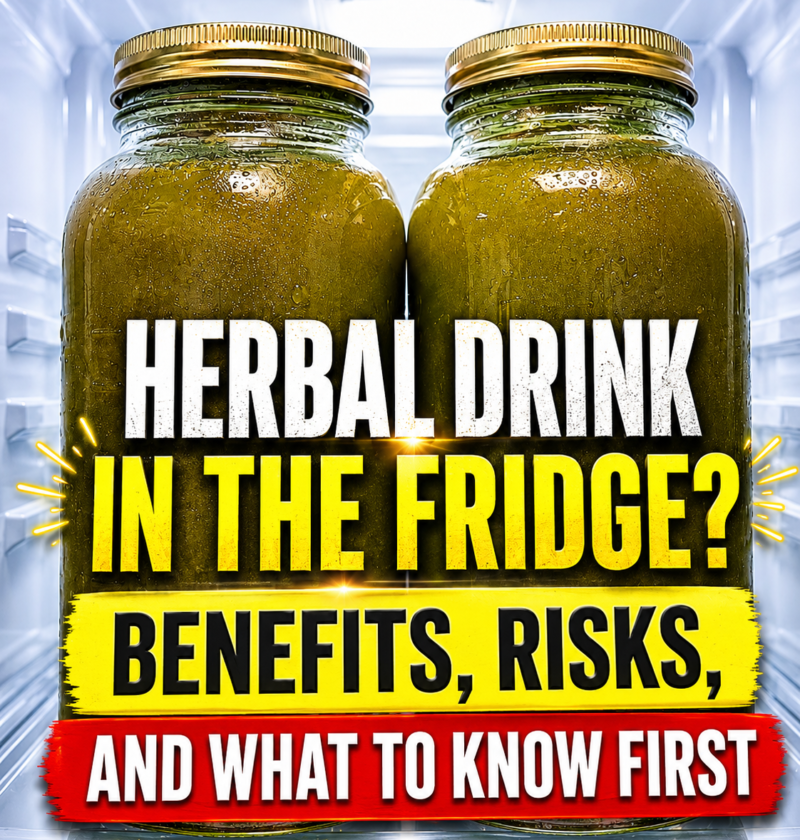
This type of image works well because it creates curiosity.
Two jars in the fridge look mysterious.
The green color makes people wonder what is inside.
The idea of a homemade remedy makes people want the recipe.
And when the headline asks a question, people stop scrolling.
They want to know:
Is this real?
What is the drink?
How do I make it?
Is it safe?
Does it help?
That is why the Facebook post can attract attention.
But the article must give balanced information.
A viral post brings people in.
A trustworthy article keeps them reading.
🍋 A Simple Safer Example
A safer homemade drink idea can be very simple.
For example:
- clean water
- a few mint leaves
- lemon slices
- cucumber slices
Keep it in a clean jar.
Refrigerate it.
Drink it within a short time.
Do not claim it cures disease.
Do not use it instead of medication.
Treat it like flavored water, not a medical treatment.
This is the kind of wellness content that feels useful without becoming dangerous.
🚫 Claims to Avoid
Avoid saying:
- “This cures cancer”
- “This reverses diabetes”
- “This replaces medication”
- “Doctors hide this”
- “Drink this and disease disappears”
- “Your memory returns instantly”
- “This kills cancer cells”
These claims can mislead people.
They can also reduce trust.
A better headline is:
“Herbal Drink in the Fridge? Benefits, Risks, and What to Know First”
It still creates curiosity.
But it is much safer.
🧠 The Smart Home Wellness Rule
Here is the simple rule:
If a drink sounds too powerful to be true, slow down.
Ask what is inside.
Ask if it is safe.
Ask how long it was stored.
Ask if it interacts with medication.
Ask whether the claim is realistic.
A good wellness routine should be calm, consistent, and safe.
It should not depend on fear or miracle promises.
🩺 When to Talk to a Professional
Talk to a doctor or pharmacist if you:
- take daily medication
- have diabetes
- have high blood pressure
- have kidney disease
- have liver disease
- are pregnant
- are breastfeeding
- have allergies
- are preparing for surgery
- have symptoms that keep getting worse
- are using herbs during serious illness
This does not mean every herbal drink is dangerous.
It means your situation matters.
What is fine for one person may not be right for another.
🌙 Final Thoughts
A herbal drink in the fridge can look healthy.
It can look natural.
It can look like a simple solution.
And in some cases, a mild homemade drink can be part of a good daily routine.
But it should not be treated like a cure.
It should not replace medical care.
It should not be stored for too long.
And it should not be made with unknown plants.
The best approach is simple:
Use safe ingredients.
Keep the recipe mild.
Store it properly.
Drink it in moderation.
And avoid miracle claims.
Because real wellness is not about one mysterious jar in the fridge.
It is about safe habits repeated every day.