🧴 How People Use Charcoal on Hair at Home
If you search for the gray to black hair with natural charcoal hack, you will usually find a few common DIY versions. Some involve mixing charcoal powder into conditioner. Others combine it with aloe vera gel, hair oil, shampoo, or a creamy mask base. A few recipes add coffee, black tea, or herbal powders in an attempt to make the result stronger or more believable.
The basic idea is always the same: create a spreadable dark mixture, apply it to gray-prone sections, leave it on briefly, then rinse and style.
That sounds simple, but simplicity can hide a lot of variability. The kind of charcoal used matters. The amount used matters. The condition of your hair matters. Whether your hair is fine, thick, straight, curly, dry, porous, damaged, or color-treated matters. How long you leave the mixture on matters. And what you do afterward matters too.
In practice, that means outcomes are unpredictable.
Some people notice almost nothing beyond a cleaner feel. Some notice mild dark residue that disappears quickly. Some dislike the dryness or the mess. Some think it worked because their hair looked darker immediately after styling. And some confuse scalp staining or product buildup with true coverage.
That is why it helps to approach the method as an experiment in temporary appearance, not a serious replacement for established hair-color strategies.
🪜 A Step-by-Step Charcoal Hair Mask Example
For readers who still want to understand how the viral routine is usually done, here is a typical version people try at home. This is not presented as a guaranteed solution for gray hair, but as an example of the trend in practice.
🥣 Basic DIY Mix
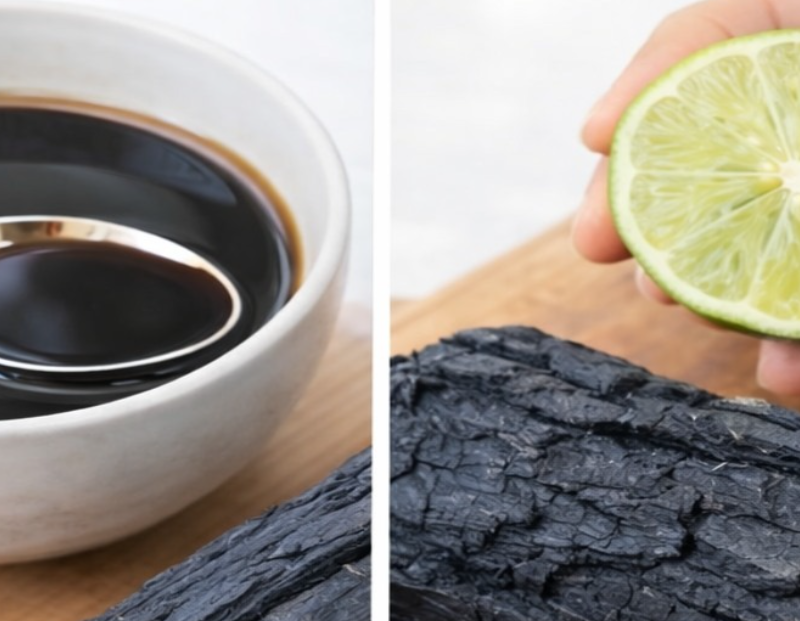
A common homemade mixture includes a small amount of activated charcoal powder blended into a creamy base such as conditioner, hair mask, or aloe gel. Some people add a few drops of oil to make it feel smoother and less drying.
The creamy base is important because charcoal on its own is too powdery and difficult to distribute evenly. The goal is to create a paste that can be applied without excessive dripping.
🖐️ Application Method
Hair is usually slightly damp or freshly washed. The mixture is spread over visible gray sections or through the full head, depending on the person’s goal. Gloves are often used because charcoal can stain hands and nails temporarily. The product is left on for several minutes, then rinsed thoroughly.
This sounds manageable, but even application is harder than it looks, especially on the back of the head, around the hairline, and at the crown where gray can be most noticeable.
🚿 Rinse and Styling Stage
After rinsing, users typically blow-dry or style their hair before judging the result. This is another point where perception changes dramatically. Styled hair nearly always looks more polished than unstylish hair, which can make the “after” result seem better than the ingredient alone deserves credit for.
👀 What You Should Realistically Expect If You Try It
If you decide to test charcoal on your hair despite the limitations, keep expectations grounded.
You might notice a fresh, clarified scalp feeling. You might notice your hair looking slightly more toned down for a short period. You might also notice no meaningful change at all. Or you may notice that some strands look darker while others remain clearly gray, leading to an uneven result.
What you should not expect is a consistent, salon-like shift from gray to rich natural black.
That expectation is where disappointment begins.
At best, charcoal may create a faint temporary shadowing effect on some strands. At worst, it can leave hair feeling dry, looking dusty, or requiring extra washing to remove residue fully. Readers who are hoping for a soft, believable, naturally dark finish are often better served by options designed for coloring or blending rather than cleansing powders repurposed through social media creativity.
🌿 Better Natural-Looking Alternatives for Gray Hair
Once you let go of the fantasy that charcoal will truly turn gray hair black, better options become much easier to see.
🍃 Henna and Indigo for Botanical Color Deposit
For people interested in plant-based color, henna and indigo remain some of the most established natural options. They require patience, careful preparation, and realistic expectations, but they have a genuine history of depositing color onto the hair shaft. This makes them fundamentally different from charcoal. They are not miracle cures, but they are purposeful coloring agents.
For dark-haired readers who want a deeper tone, these botanical methods are usually far more sensible than hoping a cleansing ingredient will double as a dye.
☕ Coffee and Tea Rinses for a Subtle Boost
If your goal is not total gray coverage but a softer, richer overall appearance, coffee or black tea rinses can sometimes offer a gentle tonal enhancement. These are modest, temporary, and best understood as appearance boosters rather than true color change. Still, they align better with the goal than charcoal because they are at least being used for tinting logic.
🖍️ Root Touch-Up Products and Color Blending
Many people resist these because they sound less romantic than a kitchen remedy. But practical solutions often work best. Temporary root powders, mascaras, sprays, or color-depositing conditioners are designed to sit on the hair in a way that looks more controlled and believable than a charcoal paste. If convenience is your main concern, these options are worth considering.
✨ Gloss, Shine, and Texture Management
Sometimes the smartest strategy is not to hide every gray strand, but to improve the overall look of the hair so the contrast feels softer. Dry, rough, puffy hair makes grays stand out more. Smooth, hydrated, well-conditioned hair often looks richer, darker, and healthier as a whole. Leave-in conditioners, nourishing masks, and gentle oils can make a noticeable difference without pretending to repigment anything.
🕒 A Smarter Daily Routine for Healthier-Looking Gray-Prone Hair
A great hair routine is rarely dramatic. It is repetitive, thoughtful, and tailored to what your hair actually needs.
Start with gentle cleansing rather than over-washing. If your scalp gets oily or you use many products, clarify occasionally instead of scrubbing aggressively every day. Use conditioner consistently, especially if gray strands feel coarse or dry. Introduce a weekly hair mask if your lengths look dull. Reduce excessive heat where possible, or at least protect the hair before styling. Brush gently. Sleep on smoother fabrics if friction is an issue. Hydrate the hair without weighing it down.
None of this will make gray hair vanish, but it will make your entire head of hair look better. And that matters more than many people realize. Beautiful hair is not always about erasing every sign of age. Often it is about softness, shine, movement, and confidence.
🌟 Additional Benefits of Focusing on Hair Health Instead of Viral Fixes
When you stop chasing instant tricks and start building a stronger routine, several things often improve at once.
Your hair may become easier to style. The texture difference between gray and pigmented strands may feel less frustrating. Your scalp may feel more balanced. You may rely less on constant experimentation. You may spend less money on random internet products. And perhaps most importantly, you may feel less disappointed because you are no longer measuring your hair against unrealistic social-media outcomes.
There is something quietly powerful about replacing beauty panic with beauty strategy.
That shift alone can transform how you feel every time you look in the mirror.
💡 Lifestyle Habits That Support Better Hair Overall
Hair care is not only what you put on your strands. It is also how you treat your body and your routine.
Steady sleep, lower day-to-day stress, balanced meals, hydration, and a calmer styling routine all support the overall appearance of hair. No lifestyle habit can guarantee that gray hair will reverse, but a neglected lifestyle can absolutely make hair look duller, rougher, and more fragile. When readers notice that their hair feels “older,” they are sometimes responding not just to gray color but to dryness, breakage, or poor manageability.
That is why it helps to zoom out. Ask not only “How do I make gray black again?” but also “How do I make my hair look and feel its best now?”
That question opens better doors.
🚫 Common Mistakes People Make with the Charcoal Hair Trend
❌ Expecting a Miracle from a Single Application
The biggest mistake is psychological. People see a bold claim and expect transformation in one session. When that does not happen, they either keep piling on more product or feel deeply disappointed. Both outcomes come from unrealistic expectations, not from thoughtful hair care.
❌ Using Too Much Charcoal
More powder does not necessarily mean more darkening. It can simply mean more mess, more dryness, and more residue clinging where you do not want it.
❌ Ignoring the Difference Between Color and Coating
A coated strand can look darker briefly, but that says nothing about the next wash or the next week. Confusing those two things keeps the myth alive.
❌ Applying It to Already Dry or Fragile Hair
If your hair is brittle, highly processed, or prone to dryness, adding a powder-heavy treatment without proper conditioning can make the texture feel worse. Then even if color appears slightly deeper, the hair may look less healthy.
❌ Believing Every Before-and-After Without Looking Closely
Different light, different styling, different camera exposure, and selective framing can completely change what hair looks like on screen. Visual proof online is often less solid than it appears.
⚠️ Safety and Precautions
Even though charcoal is often described casually in beauty content, it is still wise to be careful.
Use only cosmetic-grade or appropriate beauty-safe products for hair experiments. Avoid inhaling loose powder while mixing. Protect clothing and surfaces because black powders can be messy. Patch test any new mixture before using it widely, especially if you have a sensitive scalp. Be gentle when rinsing, and follow with conditioning if your hair feels dry. Do not scrub the scalp harshly in an effort to “make it work better.” And if your scalp is irritated, flaky, inflamed, or recovering from another treatment, it is best to avoid experimentation until things are calm again.
A natural ingredient still deserves respect. Natural does not mean foolproof.
❓ Frequently Asked Questions About Gray to Black Hair with Natural Charcoal
1. Can natural charcoal permanently turn gray hair black?
No. Charcoal does not permanently restore the natural pigment of gray hair. At most, it may create a temporary darkened appearance on the surface of some strands.
2. Why do online videos make the results look so dramatic?
Because visual presentation matters. Lighting, styling, product buildup, camera filters, and wet-versus-dry hair can all exaggerate results. A polished “after” look is not the same thing as proof of repigmentation.
3. Is charcoal at least good for the scalp?
In some formulations, charcoal can contribute to a clarifying or oil-absorbing feel, which some people enjoy. That does not mean it is necessary for everyone, and it does not mean it darkens hair in a reliable way.
4. Will charcoal work better on certain hair types?
It may show a slightly stronger temporary surface effect on some porous or textured hair types, but results are still inconsistent. Even when it appears to darken hair, the look is usually short-lived and uneven.
5. What natural option makes more sense than charcoal?
If your goal is actual color deposit, plant-based approaches such as henna and indigo are much more credible. If your goal is softer blending, temporary root products or color-depositing conditioners are often more practical.
6. Can charcoal damage hair?
Used gently and occasionally in a well-formulated product, it may not cause problems for many people. But overuse, poor mixing, or applying it to already dry hair can leave strands feeling rough or dull.
7. Is gray hair reversible naturally?
This is a much bigger scientific question than social media suggests. Some aspects of hair pigmentation are complex and tied to biology at the follicle level. There is no simple evidence-backed home charcoal remedy that reverses graying.
8. Should I skip the trend entirely?
If you are curious, you can test it with realistic expectations and proper care. But it is better viewed as a temporary appearance experiment than as a real answer to gray hair.
🏁 Final Verdict: Viral Hack or Real Solution?
The idea of gray to black hair with natural charcoal is easy to love because it tells a story people want to hear. It says that something simple, affordable, natural, and dramatic might undo one of the most visible signs of aging. It wraps hope in a bowl of black powder and a short video clip. It offers control in a world where beauty routines often feel expensive and exhausting.
But once you slow down and look carefully, the reality becomes much clearer.
Charcoal is not a proven way to restore pigment to gray hair. It does not switch your follicles back into darker production mode. It does not truly reverse the graying process. What it may do is briefly sit on the hair, change how light reflects, contribute to a temporary darker cast, or make freshly styled hair look richer than before. Those effects can be visually interesting. They can even be useful to some people in a pinch. But they are not the miracle the trend implies.
And that truth is not disappointing unless you expected magic.
In fact, it can be freeing.
Because once you stop asking charcoal to do a job it was never designed to do, you can focus on what actually helps: better scalp care, better conditioning, more realistic color options, more thoughtful routines, and a more balanced relationship with gray hair itself. You can choose whether to cover it, blend it, soften it, celebrate it, or experiment with it on your own terms, not according to the exaggerations of a trending reel.
The real beauty win is not falling for every dramatic promise.
It is learning the difference between appearance and evidence, between hype and hair care, between what looks exciting for ten seconds online and what truly serves you over time.
So is the charcoal hack a total fantasy? Not exactly. It may create a temporary visual effect for some users.
Is it a real gray-to-black solution?
No.
And sometimes the best beauty advice is simply that honest.