🖤 Gray to Black Hair with Natural Charcoal: The Viral Hack – Reality Check
✨ The Trend That Sounds Too Good to Ignore
One viral video is all it takes.
A woman with visible gray strands mixes a spoonful of black powder into a bowl, smooths it through her hair, rinses, styles, and suddenly the camera reveals what looks like a dramatic transformation. Gray appears darker. The hair seems shinier. The comments explode. People ask for measurements, timing, and brand names. Others swear they tried it and loved it. A few say it changed everything.
That is how the idea of gray to black hair with natural charcoal spread so quickly.
It taps into something many readers instantly understand: the desire for a simple, inexpensive, natural-looking way to deal with gray hair without relying on harsh dyes or salon appointments. It promises ease. It promises mystery. And most of all, it promises hope. A spoonful of something “natural” that might bring back the darker hair color you miss? That kind of claim travels fast.
But social media often compresses complicated beauty topics into dramatic before-and-after moments. It rarely pauses to explain what is really happening on the hair shaft, on the scalp, or inside the follicle. It does not always distinguish between a temporary visual effect and a true biological change. And when people are emotional about aging, appearance, confidence, or convenience, it becomes even easier for a trend to feel true before it has been examined carefully.
That is why this article matters.
If you have been curious about the gray to black hair with natural charcoal hack, this is your full reality check. We are going beyond the dramatic clips and looking at what charcoal is, why gray hair happens, why this trend went viral, what charcoal can and cannot do, what traditional beauty practices have used instead, and what a more realistic natural hair care approach actually looks like.
Because sometimes the most helpful beauty advice is not the most exciting advice. It is the honest advice that saves you money, effort, and disappointment.
🧠 What “Gray Hair” Really Means
🧬 The Story Begins at the Hair Follicle
To understand whether charcoal can turn gray hair black, you first need to understand what gray hair actually is.
Hair color comes from pigment, mainly melanin, which is produced by specialized cells associated with hair follicles. These cells help determine whether your hair appears black, brown, blonde, red, or somewhere in between. The darker your natural hair, the more concentrated certain pigments tend to be. Over time, however, that pigment production can slow down or become irregular. When less pigment gets incorporated into the growing hair strand, the hair begins to appear gray, silver, or white.
That change does not begin on the surface of the hair. It begins deeper, where the strand is formed.
This is the first major reason the charcoal claim deserves skepticism. A substance placed on top of existing hair is not automatically changing what is happening inside the follicle. Surface appearance and biological pigmentation are not the same thing.
⏳ Why Hair Turns Gray Over Time
Gray hair is often associated with aging, but the timing varies widely from person to person. Some notice their first silver strands in their twenties. Others keep their natural color much longer. That variation is influenced by several factors, including genetics, lifestyle, environmental stressors, and overall hair and scalp condition.
In many cases, graying is simply part of the body’s normal timeline. It is not always a sign that something is wrong. It can happen gradually, beginning at the temples or crown, then spreading over the years. Some people experience scattered gray hairs mixed into darker hair, while others develop broad silver sections quite quickly.
Because the process feels personal and visible, it is no surprise that people are drawn to solutions that promise control. A simple DIY trick feels empowering. It feels like something you can do at home tonight instead of waiting for an appointment or committing to a permanent color routine.
💭 Why This Topic Is So Emotional
Hair is never just hair.
It is identity, confidence, presentation, memory, and sometimes culture. For some people, gray hair feels elegant and freeing. For others, it feels sudden, aging, or out of sync with how they see themselves. That emotional layer is exactly why trends like gray to black hair with natural charcoal gain momentum. They promise more than darker color. They suggest turning back time, reclaiming control, and doing it naturally.
That emotional appeal is real. But emotional appeal is not evidence.
📜 Where the Natural Charcoal Idea Came From
🌿 The Rise of DIY Beauty Remedies
For years, beauty culture has cycled between two strong desires: high-performance products and natural alternatives. Many readers want the benefits of modern beauty routines without ingredients they consider harsh, expensive, overly processed, or difficult to understand. That interest created fertile ground for home remedies made with kitchen ingredients, herbs, oils, powders, and plant-based colorants.
Charcoal entered that conversation through skincare and cleansing trends. It became known as a detox-friendly, oil-absorbing, deep-cleaning ingredient. Face masks featured it. Soaps featured it. Toothpaste featured it. Cleansers and shampoos featured it. The black powder itself looked dramatic and memorable, which made it perfect for visual platforms.
From there, it was almost inevitable that someone would ask: if charcoal is black, could it make hair blacker too?
That leap—from cleansing ingredient to hair-darkening shortcut—is simple enough to sound believable, even though the underlying logic is weak.
📱 Why the Internet Loved It Instantly
The charcoal hack has every quality that social platforms reward.
It is highly visual. It is easy to film. It uses a strong contrast color. It involves transformation. It sounds “natural.” It looks affordable. It feels like insider knowledge. And because gray hair is common, the audience is enormous.
A person scrolling late at night sees dark powder, glossy hair, glowing comments, and a bold promise. They do not see lighting changes, editing choices, hair styling products, selective framing, or the fact that temporary staining can be mistaken for true color change.
That is how a beauty hack becomes a belief.
🔥 Why People Are Talking About Gray to Black Hair with Natural Charcoal Today
The popularity of this trend is not random. It reflects broader changes in how people think about beauty and aging.
Many readers want lower-maintenance beauty routines. Many are reducing salon visits or spacing them out. Many are looking for alternatives to frequent permanent dye use. Many want options that seem gentle, simple, or plant-inspired. And many are skeptical of products that make bold claims while listing long unfamiliar ingredient panels.
At the same time, gray hair itself has become a more visible conversation topic than ever before. Some are embracing it proudly. Others want softer blending solutions rather than full coverage. Others still are searching for ways to delay, disguise, or reverse it. Into that atmosphere comes a viral claim that sounds almost ideal: charcoal is natural, dark, cleansing, easy to mix, and available almost everywhere.
The timing makes sense.
But popularity is not proof, and visual drama is not science. That is why it is important to ask not whether people are talking about it, but whether there is a believable mechanism behind it.
🧪 What Natural Charcoal Actually Is
⚫ Understanding Charcoal Beyond the Hype
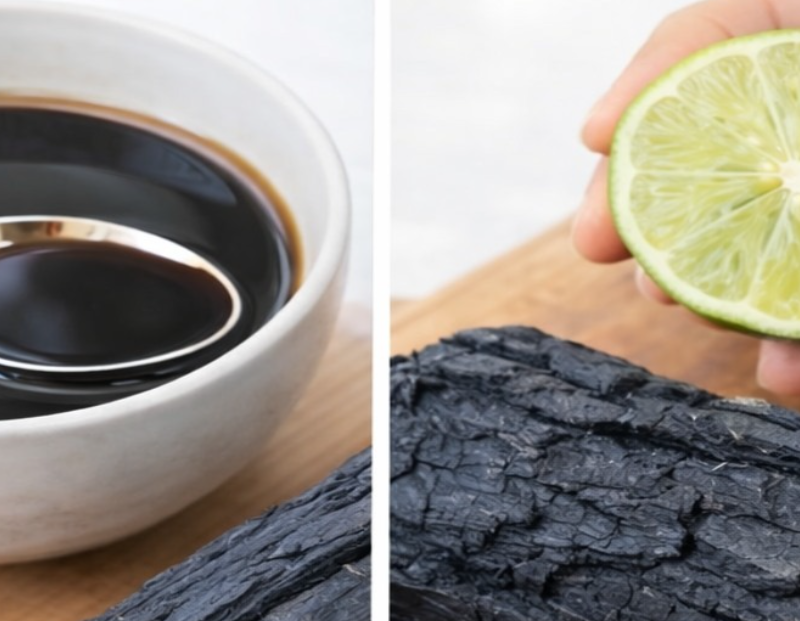
When people say “natural charcoal” in beauty discussions, they are often referring to activated charcoal or finely processed charcoal derived from materials such as coconut shells, wood, bamboo, or other carbon-rich sources. It is typically heated and treated in a way that increases its porous structure, making it useful for adsorption, which is why it is often associated with cleansing and impurity removal in beauty marketing.
That deep black color makes it visually powerful. It also makes it easy to imagine that it might darken whatever it touches. But appearance alone does not tell you how well it binds to hair, how evenly it deposits, how long it stays, whether it penetrates, or whether it changes hair pigment in any meaningful way.
Those are separate questions.
🧴 Why Charcoal Became a Beauty Ingredient
Charcoal became trendy because it fits a popular beauty story: pull out impurities, refresh the scalp, absorb excess oil, and leave everything feeling cleaner. In shampoos and scalp scrubs, that positioning made sense from a marketing perspective. It offered a fresh angle for people dealing with heavy product buildup or oily roots.
Once an ingredient earns a reputation for cleansing and transformation in one category, beauty culture often expands its use into others. Some of those expansions are useful. Others are more imaginative than practical. The leap to “this can turn gray hair black” belongs firmly in the second category unless a product is specifically formulated as a color-depositing treatment.
🔍 The Big Question: Can Charcoal Really Turn Gray Hair Black?
❌ The Honest Answer
If by “turn gray hair black” you mean restore the hair’s natural pigment permanently, then no, charcoal does not do that.
This is the most important takeaway in the entire article.
Charcoal does not restart melanin production in the follicle. It does not biologically reverse the graying process. It does not transform a non-pigmented strand back into a naturally pigmented strand from the inside out.
What it may do, depending on the formula, hair texture, porosity, lighting, and how much is used, is leave behind a temporary dark cast or surface staining effect. That is very different from true repigmentation.
🖤 Temporary Coating vs. Permanent Change
This is where many viral beauty claims become confusing. A temporary visual shift can be real without proving the larger claim.
For example, if a black powder or dark paste clings lightly to the outer surface of hair, especially porous or rough-textured hair, the strand may appear darker until washed thoroughly. If the person styles their hair after application, adds oil or shine serum, films under softer light, or records the “after” result on smoother, freshly blow-dried hair, the contrast can be even more dramatic.
But that is not the same thing as a true color reversal.
It is closer to cosmetic camouflage.
That does not necessarily make it useless. It simply means it should be described honestly.
📸 Why Before-and-After Clips Can Mislead
Most viewers underestimate how much perception changes with lighting, angle, moisture level, hairstyle, and editing. Gray strands look more visible in harsh overhead light. Dark hair looks richer when smoothed and photographed in warm indoor light. Hair that is freshly styled reflects light differently than hair that is frizzy, dry, or uncombed.
Add a black ingredient to the ritual and the mind expects darkness as the result. That expectation influences perception too.
So when people say charcoal “worked,” they may be describing one of several things: a temporary deposit, reduced contrast between gray and dark strands, smoother styling, darker-looking roots because of dampness or product, or simply a more polished final appearance.
Those outcomes are not imaginary. But they are not evidence that charcoal reverses gray hair.
🌟 What Charcoal Might Actually Do for Hair
It helps to separate fantasy from function. While charcoal is not a true gray-to-black solution, it may still have a place in some beauty routines when used carefully.
🧼 It Can Support a Clean-Scalp Feeling
Some people enjoy charcoal-based shampoos or scalp cleansers because they feel clarifying. If you use many styling products, dry shampoo, heavy serums, or oil treatments, a charcoal-containing cleanser may leave the scalp feeling refreshed.
That sensation of deep cleansing can make hair feel lighter and more manageable, which can improve overall appearance even if color remains unchanged.
✨ It May Enhance the Look of Hair Temporarily
Anything that improves shine, smoothness, or texture can make hair look healthier and more uniform. When hair appears glossier and less frizzy, gray strands may stand out less. This can create the impression that the hair is darker overall, even without meaningful pigment change.
In other words, some of the appeal may come from better styling results rather than color alteration.
⚠️ It May Leave a Mild Surface Tint on Some Hair Types
This is the piece that keeps the trend alive. On some hair textures, especially lighter or more porous strands, charcoal may cling enough to create a brief darkened effect. But the result is unlikely to be even, reliable, or long-lasting. It may also transfer, rinse unevenly, or create dullness rather than beautiful color.
That is why charcoal is better understood as an unreliable surface trick than a real natural hair-color strategy.
🌍 Traditional Hair-Darkening Practices from Different Cultures
Long before viral beauty hacks, many cultures developed plant-based and natural-looking ways to deepen hair tone, add richness, or blend grays more subtly. These practices make far more sense than assuming charcoal can restore pigment.
🌿 Henna and Indigo Traditions
In several regions, especially across parts of South Asia, North Africa, and the Middle East, botanical powders such as henna and indigo have long been used in beauty rituals. Henna is known for giving warm reddish or coppery tones, while indigo has been used in combination with henna to move color toward brown or black. These powders are not “reversing” gray hair in a biological sense, but they are genuinely depositing plant-based color in a more established and intentional way.
This distinction matters. A plant dye is meant to color hair. Charcoal, by contrast, is not traditionally celebrated as a dependable hair-darkening dye.
☕ Tea, Coffee, and Botanical Rinses
Many traditional beauty routines also include dark rinses made with black tea, coffee, or herbs. These can sometimes deepen tone slightly or enhance richness, especially on already dark hair. Results tend to be subtle, gradual, and temporary, but the logic is still stronger than the charcoal hack because the goal is tinting and conditioning rather than claiming pigment reversal.
🧴 Oils, Pastes, and Appearance-Based Hair Care
Traditional hair care often focused not only on color but on overall appearance. Oiling, smoothing, braiding, wrapping, and gentle cleansing can all make hair look richer, shinier, and darker simply because healthy hair reflects light better and frizzes less. In many cases, the “darkening” people seek is partly about visual uniformity, not just pigment.
That is an important insight. Sometimes the best path to better-looking gray-prone hair is not magical repigmentation. It is consistent scalp and strand care.
🔬 Scientific Interest and the Modern Research Conversation
The science of gray hair is genuinely fascinating, but it is far more complex than viral videos suggest.
Researchers have explored how pigment production changes over time, how follicles age, and how various internal and external factors may affect hair quality. Scientists are interested in the biology of melanocytes, oxidative stress, hair cycling, and the broader aging process. That does not mean there is a simple home remedy already sitting in your pantry waiting to reset the system.
When it comes to gray to black hair with natural charcoal, there is a major gap between social media storytelling and realistic scientific expectation. A true reversal of graying would involve restoring or preserving the body’s pigment-related processes in a targeted way. Charcoal applied topically does not have a convincing role in that mechanism.
The more realistic scientific discussion around charcoal in beauty has centered on cleansing, adsorption, and formulation texture rather than hair repigmentation. That is a completely different category of use.
💡 The 10 Biggest Reality Checks About This Viral Charcoal Hack
1. It Looks More Dramatic on Camera Than in Real Life
Many viral beauty hacks are built for the screen, not for daily life. The charcoal trick is especially camera-friendly because the ingredient is strikingly black. In person, the result may look patchy, dusty, or barely noticeable compared with the polished “after” clips online.
2. A Temporary Stain Is Not Hair Color Reversal
Even if your hair appears darker for a day, that does not mean gray hair has biologically turned black again. It means something dark may be sitting on the surface.
3. Results Are Likely to Be Uneven
Gray strands vary in texture, and hair porosity differs from person to person. Some sections may pick up more residue than others. That can create a dull or inconsistent result instead of a believable dark tone.
4. The Shine Factor Can Be Misread as Color Change
Smooth, styled, freshly treated hair often looks darker simply because it reflects light differently. That effect can be mistaken for real color change.
5. Charcoal Is Not a Designed Hair Dye
Products intended to color hair are formulated for deposit, adherence, tone control, and longevity. Charcoal is not designed with those goals in mind.
6. “Natural” Does Not Automatically Mean Effective
Beauty culture often treats “natural” as a shortcut for safe, gentle, and powerful. In reality, natural ingredients can be helpful, neutral, drying, messy, or ineffective depending on how they are used.
7. Gray Hair Needs Different Expectations
Gray strands often have a different texture and can be more resistant, wiry, or prone to dryness. Any remedy that ignores those texture changes is oversimplifying the issue.
8. People Often Want a Shortcut More Than a Solution
This trend is popular partly because it offers hope without commitment. But good hair results usually come from realistic routines, not miracle hacks.
9. Better Hair Care Can Sometimes Solve the Wrong Problem
Some users may think charcoal changed their color when what really improved was scalp freshness, product buildup, or styling. The routine helped, just not in the way they believed.
10. The Best Natural Approach Is Usually More Boring Than Viral Trends
Gentle cleansing, scalp care, strategic color blending, protective styling, and realistic plant-based color options are less flashy than charcoal videos. They are also much more credible.
🤔 Before You Try It, Here’s the Question That Really Matters
Are you actually trying to reverse gray hair?
Or are you trying to make it look softer, darker, healthier, shinier, less obvious, and easier to manage?
Those are not the same goal.
If your true goal is a healthier-looking head of hair with less noticeable gray, there are more realistic and more effective ways to get there. And that is exactly what we will explore next: how people use charcoal, what to expect if you try it anyway, how to build a smarter routine, what mistakes to avoid, and what natural-looking options make far more sense in real life.
The second half is where the hype ends and the useful advice begins.