🌸 All You Need to Know About the Secrets to Make African Violets Bloom Abundantly
African violets are among the most محبوب houseplants in the world. Their soft, velvety leaves and vibrant blooms in shades of purple, pink, white, and blue make them perfect for brightening any indoor space. Yet many people struggle with one common problem — the plant grows leaves but refuses to bloom.
If your African violet looks healthy but hasn’t flowered in months, you’re not alone. The good news is that these plants are not difficult — they are simply very specific about their conditions.
Once you understand what they need, they can bloom continuously and abundantly for most of the year.
This guide will show you the real secrets behind consistent flowering — not myths, not shortcuts, but practical methods that actually work.
🌱 Understanding African Violet Blooming
African violets (Saintpaulia) bloom based on a combination of light, nutrition, root health, and environmental stability. If even one of these factors is off, the plant may stop producing flowers.
Unlike many plants, African violets are capable of blooming almost year-round when conditions are right. That’s what makes them so special — and also why they can be frustrating when they don’t perform.
💡 The #1 Secret: Proper Light
Light is the most important factor for blooming.
☀️ Bright Indirect Light
African violets need bright, indirect light. Too little light results in lush leaves but no flowers. Too much direct sun can burn the leaves.
The best placement is near an east-facing window or a bright north-facing window.
⏱️ Light Duration
They need about 10–14 hours of light per day to bloom consistently. In darker homes, grow lights can make a huge difference.
🌿 The Soil Secret
African violets do not like heavy soil. Regular potting soil is often too dense.
🌱 Use Light, Airy Mix
A proper mix should be loose and well-draining. Many growers use a blend of peat moss, perlite, and vermiculite.
This allows roots to breathe and prevents waterlogging.
🌱 Small Pots Work Better
African violets bloom better when slightly root-bound. Large pots often delay flowering because the plant focuses on root growth instead of blooms.
💧 The Watering Trick
Watering African violets incorrectly is one of the main reasons they fail to bloom.
🚫 Avoid Wet Leaves
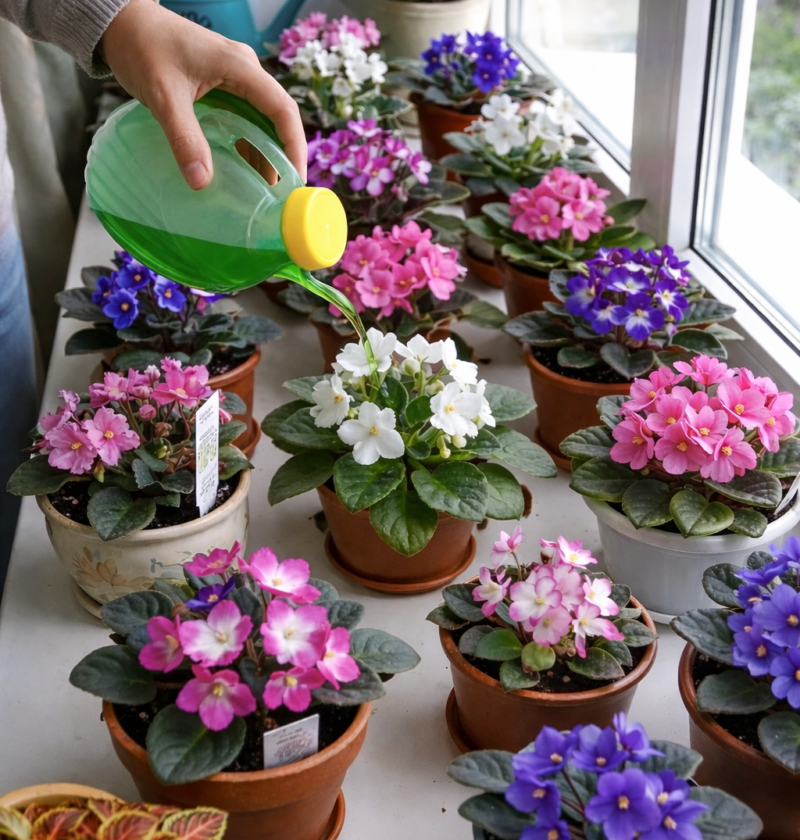
Water on leaves can cause spots and damage. Always water the soil, not the plant.
🌊 Bottom Watering Method
Place the pot in a tray of water and allow the soil to absorb moisture from below. This keeps the crown dry and encourages healthy roots.
⚖️ Consistency
Keep the soil slightly moist but never soggy. Let the top layer dry slightly between watering.
🌿 Feeding for More Blooms
African violets need regular feeding to support continuous flowering.
🌸 Balanced Fertilizer
Use a balanced, diluted fertilizer designed for flowering plants.
🌱 Gentle Natural Option
Some growers use light top-dressing like worm castings for a slow, steady nutrient supply.
Overfeeding should be avoided — too much fertilizer can damage roots.