🪵 How to Build a Breeze Block Herb Garden
Step 1: Choose a Sunny Location
Herbs typically require plenty of sunlight to produce strong flavors and healthy growth. A south-facing or west-facing wall is ideal.
Step 2: Prepare the Ground
Ensure the ground is level before stacking the blocks. If the soil is uneven, a thin base layer of gravel can help stabilize the structure.
Step 3: Stack the Breeze Blocks
Arrange the blocks in a staggered bond pattern similar to brickwork. This increases stability and distributes weight evenly.
Two courses of blocks are usually stable without mortar. If stacking three courses high, consider pinning or mortaring the blocks for safety.
Step 4: Fill the Planting Pockets
Fill each hole with multipurpose compost mixed with a small amount of grit or sand. This improves drainage and prevents compacted soil.
Step 5: Plant the Herbs
Plant one herb in each opening. This ensures that each plant has enough space to grow without competing with others.
🌿 The Ideal Herb Layout
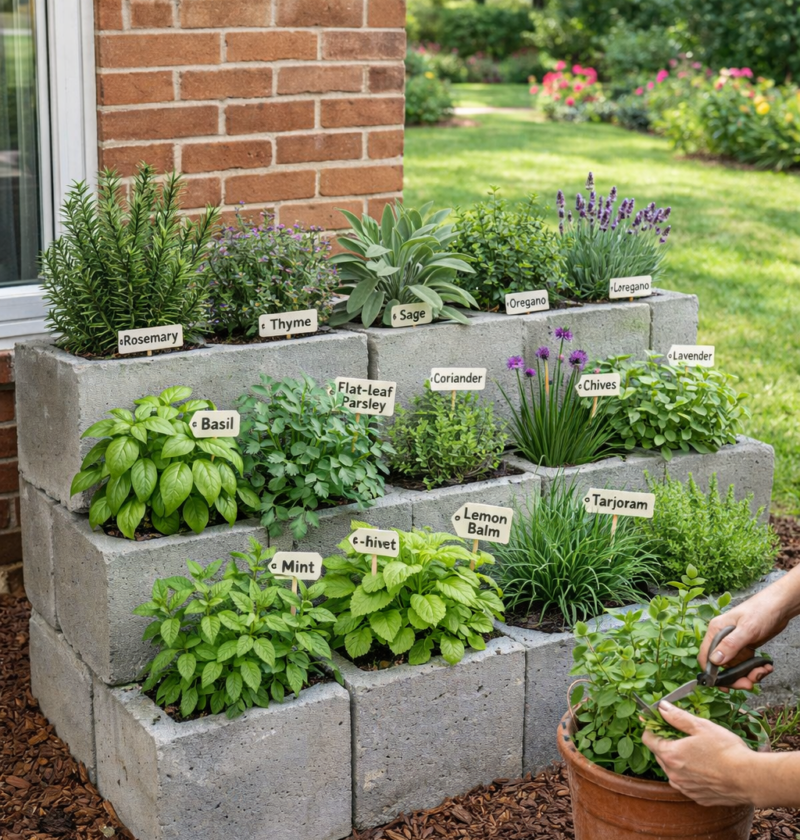
Top Row — Hot and Dry Conditions
Herbs placed in the top row receive the most sunlight and heat.
Best choices include:
• Rosemary
• Thyme
• Sage
• Oregano
• Lavender
These Mediterranean herbs thrive in well-drained soil and warm conditions.
Middle Row — Moderate Moisture
The middle section provides slightly cooler conditions.
Good herbs for this level include:
• Basil
• Parsley
• Coriander
• Chives
• Marjoram
Bottom Row — Moisture-Loving Herbs
The lower level retains slightly more moisture, making it ideal for herbs that prefer consistent hydration.
• Mint
• Lemon balm
• Tarragon
Growing these herbs in separate concrete cells prevents them from spreading aggressively.
🌱 Why This Method Is Perfect for Mint
Mint is one of the most notorious garden plants for spreading uncontrollably. Once planted in open soil, its underground runners can quickly take over entire beds.
In a breeze block garden, however, mint remains confined to a single planting pocket. It grows dense and productive without invading surrounding plants.
🌿 Final Thoughts
Sometimes the best gardening ideas come from repurposing materials that would otherwise be forgotten. Breeze blocks are a perfect example of how simple construction materials can become valuable tools for growing food.
By stacking a few blocks and filling them with compost, gardeners can create compact vertical herb gardens that grow dozens of plants in very little space.
With proper sunlight and occasional watering, this simple structure can provide fresh herbs for cooking all season long.
Twenty-four herbs in four square feet — all using materials that might already be sitting in the corner of your yard.