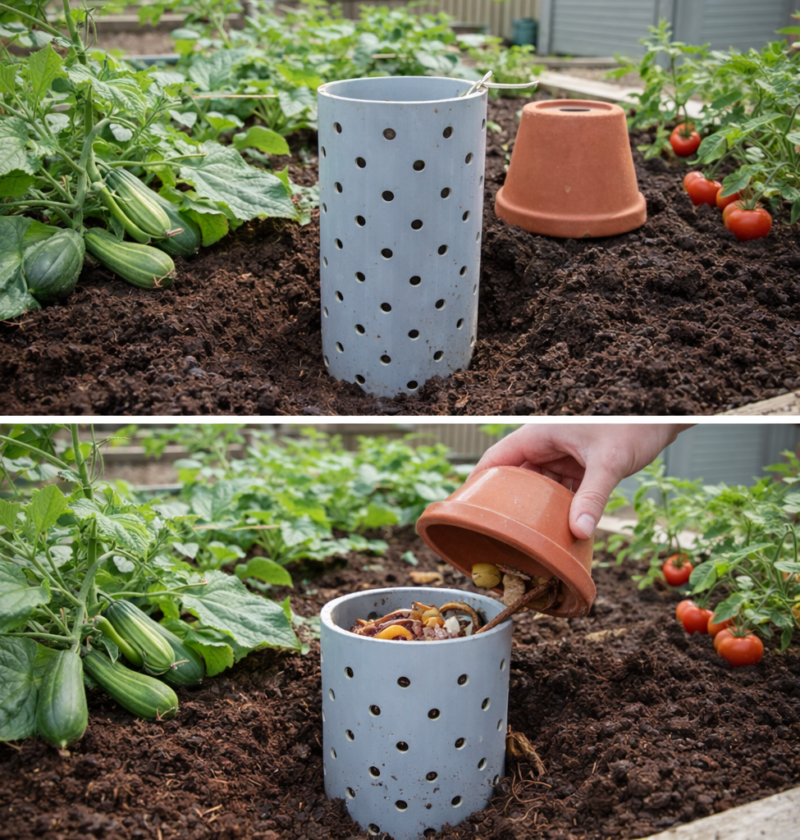
🪵 What You Need to Build a Worm Tower
Creating a worm tower requires only a few simple materials that are easy to find.
Materials
• A section of drainpipe about 30 cm in diameter and 50 cm long
• A drill with a 10 mm drill bit
• A lid or an upturned plant pot
• A garden bed or raised bed
🔧 How to Build a Worm Tower
Step 1: Drill Holes in the Pipe
Use the drill to create holes every 5 centimeters along the lower two-thirds of the pipe. These holes allow worms to enter and exit the tower.
Step 2: Dig the Hole
Dig a hole in the center of your garden bed deep enough to bury the pipe while leaving about 10 centimeters above soil level.
Step 3: Position the Pipe
Place the pipe in the hole and backfill soil around it. Firm the soil gently to keep the pipe stable.
Step 4: Add Starter Material
Add a handful of compost and a few worms from the garden to start the system.
Step 5: Cover the Top
Place a lid or upside-down pot over the opening to prevent rainwater from flooding the tower.
🍎 What to Feed the Worm Tower
Kitchen scraps are the primary food source for worms.
Good Materials
• Vegetable peelings
• Fruit cores
• Tea bags
• Coffee grounds
• Crushed eggshells
Materials to Avoid
• Large quantities of meat
• Oily foods
• Dairy products
🌱 How Much Area Can One Tower Feed?
A single worm tower can supply nutrients to a garden bed within roughly a two-meter radius. This means that a typical raised bed can be supported by two worm towers placed strategically within the soil.
As worms move through the soil carrying nutrients outward, plants benefit from continuous natural fertilization.
🌿 Final Thoughts
The worm tower is a perfect example of how simple ideas can transform gardening. By allowing worms to recycle kitchen waste underground, gardeners create a self-sustaining fertilization system that works continuously without effort.
This method eliminates the need for traditional compost piles while still returning organic matter to the soil.
With just a piece of pipe, a handful of worms, and regular kitchen scraps, a garden bed can feed itself season after season.