🌿 Additional Systems That Complete the Homestead
💧 4. Rain Barrel System
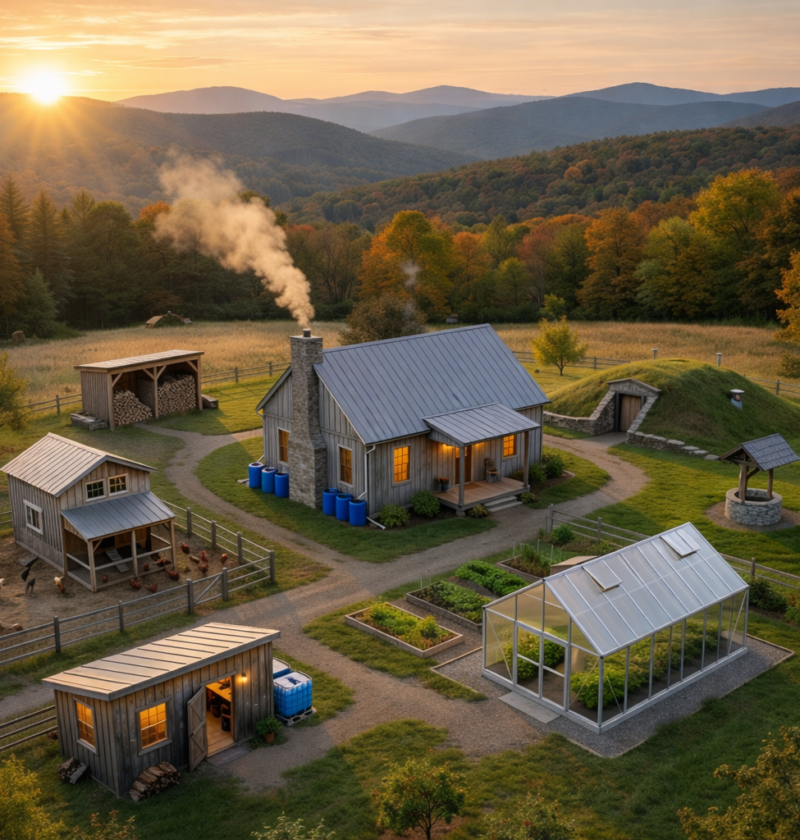
Rainwater harvesting is one of the simplest ways to increase homestead sustainability. Roof runoff can be captured using gutters and directed into barrels or underground cisterns.
Even a small roof can collect significant amounts of water. For example, one inch of rain falling on a 1,000-square-foot roof can produce roughly 600 gallons of water.
This stored water can then be used to irrigate gardens and greenhouses.
🪵 5. Woodshed
A woodshed stores firewood for heating and cooking. Properly seasoned wood must be dried for at least 12–18 months before burning efficiently.
Stacking wood under a roof allows air circulation while protecting it from rain.
A typical home may require three to five cords of wood to heat through winter depending on climate.
🥕 6. Root Cellar
A root cellar is an underground storage space designed to maintain cool temperatures throughout the year without electricity. These cellars allow homesteaders to store vegetables such as potatoes, carrots, onions, and squash for months.
Apples, canned goods, and preserved foods can also be stored safely in root cellars.
🔧 7. Workshop
A workshop provides space for repairing tools, building equipment, and maintaining homestead infrastructure. On a self-reliant property, being able to repair tools and construct simple equipment is extremely valuable.
Workshops often include woodworking tools, mechanical repair equipment, and storage for spare parts.
🚰 8. Well or Cistern
Water independence is essential for a sustainable homestead. Many properties rely on wells that draw water directly from underground aquifers.
Hand pumps can provide water even during power outages.
In areas without reliable groundwater, cisterns can store collected rainwater for household use.
🌱 How These Systems Work Together
The true strength of a homestead lies in how these elements interact. Nothing operates in isolation. Each component supports another.
Chicken manure fertilizes greenhouse plants. Rainwater irrigates gardens. Garden harvests are preserved in root cellars. Wood from nearby forests fuels heating systems.
This network of interconnected systems creates a resilient lifestyle that can adapt to changing conditions.
⚠️ Planning for Redundancy
Redundancy is a critical concept in sustainable design. Systems should include backups in case one fails. For example, a homestead might rely on both rainwater collection and a well for water security.
Multiple food sources — gardens, chickens, fruit trees — ensure that food production continues even if one crop fails.
🌿 Final Thoughts
A self-sustaining homestead is more than just a place to grow food. It represents a lifestyle built on resilience, thoughtful design, and respect for natural cycles.
By integrating greenhouses, rainwater systems, animal care, food storage, and energy sources, homesteaders create environments that can support life in a sustainable and balanced way.
With careful planning and patience, these systems can work together to produce a reliable and productive homestead for years to come.