🌿 Building a Self-Sustaining Homestead: The 8 Essential Systems for Independent Living
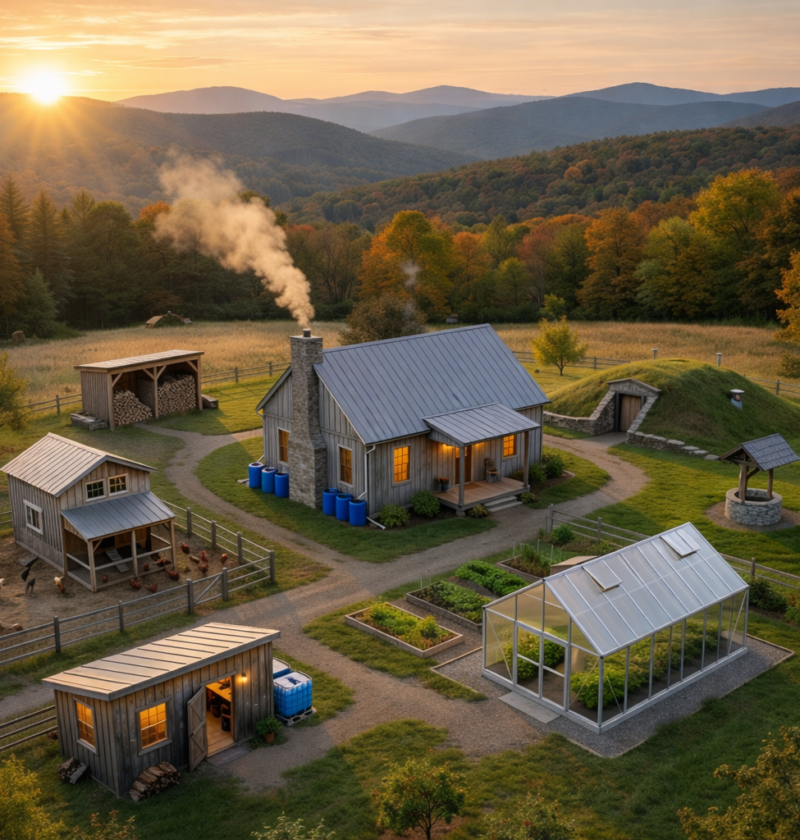
Across the world, more people are becoming interested in the idea of self-sufficient living. Rising food costs, environmental concerns, and a desire for greater independence have inspired many families to explore homesteading and sustainable lifestyles. A self-sustaining homestead is designed to operate as an integrated system where food production, water management, energy use, and daily living are closely connected.
Rather than relying entirely on outside resources, a well-designed homestead produces many of its own essentials. Vegetables, eggs, fruit, and sometimes meat are grown directly on the property. Rainwater may be collected and stored for irrigation. Energy can be produced through wood, solar power, or other renewable sources.
The key to successful homesteading is not simply growing food. The real secret lies in building systems that support one another. Waste from one system becomes a resource for another. Chickens provide eggs while also producing fertilizer for gardens. Rainwater collected from the roof irrigates crops. Garden harvests are preserved in root cellars for winter use.
When these systems are connected intelligently, a homestead becomes far more efficient and resilient.
🌱 What Is a Self-Sustaining Homestead?
A self-sustaining homestead is a property designed to provide many of the basic needs of its inhabitants. While complete independence is rarely achieved, many homesteads can significantly reduce reliance on outside supply chains.
These systems focus on producing food locally, capturing water, conserving energy, and using natural cycles to maintain soil fertility and productivity.
Over time, a well-planned homestead becomes a balanced ecosystem that supports both human life and the surrounding environment.
🌿 Why Integrated Systems Matter
One of the most important principles of sustainable homesteading is integration. Each element of the homestead should serve multiple functions and support other parts of the system.
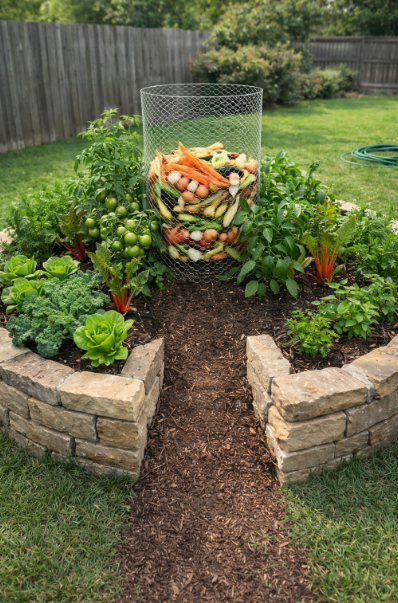
For example, chickens eat kitchen scraps and produce manure that fertilizes garden beds. Garden crops feed the household while plant residues return to compost piles.
This cycle reduces waste and increases efficiency.
🌿 The 8 Essential Elements of a Self-Sustaining Homestead
🌱 1. Greenhouse
A greenhouse allows gardeners to extend their growing season far beyond normal outdoor limits. By capturing solar heat, a greenhouse creates a protected environment where plants can grow even during cold months.
Passive solar greenhouse designs are especially efficient because they rely on sunlight and thermal mass rather than mechanical heating systems.
Seedlings started in a greenhouse can later be transplanted into outdoor garden beds once the weather warms.
🏡 2. Main House
The main house serves as the central hub of the homestead. Efficient design plays a major role in reducing energy use. Homes that face south with large windows can capture natural sunlight during winter months.
Wood stoves or masonry heaters are often used as reliable heating systems because they allow homeowners to use renewable wood fuel harvested locally.
🐓 3. Chicken Coop
Chickens are among the most valuable animals on a small homestead. A flock of six to twelve hens can provide a steady supply of eggs throughout the year.
Chickens also help recycle kitchen scraps, weeds, and garden waste while producing nutrient-rich manure that improves soil fertility.
Mobile chicken tractors can be moved across garden beds, allowing chickens to till soil and remove pests.
But these three elements are only part of a larger system that keeps a homestead running efficiently.