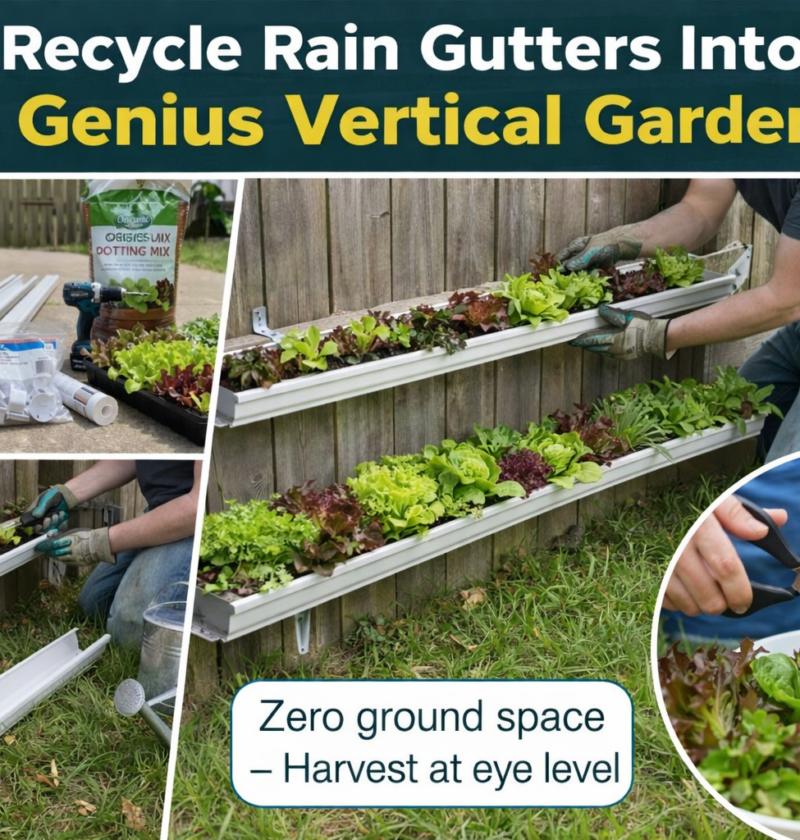
🥬 The Rain Gutter Garden Trick: Grow 40 Lettuce Plants on One Fence With Zero Ground Space
🌿 Why Vertical Gutter Gardens Produce Faster Growth
One of the surprising benefits of growing lettuce in rain gutters is how quickly the plants mature. Because the soil layer is shallow and exposed to warm air and sunlight, the growing medium heats up faster than traditional garden beds. This slightly warmer soil encourages faster root activity and quicker leaf production.
In addition, vertical placement improves airflow around plants. Better air circulation helps reduce moisture buildup on leaves, which lowers the risk of fungal diseases that sometimes affect dense lettuce plantings.
The result is a system where plants grow rapidly, remain clean, and can be harvested sooner than many traditional garden rows.
🌱 Keeping Lettuce Tender and Sweet
Lettuce flavor can change depending on how the plant grows. When lettuce becomes stressed from heat, drought, or poor nutrition, the leaves may develop a bitter taste.
In rain gutter gardens, consistent watering and feeding help prevent this stress. Because the soil volume is small, nutrients can wash out more quickly than in ground soil.
Applying a diluted liquid fertilizer every two weeks helps keep plants growing vigorously. Healthy lettuce plants produce tender, mild-flavored leaves that are perfect for salads.
🌞 Protecting Lettuce From Extreme Heat
While lettuce enjoys sunlight, extremely hot temperatures can cause plants to bolt, meaning they begin producing flowers instead of leaves.
To prevent this, some gardeners place gutter gardens where they receive morning sunlight but partial shade during the hottest afternoon hours.
Another option is planting heat-tolerant lettuce varieties that remain productive longer in warm conditions.
💧 Smart Irrigation for Vertical Gardens
Water management is one of the most important factors in vertical gardening systems.
Because gutters hold limited soil, they dry out faster than traditional garden beds. However, their design also allows water to flow efficiently from one level to the next.
A simple drip irrigation line placed along the top gutter row allows gravity to distribute water downward through the system.
This setup means a single irrigation line can water multiple rows of plants simultaneously.
🌿 Expanding the Gutter Garden System
Once gardeners see how productive a single gutter row can be, many decide to expand the system further.
Additional rows can be installed on nearby fences, balcony railings, or garden walls. Some gardeners even build freestanding frames to support multiple tiers of gutters.
This approach allows small spaces to produce large amounts of fresh vegetables.
By stacking multiple levels vertically, gardeners can create entire “salad walls” that provide fresh greens throughout the growing season.
🥬 Other Vegetables That Grow Well in Gutters
While lettuce is one of the most popular plants for gutter gardens, several other shallow-rooted crops grow equally well in this system.
- Spinach
- Arugula
- Baby kale
- Swiss chard seedlings
- Asian greens
These leafy vegetables thrive in the same shallow soil depth as lettuce and can be harvested frequently.
🌼 Companion Herbs for Vertical Salad Gardens
Mixing herbs into gutter rows not only increases productivity but also enhances flavor combinations for fresh salads.
Parsley, chives, cilantro, and compact basil varieties grow well alongside lettuce.
These herbs require similar soil depth and moisture levels, making them ideal companions for vertical salad gardens.
In addition to culinary benefits, herbs often attract beneficial insects that help maintain a balanced garden ecosystem.
🧱 Maintenance and Seasonal Care
Maintaining a rain gutter garden is relatively simple compared to traditional gardening.
Because the plants grow above ground, weeds rarely become a problem. Slugs and snails also struggle to reach the elevated plants.
Periodic cleaning of drainage holes helps ensure water continues flowing properly.
At the end of the growing season, the soil can be refreshed by mixing in compost or replacing part of the potting mix.
🌍 Why This Method Is Perfect for Small Spaces
One of the greatest advantages of rain gutter gardening is its ability to produce food in areas where traditional gardens are impossible.
Urban gardeners with limited yard space can use fences, balcony railings, or walls to grow vegetables vertically.
This transforms unused vertical surfaces into productive food-growing areas.
Even renters can build temporary systems that attach to existing structures without permanent construction.
🌱 A Fence That Feeds You
The rain gutter garden method proves that creative thinking can turn simple materials into powerful gardening systems.
Instead of growing lettuce in long ground rows, gardeners can produce dozens of plants on a single fence panel.
This approach saves space, keeps vegetables clean, and makes harvesting easier than ever.
Forty lettuce plants growing in zero ground space shows how efficient vertical gardening can be.
With just a few inexpensive materials and a sunny fence, any gardener can turn an ordinary wall into a thriving vertical salad garden.