🍓 Turn One Wooden Pallet Into a Strawberry Garden That Produces for Years
Growing your own strawberries at home is one of the most rewarding gardening experiences. There is something incredibly satisfying about harvesting fresh, sweet berries directly from plants you grew yourself. However, many people believe that growing strawberries requires large garden spaces or expensive raised beds. The truth is that you can grow a productive strawberry garden using something incredibly simple — a single wooden pallet.
Wooden pallets are widely available, inexpensive, and extremely versatile for gardening projects. With a little creativity, one pallet can be transformed into a vertical strawberry garden that produces fresh berries year after year. This clever method allows gardeners to grow more plants in less space while keeping fruits clean, organized, and easy to harvest.
Vertical pallet gardening has become increasingly popular among home gardeners, urban growers, and DIY enthusiasts. Whether you have a large backyard, a small patio, or even a balcony, this project can turn unused space into a productive mini garden.
In this guide, you will learn how to transform a simple wooden pallet into a long-lasting strawberry garden that can produce delicious fruit for many seasons.
🌱 Why Grow Strawberries in a Wooden Pallet Garden
Strawberries are one of the best plants for vertical gardening. Unlike large fruiting plants that require deep soil and wide spacing, strawberries have relatively shallow roots and compact growth habits. This makes them ideal for pallet gardens where soil space is limited.
Growing strawberries vertically also offers several advantages. First, it saves space. A pallet garden allows you to grow many plants in a small area, making it perfect for urban gardening.
Second, it improves air circulation around the plants. Better airflow helps reduce common strawberry problems such as fungal diseases and mold.
Third, harvesting becomes much easier. Instead of bending down to pick berries from ground-level plants, strawberries grow conveniently at different heights along the pallet structure.
Finally, vertical strawberry gardens are visually beautiful. When the plants begin producing flowers and bright red fruit, the pallet becomes a living wall of color and flavor.
🪵 Choosing the Right Wooden Pallet
The first step in building your pallet strawberry garden is choosing a safe and sturdy pallet. Not all pallets are suitable for gardening, so it is important to select one that is clean and untreated with harmful chemicals.
Look for pallets stamped with the letters “HT,” which means the wood was heat-treated rather than chemically treated. Avoid pallets labeled “MB,” which indicates chemical fumigation.
Inspect the pallet carefully to make sure it is strong and not broken. A good pallet should feel solid and stable because it will hold soil, water, and plants once assembled.
Sand rough edges if necessary to prevent splinters and to create a smoother surface for your garden.
🧱 Preparing the Pallet for Planting
Before adding soil and plants, the pallet must be prepared to hold the growing medium. This step ensures that soil stays in place and plants have enough support.
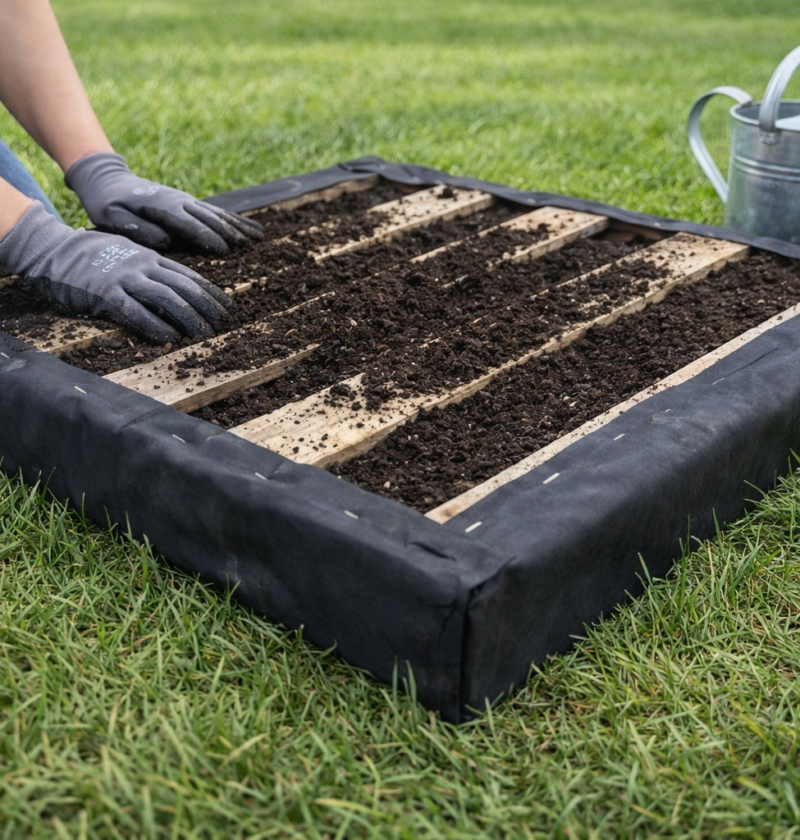
Start by attaching landscape fabric or breathable garden cloth to the back and sides of the pallet. This fabric acts as a barrier that holds soil inside while still allowing water to drain properly.
Use a staple gun or strong nails to secure the fabric firmly. Make sure all open areas at the back and sides are covered so soil will not fall out when the pallet is filled.
Once the fabric is attached, place the pallet flat on the ground while filling it with soil. This prevents the soil from shifting before plants are established.
🌿 Choosing the Best Soil for Pallet Strawberry Gardens
Strawberries thrive in light, well-draining soil rich in organic matter. Because pallet gardens have limited soil volume, choosing the right soil mix is extremely important.
A good mixture typically includes high-quality potting soil, compost, and a small amount of perlite or coconut coir. This combination creates a balance between moisture retention and drainage.
Strawberries prefer slightly acidic soil with a pH between 5.5 and 6.5. Adding compost or organic amendments can help improve soil fertility while supporting healthy plant growth.
Fill each section of the pallet carefully, pressing soil gently into corners so no large air pockets remain.
🍓 Selecting the Best Strawberry Varieties
Not all strawberry varieties behave the same way. Some produce fruit only once per season, while others continue producing throughout the year.
For pallet gardens, everbearing or day-neutral strawberry varieties are often the best choice. These plants produce multiple harvests during the growing season, allowing you to enjoy fresh berries for longer periods.
Popular varieties include Albion, Seascape, and Quinault. These types are known for reliable production and compact growth.
Choose healthy young plants or bare-root strawberry starters to begin your pallet garden.
🌱 Planting Strawberries in the Pallet
Once the soil is prepared, begin planting strawberries in each opening of the pallet structure. Insert the roots gently into the soil and press the surrounding soil firmly around them.
Make sure the crown of each plant sits just above the soil surface. Burying the crown too deeply can cause rot, while leaving roots exposed may dry them out.
Start planting from the bottom row and work upward. This prevents soil from spilling out as you add plants higher on the pallet.
After planting, water the pallet thoroughly to help settle the soil around the roots.
💧 Watering Your Vertical Strawberry Garden
Because pallet gardens have limited soil depth, they tend to dry out faster than traditional garden beds. Regular watering is essential to keep strawberry plants healthy.
Water slowly so moisture reaches all areas of the pallet. Drip irrigation systems work particularly well for vertical gardens because they provide consistent moisture without overwatering.
Adding a layer of mulch or straw around the plants can help retain moisture and keep berries clean.
🌞 Sunlight Requirements for Strawberries
Strawberries thrive in full sunlight. Ideally, your pallet garden should receive at least six to eight hours of sunlight per day.
Place the pallet in a location where plants will receive consistent light. South-facing walls, patios, or garden fences are often ideal locations.
Proper sunlight encourages strong growth, abundant flowering, and sweeter fruit.
🍓 Harvesting and Long-Term Productivity
One of the most exciting moments for gardeners is harvesting the first ripe strawberries. Depending on the variety, plants may begin producing fruit within several weeks of planting.
Regular harvesting encourages plants to continue producing berries. Remove ripe fruit promptly and check plants frequently during peak harvest season.
With proper care, a pallet strawberry garden can remain productive for several years.
Strawberry plants naturally produce runners that create new plants. These runners can be trimmed or replanted to maintain strong production.
🌿 A Small Garden with Big Rewards
Transforming a simple wooden pallet into a vertical strawberry garden demonstrates how creative gardening can turn everyday materials into productive growing systems.
This project is affordable, space-efficient, and incredibly rewarding. Whether you are an experienced gardener or a beginner exploring DIY gardening ideas, pallet strawberry gardens offer an exciting way to grow your own fresh fruit.
With proper soil, sunlight, watering, and care, one wooden pallet can become a thriving strawberry garden that continues producing sweet berries for many seasons.