🌿 The Compost Layering Method That Turns Kitchen Waste Into Super Soil
🌱 The Microbial Magic Inside a Compost Pile
When gardeners begin composting, it may appear that organic waste simply “rots” over time. In reality, composting is an incredibly complex biological process driven by billions of microorganisms. These microscopic workers are responsible for breaking down organic materials into the nutrient-rich substance we call compost.
Bacteria are usually the first organisms to begin the decomposition process. They feed on soft organic materials such as fruit scraps, vegetable peels, and fresh plant matter. As they consume these materials, they release heat and begin converting the waste into simpler compounds.
Fungi also play a crucial role in compost piles. They are especially effective at breaking down tougher materials such as wood fibers, leaves, and stems. Together with bacteria, fungi help transform organic waste into a stable, nutrient-rich soil amendment.
Other organisms such as earthworms, beetles, and beneficial insects also contribute to the composting process by physically breaking down materials into smaller particles that microbes can process more easily.
🌡️ Heat: A Sign Your Compost Is Alive
One of the most fascinating aspects of composting is the heat generated by microbial activity. When microorganisms begin breaking down organic materials, they release energy in the form of heat.
In a healthy compost pile, internal temperatures can reach between 120°F and 160°F (50°C to 70°C). This heat not only speeds up decomposition but also helps destroy weed seeds and harmful pathogens.
If your compost pile feels warm in the center, it is a strong sign that microbial activity is working effectively.
However, compost piles that become too dry or lack oxygen may stop generating heat. Turning the pile occasionally helps restore airflow and reactivate microbial activity.
🍂 Advanced Layering Techniques for Faster Compost
While basic compost layering is simple, experienced gardeners often use advanced techniques to speed up the process even further.
One technique involves shredding or chopping organic materials before adding them to the pile. Smaller pieces have more surface area, allowing microbes to break them down faster.
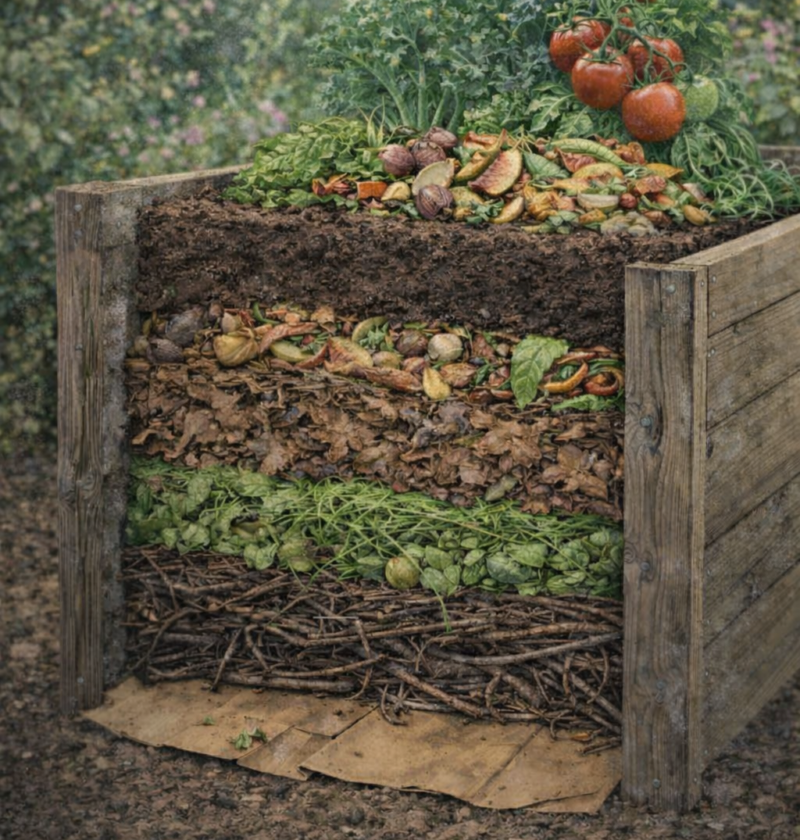
Another technique involves adding thin layers instead of thick ones. Thin alternating layers of greens and browns allow microbes to access materials more easily.
Maintaining the right moisture level is also critical. Compost should feel slightly damp, similar to a wrung-out sponge.
🌿 Adding Compost Activators
Some gardeners add natural compost activators to stimulate microbial growth. These materials may include garden soil, finished compost, or manure from herbivorous animals.
These additions introduce beneficial microbes that help accelerate decomposition.
🥬 Turning Kitchen Waste Into Nutrient Power
Kitchen waste contains many valuable nutrients that plants need to grow. Fruit and vegetable scraps contain potassium, phosphorus, and trace minerals that support plant development.
When these materials are composted properly, their nutrients become available to plants in a slow and balanced form.
Unlike synthetic fertilizers, compost releases nutrients gradually, reducing the risk of nutrient burn and improving soil health over time.
🌿 Signs Your Compost Is Ready
Finished compost looks very different from the original materials placed in the pile. Instead of recognizable food scraps and leaves, mature compost appears dark, crumbly, and earthy.
It should smell like fresh forest soil rather than rotting waste.
At this stage, the compost is ready to be added to garden beds, containers, and planting holes.
🌻 How to Use Compost in the Garden
Compost can be used in many ways to improve plant health.
Gardeners often mix compost directly into soil before planting. This improves soil structure and adds essential nutrients.
Compost can also be used as mulch around plants. A layer of compost helps retain moisture while slowly feeding plants.
Another popular technique is compost tea, a liquid fertilizer created by soaking compost in water to extract beneficial nutrients and microorganisms.
🌱 Compost and Long-Term Soil Health
Healthy soil is not just about nutrients. Soil structure, microbial life, and organic matter all play essential roles in supporting plant growth.
Regular compost use increases organic matter in soil, improving water retention and root development.
Over time, compost-rich soil becomes more fertile, easier to work with, and better able to support productive gardens.
🌍 Composting as a Sustainable Lifestyle
Beyond gardening benefits, composting represents a powerful step toward sustainable living. By recycling organic waste at home, households can significantly reduce the amount of garbage sent to landfills.
This simple practice turns everyday waste into a valuable resource while supporting environmental health.
Many communities now encourage composting as part of broader sustainability programs.
🌿 Turning Waste Into Garden Gold
The compost layering method proves that simple kitchen scraps can become one of the most valuable tools for any gardener. Instead of being thrown away, organic waste can be transformed into nutrient-rich soil that supports plant life.
With the right balance of materials, moisture, and airflow, compost piles become living ecosystems filled with beneficial microorganisms.
These microorganisms quietly convert everyday waste into powerful super soil that helps gardens thrive.
For gardeners seeking healthier plants, richer soil, and more sustainable practices, compost layering remains one of the most effective and rewarding techniques available.