🌿 The Compost Layering Method That Turns Kitchen Waste Into Super Soil
Every day, households around the world throw away large amounts of kitchen scraps. Fruit peels, vegetable trimmings, coffee grounds, and eggshells often end up in trash bins without a second thought. Yet these simple organic materials hold incredible potential for gardeners.
Instead of sending these materials to landfills, they can be transformed into one of the most valuable resources for gardening: compost. Compost is often called “black gold” by experienced gardeners because of its ability to enrich soil, improve plant health, and dramatically increase garden productivity.
The compost layering method is one of the most efficient ways to turn kitchen waste into nutrient-rich super soil. By carefully arranging layers of organic materials, gardeners create the perfect environment for beneficial microorganisms that break down waste into fertile compost.
This method not only reduces household waste but also improves soil health naturally, making gardens more productive and sustainable.
🌱 Why Composting Is One of the Most Powerful Gardening Techniques
Soil health is the foundation of successful gardening. Plants depend on healthy soil to absorb nutrients, water, and oxygen through their roots.
Unfortunately, many garden soils gradually lose fertility over time due to erosion, nutrient depletion, and repeated planting cycles.
Compost helps restore this lost fertility. When added to soil, compost improves its structure, increases water retention, and provides essential nutrients that plants need to grow.
Unlike synthetic fertilizers that provide nutrients temporarily, compost continues improving soil health for years.
🌍 Composting Also Helps the Environment
Organic waste in landfills produces methane gas as it decomposes without oxygen. Methane is a powerful greenhouse gas that contributes to climate change.
By composting kitchen scraps at home, gardeners reduce landfill waste and create a more environmentally friendly system for recycling organic materials.
🍂 Understanding the Layering Method
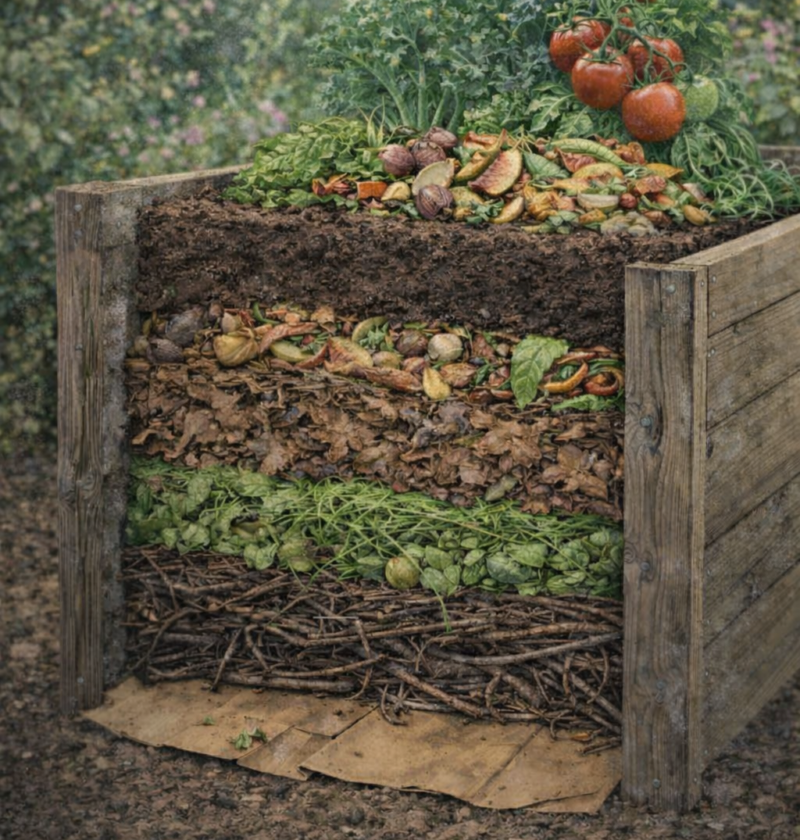
The compost layering method works by alternating two main categories of organic materials: carbon-rich materials and nitrogen-rich materials.
Carbon materials, often called “browns,” include dry leaves, cardboard, straw, paper, and small branches. These materials provide energy for microorganisms.
Nitrogen materials, called “greens,” include fruit scraps, vegetable peels, coffee grounds, and fresh plant clippings.
When these materials are layered correctly, microorganisms begin breaking them down quickly, producing rich compost.
⚖️ The Perfect Balance: Browns vs Greens
Maintaining the right balance between carbon and nitrogen is essential for successful composting.
Too many green materials can make compost piles wet and smelly, while too many brown materials slow decomposition.
Most compost experts recommend roughly three parts brown materials to one part green materials.
This balance allows microbes to work efficiently without producing unpleasant odors.
🍎 Kitchen Scraps That Make Excellent Compost
- Fruit peels
- Vegetable scraps
- Coffee grounds
- Tea bags
- Eggshells
- Soft plant stems
- Herb trimmings
These materials break down quickly and provide valuable nutrients to the compost pile.
⚠️ Materials You Should Avoid Adding
Not all kitchen waste should go into compost. Certain materials may attract pests or cause unpleasant smells.
- Meat and fish
- Dairy products
- Oily foods
- Diseased plants
- Pet waste
Avoiding these materials keeps compost piles healthy and balanced.
🧱 Step-by-Step Compost Layering
The layering process begins with a base layer of coarse materials such as small branches or straw. This layer helps air circulate through the pile.
The second layer should contain nitrogen-rich kitchen scraps.
Next, add a layer of dry leaves or shredded cardboard.
Continue alternating these layers until the compost bin or pile reaches the desired height.
Each layer supports the growth of beneficial microbes that gradually break down organic waste.
💧 Moisture and Airflow
Compost piles should remain slightly moist but not overly wet. Microorganisms require moisture to function, but too much water can remove oxygen from the pile.
Turning the compost pile occasionally allows fresh oxygen to reach microbes and speeds up decomposition.
A healthy compost pile often becomes warm as microorganisms generate heat while breaking down organic matter.
🌱 Signs Your Compost Is Working
A successful compost pile usually produces several noticeable signs:
- Warm temperature inside the pile
- Gradual shrinking of organic materials
- Darkening color of decomposing matter
- Earthy, soil-like smell
These signs indicate that beneficial microorganisms are actively converting waste into compost.
🌿 The Beginning of Super Soil
Within a few months, the layered materials gradually transform into rich, dark compost filled with nutrients.
This compost becomes a powerful soil amendment that can dramatically improve plant growth.
Gardeners who regularly compost often notice stronger plants, healthier soil, and bigger harvests.
By using the compost layering method, even simple kitchen scraps can become one of the most valuable resources for your garden.