🌱 Stop Throwing Away Free Food: How to Turn Kitchen Scraps Into an Infinite Indoor Garden
🌿 More Plants You Can Regrow From Kitchen Scraps
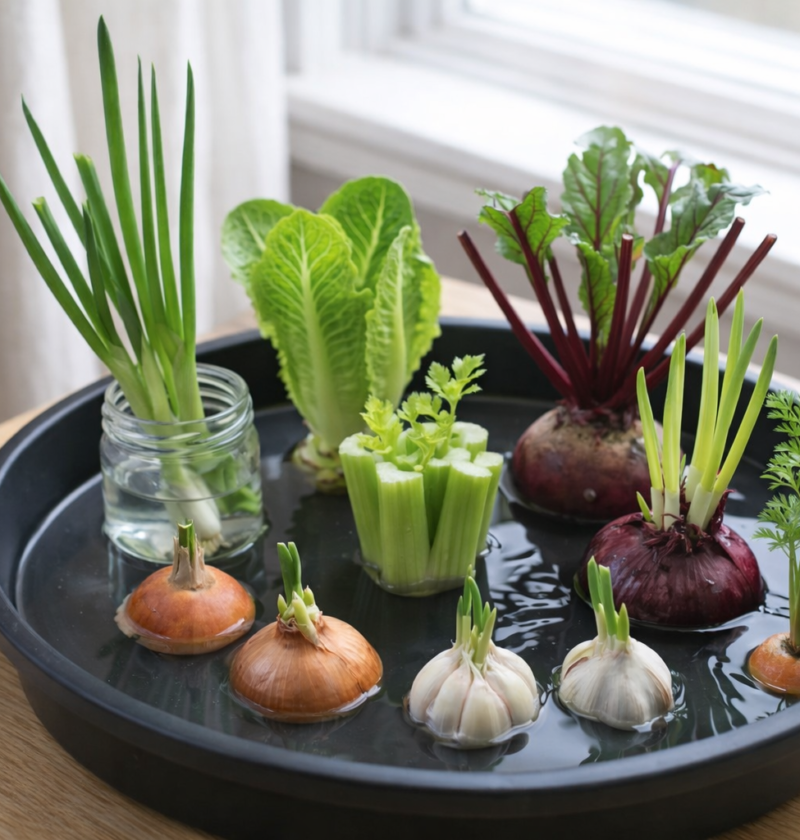
Once people discover that vegetables can regrow from scraps, the possibilities suddenly expand. Many common kitchen ingredients contain living growth points that can produce new plants with very little effort.
Instead of throwing these pieces away, you can give them a second life by placing them in water or soil. Over time, these scraps begin developing roots and shoots, creating a steady supply of fresh greens and herbs inside your home.
🧄 Garlic
Garlic cloves are actually small bulbs that can easily grow into new plants. If a garlic clove begins sprouting in your kitchen, do not throw it away.
Place the clove in a small container with soil, root side down. Within a few days, green shoots will begin emerging from the top.
These shoots can be harvested as garlic greens, which have a mild garlic flavor perfect for salads and cooking.
🥔 Potatoes
Potatoes often develop small sprouts known as “eyes.” Each of these eyes can grow into an entirely new potato plant.
Cut the potato into pieces, making sure each piece contains at least one sprouting eye. Allow the cut pieces to dry for a day before planting them in soil.
With enough sunlight and space, potato plants can produce multiple new potatoes underground.
🌿 Basil
Basil stems can easily regrow roots in water. Simply place a healthy basil cutting into a glass of water near a sunny window.
Within about one week, roots will begin forming along the stem. Once the roots become strong, the cutting can be transferred into soil.
This allows gardeners to multiply basil plants endlessly from a single original plant.
💧 Caring for Your Indoor Scrap Garden
Although scrap gardening is simple, proper care helps plants grow stronger and healthier.
Water should be changed regularly for plants growing in jars. Fresh water prevents bacteria from building up and keeps roots healthy.
Plants growing in soil should be watered lightly but consistently. Overwatering can damage young roots.
Good airflow and sunlight are also essential for indoor plant health.
🌞 Light: The Most Important Growth Factor
Most vegetables require several hours of sunlight each day. Without sufficient light, plants may become weak or grow slowly.
A bright kitchen window that receives morning or afternoon sunlight is often the perfect location for an indoor garden.
If natural sunlight is limited, small LED grow lights can help provide the necessary light for plant growth.
🌱 Expanding Your Infinite Garden
Once your first few scraps begin growing successfully, expanding the garden becomes easy.
Each time you cook vegetables, save the parts that can regrow. Over time, these small plants multiply and fill your kitchen with fresh greenery.
Some gardeners eventually move these plants outdoors into larger containers or garden beds.
This creates a continuous cycle where food scraps turn into new plants, which produce more food.
🌿 Common Mistakes to Avoid
While scrap gardening is simple, a few common mistakes can slow plant growth.
- Using dirty containers that introduce bacteria
- Leaving plants in water too long without nutrients
- Placing plants in areas with insufficient sunlight
- Overwatering soil containers
By avoiding these mistakes, gardeners can create healthier indoor plants.
🍃 Why Indoor Scrap Gardens Are Becoming Popular
In recent years, many people have become interested in growing food at home. Rising food costs and environmental concerns have encouraged households to explore more sustainable solutions.
Scrap gardening offers a simple way to participate in home food production without requiring land, tools, or large investments.
Even small apartments can support productive indoor gardens when windows, containers, and sunlight are used creatively.
🌍 A Small Habit That Reduces Food Waste
Food waste is a global issue. Large amounts of edible food are discarded every day, contributing to landfill waste and environmental problems.
By regrowing vegetables from scraps, households reduce waste while gaining fresh ingredients for cooking.
This small habit can make kitchens more sustainable and environmentally friendly.
🌿 Turning Your Kitchen Into a Living Garden
An indoor scrap garden brings life into the kitchen environment. Small jars filled with growing vegetables add color, freshness, and a sense of connection to nature.
Many people find that caring for these plants becomes a relaxing daily routine.
Watching scraps transform into living plants reminds us how powerful natural growth processes can be.
🌱 The Future of Infinite Indoor Gardening
As more people explore sustainable living, indoor scrap gardening is likely to become even more popular.
This simple technique demonstrates how everyday kitchen waste can become a valuable resource.
Instead of throwing away potential food sources, gardeners can transform them into a continuous cycle of growth.
With just a few containers, sunlight, and patience, your kitchen can become a small but powerful food-growing system that continues producing fresh greens again and again.