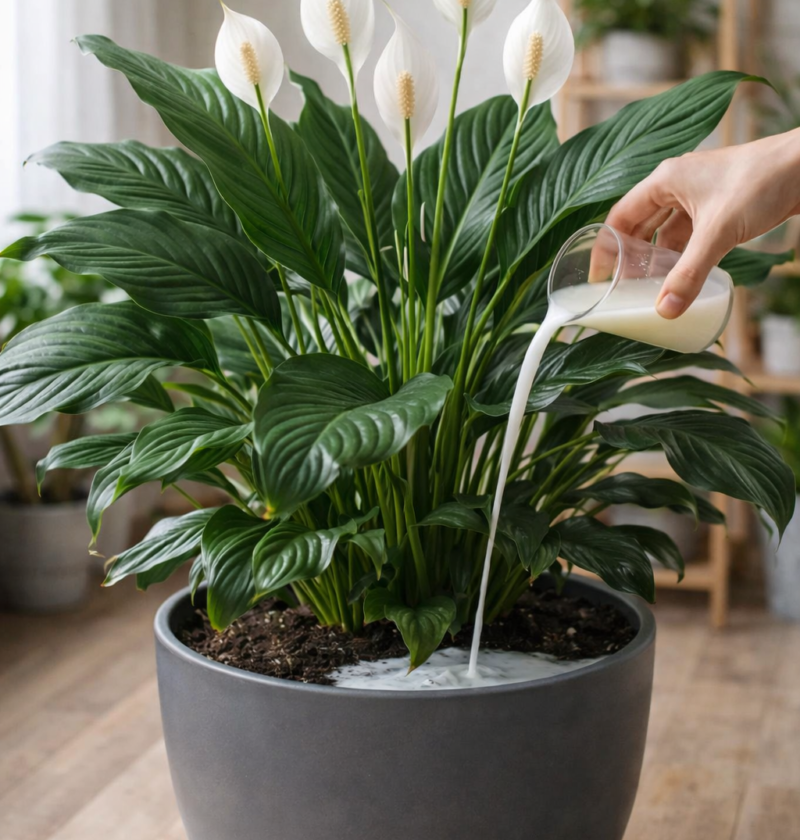
How to Safly Fertilize a Peace Lily at Home (Without Damaging the Roots)
Peace lilies are known for their deep green leaves and elegant white blooms, but they are also sensitive plants — especially when it comes to fertilization. Many indoor gardeners unintentionally damage their peace lily’s roots by overfeeding, using concentrated fertilizers, or applying nutrients too frequently.
The key to healthy growth is understanding that peace lilies prefer gentle, balanced feeding rather than aggressive fertilization. When done correctly, proper feeding supports leaf color, bloom production, and steady root development — without causing root burn or stress.
🌿 Why Peace Lily Roots Are Sensitive
Peace lilies (Spathiphyllum) grow naturally in rainforest environments where nutrients are delivered gradually through decomposing organic matter. Their roots are adapted to mild, consistent feeding — not high-salt synthetic fertilizers.
- Shallow root systems
- Sensitive to salt buildup
- Prefer moist but well-draining soil
- React quickly to overfeeding
Healthy fertilizing habits help:
- ✔️ Encourage fuller foliage
- ✔️ Support bloom formation
- ✔️ Prevent leaf tip browning
- ✔️ Protect root integrity
According to Dr. Leila Nour, “Indoor tropical plants like peace lilies benefit more from diluted feeding schedules than concentrated fertilizer applications.”
✨ Choosing the Right Fertilizer
A balanced liquid fertilizer with equal or slightly higher nitrogen works best. Look for gentle, indoor-plant formulas.
- • 10-10-10 or 20-20-20 diluted formula
- • Organic liquid fertilizer options
- • Compost-based mild teas
- • Slow-release pellets (light application only)
Avoid high-phosphorus bloom boosters unless the plant is actively flowering.
🥄 Step-by-Step: Safe Fertilizing Method
1. Water First
Never fertilize dry soil. Lightly water the plant to prevent root shock.
2. Dilute Fertilizer
Use half (or even quarter) of the recommended strength.
3. Apply Evenly
Pour the solution slowly around the soil surface, avoiding leaf contact.
4. Allow Drainage
Ensure excess water drains from the bottom of the pot.
5. Fertilize Sparingly
Feed once every 4–6 weeks during spring and summer only.
6. Pause in Winter
Avoid fertilizing during dormant months.
📊 Safe Fertilizing Guidelines Table
| Factor | Recommended Practice | Why It Helps |
|---|---|---|
| Fertilizer Strength | ½ or ¼ strength | Prevents root burn |
| Frequency | Every 4–6 weeks | Avoids salt buildup |
| Season | Spring & Summer | Matches active growth phase |
| Pre-Watering | Light watering before feeding | Protects sensitive roots |
⚖️ Organic vs Synthetic Fertilizers
Organic Options
- Gentler nutrient release
- Improves soil structure
- Lower risk of root damage
Synthetic Options
- Precise nutrient ratios
- Faster visible response
- Higher burn risk if overused
For peace lilies, many indoor gardeners prefer mild organic feeding combined with proper watering routines.
🚫 Common Fertilizing Mistakes
- Fertilizing too frequently
- Using full-strength fertilizer
- Applying to dry soil
- Ignoring drainage holes
- Feeding during winter dormancy
Professor Mark Benson explains, “Root damage often happens silently. By the time leaf tips brown, salt accumulation may already be present in the soil.”
❓ Peace Lily Fertilizing FAQ
- How often should I fertilize?
Every 4–6 weeks during active growth. - Can I use coffee grounds?
Only sparingly and composted; direct use may alter soil balance. - Why are my leaf tips brown?
Often caused by overfertilizing or mineral buildup. - Should I flush the soil?
Yes, occasional flushing with distilled water helps remove salts. - Is slow-release fertilizer safe?
Yes, but apply lightly. - Can I fertilize newly repotted plants?
Wait 4–6 weeks before feeding. - Do peace lilies need bloom boosters?
Not usually; balanced feeding works best. - What happens if I overfeed?
Roots may burn and leaves may yellow or brown. - Is tap water safe?
Filtered or distilled water reduces mineral buildup. - Should I fertilize after flowering?
Yes, lightly during the growing season.