✨ The Baking Soda & Coconut Oil Cabinet Trick That Restores Kitchen Shine Naturally
Have your kitchen cabinets started to look dull, sticky, or slightly yellowed over time?
If you cook regularly, grease particles, steam, and airborne food residue slowly build up on cabinet surfaces — especially near the stove. Even if you wipe them occasionally, that invisible film can make wood look tired and worn.
Before you invest in expensive degreasers or consider repainting, there’s a simple homemade method many homeowners swear by: a baking soda and coconut oil paste.
When used correctly, this mixture can help loosen grime, cut through grease, and gently polish cabinet surfaces — without harsh chemical fumes.
🧽 Why Kitchen Cabinets Get Sticky
Kitchen air contains more than just cooking aromas. It carries:
- Microscopic oil droplets from frying
- Steam that helps grease cling to surfaces
- Dust particles that stick to oily film
- Smoke residue
According to Dr. Leila Nour, Environmental Health Specialist, “Grease particles become airborne during cooking and settle on vertical surfaces. Over time, dust adheres to that layer, creating a sticky buildup.”
That’s why simple dry dusting rarely solves the issue.
🥥 Why Baking Soda & Coconut Oil Work Together
This combination works because each ingredient plays a different role:
- Baking soda acts as a gentle abrasive to lift grime.
- Coconut oil helps dissolve greasy residue while adding mild conditioning properties.
Cleaning consultant Sarah Coleman explains, “Oil dissolves oil. Coconut oil can help loosen hardened grease, while baking soda provides mild scrubbing power without scratching most finished surfaces.”
🧴 Essential Items You’ll Need
- Baking soda
- Coconut oil
- Small mixing dish
- Old toothbrush (for corners and grooves)
- Sponge or microfiber cloth
- Slightly damp towel
🧪 Step-by-Step Cleaning Directions
Step 1: Combine the Cleaning Agent
In a small bowl, mix:
- 1/4 cup coconut oil
- 1/2 cup baking soda
Whisk until you form a smooth, spreadable paste. It should not be too runny or too crumbly.
Step 2: Apply the Solution
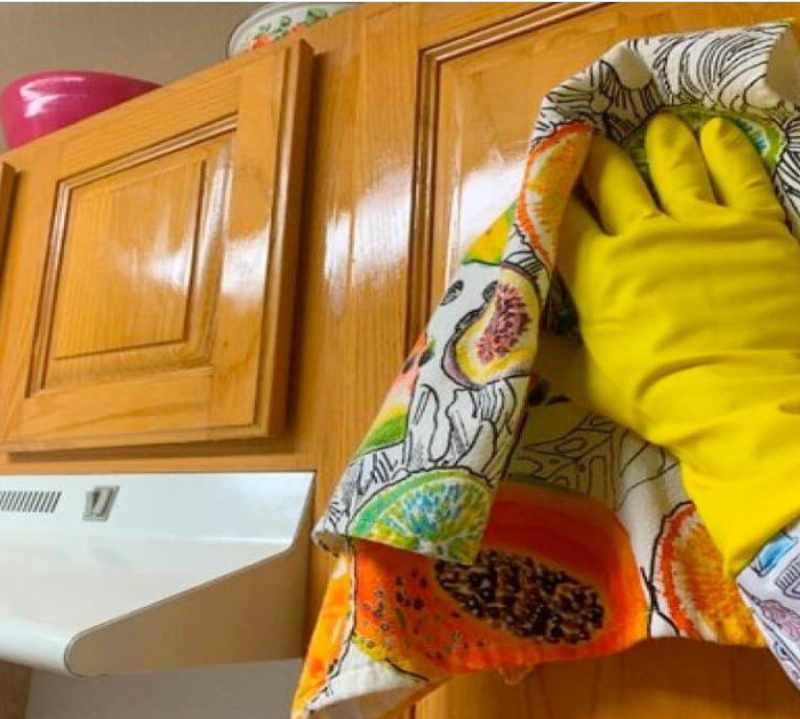
- Use your hands or a cloth to spread the paste over cabinet surfaces.
- Apply a thin, even layer.
- For grooves, hinges, or decorative trim, use an old toothbrush.
Step 3: Gently Scrub Away Buildup
Using circular motions, scrub lightly — especially on greasy areas near the stove or handles.
Avoid aggressive pressure, particularly on painted or laminate cabinets.
Step 4: Remove Residue
- Wipe cabinets with a slightly damp towel.
- Rinse and wring the towel as needed.
- Ensure all paste residue is removed to prevent streaking.
Finish by drying with a clean microfiber cloth.
📊 How Each Ingredient Functions
| Ingredient | Quantity | Primary Function | Surface Effect | Practical Benefit |
|---|---|---|---|---|
| Baking Soda | 1/2 cup | Mild abrasive | Lifts grime | Removes sticky buildup |
| Coconut Oil | 1/4 cup | Grease dissolver | Softens residue | Restores light sheen |