Peace Lily Care Guide 🌿
The Peace Lily is one of the most popular indoor plants — and for good reason. With its glossy green leaves and elegant white blooms, it adds calm beauty to any space while helping freshen indoor air.
But while Peace Lilies are often labeled “easy,” they do have specific needs. The good news? Once you understand their signals, they’re incredibly rewarding plants to grow.
This complete guide covers proper watering, light needs, natural fertilizer options, common mistakes, and how to keep your Peace Lily thriving year-round.
🌿 Meet the Peace Lily (Spathiphyllum)
Peace Lilies belong to the genus Spathiphyllum, tropical plants native to Central and South America. In their natural habitat, they grow on rainforest floors where they receive filtered light, consistent moisture, and warm temperatures.
Understanding that tropical background explains nearly all of their care requirements indoors.
1️⃣ Water Properly 💧
Watering is the most important factor in Peace Lily care — and the most common place people go wrong.
How Often Should You Water?
On average:
- Hot, dry weather: every 4–5 days
- Mild conditions: about once a week
- Cold or humid weather: every 8–10 days
However, there is no perfect calendar schedule. Your environment matters more than the calendar.
The Finger Test (Best Method)
Insert your finger about 2–3 cm (1 inch) into the soil:
- If it feels dry → time to water.
- If it feels damp → wait another day or two.
This simple habit prevents both underwatering and overwatering.
How to Water Correctly
- Use room-temperature water.
- Water thoroughly until liquid drains from the bottom.
- Empty the saucer after 10–15 minutes.
Peace Lilies prefer evenly moist soil — not soggy, not bone dry.
2️⃣ Avoid Overwatering 🚫💦
Overwatering is the number one reason Peace Lilies decline indoors.
Why Overwatering Is Dangerous
- Roots sit in oxygen-deprived soil.
- Fungal pathogens thrive in excess moisture.
- Root rot can develop quickly.
Signs of overwatering include:
- Yellowing leaves
- Soft or mushy stems
- Persistent drooping even after watering
- Foul smell from soil
Cold water can also shock the roots. Always use water that’s close to room temperature.
3️⃣ Water in the Morning ☀️
Morning watering is ideal because:
- The plant has the full day to absorb moisture.
- Leaves dry faster, reducing fungal risk.
- Temperature is more stable.
Evening watering isn’t harmful, but morning is optimal.
🌞 Light Requirements
Peace Lilies thrive in bright, indirect light.
Ideal Placement
- Near an east-facing window
- A few feet from a south or west window
- In well-lit rooms with filtered sunlight
Avoid direct harsh sun — it can scorch leaves.
Low light conditions are tolerated, but flowering may decrease.
🌡️ Temperature & Humidity
Peace Lilies prefer:
- Temperature: 18–27°C (65–80°F)
- Moderate to high humidity
Dry indoor air (especially in winter) can cause brown leaf tips.
To Increase Humidity:
- Use a humidifier.
- Group plants together.
- Place pot on a pebble tray with water (pot not sitting in water).
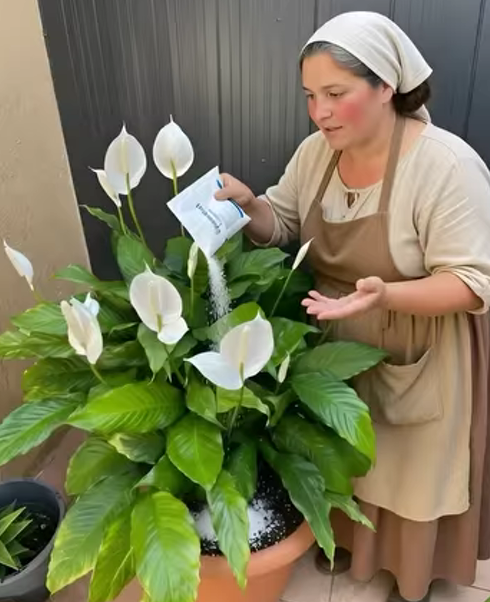
🌱 Natural Fertilizer Tips
Peace Lilies benefit from gentle feeding during active growth (spring and summer).
1. Banana Peel Water
- Soak banana peels in water for 24 hours.
- Use the strained water once monthly.
Banana peels provide potassium and small amounts of phosphorus.
2. Epsom Salt Solution
- Mix ½ tablespoon in 1 liter of water.
- Apply every 6–8 weeks.
Epsom salt provides magnesium, which supports greener foliage.
3. Diluted Coffee Water
- Half brewed coffee, half water.
- Use once monthly.
- No sugar or milk.
Peace Lilies prefer slightly acidic soil, and diluted coffee can support that balance. However, moderation is key.
Alternative Option
A balanced liquid houseplant fertilizer (half-strength) every 4–6 weeks during spring and summer is often more predictable and controlled.