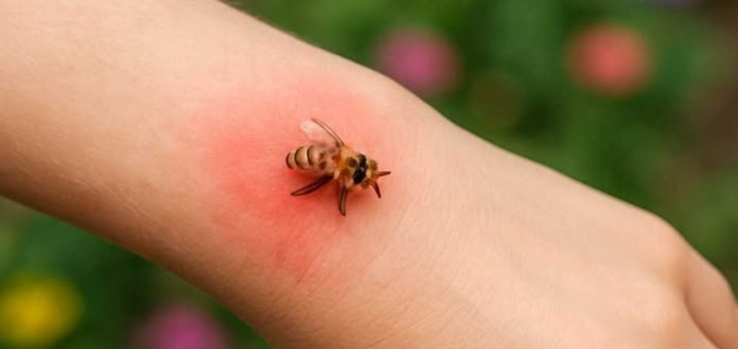
When to Seek Medical Help
Most bee stings are mild.
But seek immediate medical attention if you notice:
- Difficulty breathing or swallowing
- Swelling of the face, lips, or throat
- Widespread hives
- Dizziness or fainting
- Rapid heartbeat
- Nausea or vomiting
- Multiple stings (especially in children)
These can be signs of anaphylaxis, a serious allergic reaction that requires urgent care.
If someone carries an epinephrine auto-injector, use it immediately and call emergency services.
A Note on Expectations
The cold spoon trick helps with pain relief and swelling.
It does not:
- Neutralize venom chemically
- Prevent allergic reactions
- Replace medical treatment when needed
Think of it as quick first aid — not a cure-all.
Why Simple Remedies Feel “Magical”
When pain is sharp and sudden, fast relief feels dramatic.
Cold therapy works quickly on nerve endings, so improvement can feel almost immediate. That contrast makes the trick memorable — and worth sharing.
Sometimes the most effective solutions are also the simplest.
Final Thoughts
If you get stung:
- Stay calm.
- Remove the stinger quickly.
- Clean the area.
- Apply cold (a spoon, ice pack, or cold compress).
- Monitor symptoms.
Most bee stings are temporary discomforts — not emergencies.
And while no remedy is magic, a cold spoon can absolutely make those first painful minutes much more manageable.
Sometimes, practical wisdom passed down in families aligns perfectly with science.
And that’s worth keeping. 🐝