What’s the Purpose of the Fabric Strip Across Hotel Beds?
You check into a sleek hotel room.
The bed looks perfectly made — crisp white sheets, cloud-like pillows, everything tucked with precision.
And then you notice it.
Right at the foot of the bed:
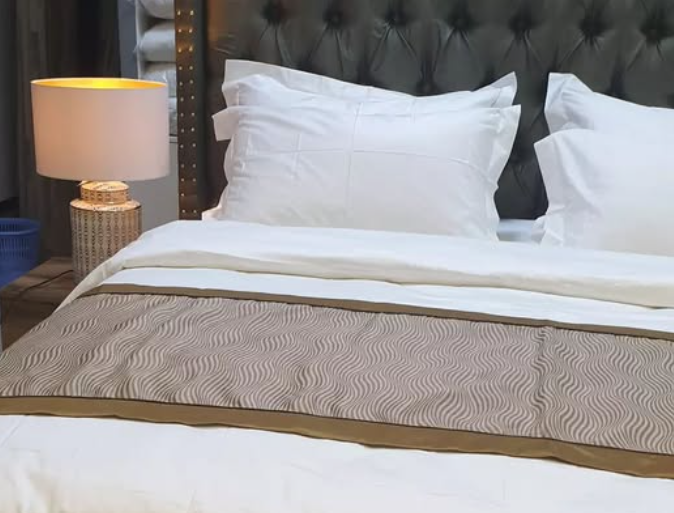
A narrow strip of fabric. Sometimes bold. Sometimes patterned. Always intentional.
It looks decorative — almost too small to matter.
But it does.
That detail has a name. It’s called a bed runner (sometimes referred to as a bed scarf or blanket roll).
And it serves several surprisingly practical, guest-friendly purposes.
Because real luxury isn’t always loud.
Sometimes, it’s stitched quietly at the foot of the bed.
What Is a Bed Runner?
A bed runner is a decorative fabric panel placed horizontally across the foot of the bed.
It’s typically made from:
- Durable woven fabric
- Upholstery-grade textile
- Patterned material matching curtains or accent chairs
Unlike the main bedding, it’s not meant to cover the entire bed — just the lower portion.
And that positioning is intentional.
1. Protecting the Bedding
This is the most practical reason hotels use bed runners.
Guests often:
- Sit on the edge of the bed
- Place luggage temporarily on top
- Set down purses, coats, or shoes
Hotel sheets and duvets are typically white — chosen for cleanliness and easy bleaching.
The bed runner acts as a protective barrier between everyday wear-and-tear and those pristine linens.
Instead of replacing or laundering an entire duvet cover, housekeeping can simply clean or swap out the runner if needed.
2. A Clean Place for Shoes or Bags
After a long travel day, many guests sit at the foot of the bed to remove shoes.
The runner provides a designated surface for that moment.
It quietly signals:
“Sit here.”
“Set your bag down here.”
Without saying a word.
3. Adding a Layer of Visual Interest
Hotel design aims to balance comfort with visual appeal.
White bedding feels fresh and luxurious — but it can look flat without contrast.
The runner introduces:
- Color
- Texture
- Pattern
- Brand identity
It ties the room together with matching curtains, cushions, or headboard accents.
It’s functional — but also strategic interior design.
4. Subtle Branding
Some upscale hotels use runners as part of their brand aesthetic.
The fabric may reflect:
- Local culture
- Regional patterns
- Signature colors
- Luxury cues
It becomes a quiet but memorable design signature.
5. A Psychological Cue of Luxury
Interestingly, bed runners aren’t essential for comfort.
But they signal attention to detail.
Small finishing touches subconsciously communicate:
- Care
- Cleanliness
- Thoughtful design
Guests may not consciously analyze it — but they notice the polish.
Why Not Just Use a Blanket?
Unlike a full throw blanket, a bed runner:
- Is narrower and more structured
- Stays in place neatly
- Is easier to maintain
- Doesn’t disrupt the made-bed look
It’s decorative without appearing messy or casual.
Do You Have to Use It?
As a guest?
Not at all.
Some travelers move it aside immediately.
Others appreciate having a clean place for shoes or luggage.
It’s there as an option — not a rule.
Can You Use One at Home?
Absolutely.
A bed runner can:
- Protect light bedding from pets
- Add color without replacing linens
- Create a hotel-inspired aesthetic
- Cover the foot of the bed for a polished look
It’s a simple upgrade that feels intentional without being extravagant.
Final Thoughts
That small strip of fabric at the foot of the bed?
It’s not random.
It’s thoughtful.
It protects linens.
It guides guests.
It adds style.
It elevates the room.
And like many details in hospitality design, its purpose blends beauty with practicality.
Because luxury isn’t always about grand gestures.
Sometimes, it’s a narrow strip of fabric — quietly doing its job.