The Damp Towel Trick: Does This Humble Hack Really Cool Your Room?
On a sweltering summer night, when the air in your bedroom feels thick enough to slice and sleep feels impossibly far away, you might remember an old household trick:
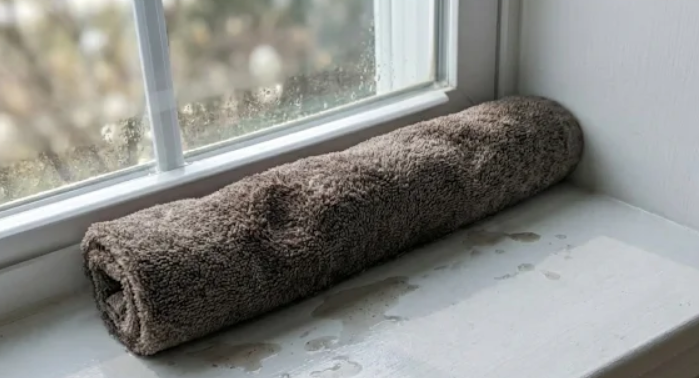
Drape a damp towel over the windowsill, crack the window, and let nature’s air conditioning do the rest.
In a world of smart thermostats and energy-efficient cooling systems, this homespun method feels almost quaint. But is it science — or superstition?
Let’s unravel what’s really happening when you hang a wet towel in the window.
The Science Behind the Trick: Evaporative Cooling
The damp towel method is based on a real and well-understood principle of physics: evaporative cooling.
Evaporation requires energy. When water changes from liquid to vapor, it absorbs heat from its surroundings. That heat is pulled from nearby air molecules, which lowers the air temperature.
This is the same reason:
- Sweat cools your skin
- A breeze feels cooler after swimming
- Traditional “swamp coolers” work in dry climates
So yes — the principle is scientifically sound.
Step-by-Step: How the Damp Towel Trick Works
Assuming ideal conditions, here’s what happens:
- You wet a towel and wring it out so it’s damp, not dripping.
- You place it over the windowsill and crack the window open.
- Warm, relatively dry outdoor air flows into your room.
- That air passes across the damp towel.
- Some of the water evaporates into the incoming air.
- Evaporation absorbs heat from the air.
- Slightly cooler — but more humid — air enters the room.
The effect is localized and subtle, but measurable under the right circumstances.
The Key Factor: Humidity
This trick lives or dies by one critical variable:
Outdoor humidity.
Why Dry Air Matters
Evaporation happens fastest when the surrounding air is dry. Dry air can absorb more moisture, allowing more water to evaporate — and therefore more heat to be removed.
If the outdoor humidity is:
- Low (20–40%) → Evaporation works efficiently.
- Moderate (50–60%) → Limited effect.
- High (70–80%+) → Almost no cooling benefit.
On a muggy, humid night, the air is already saturated with moisture. It cannot absorb much more water, so the towel simply stays damp and the cooling effect is minimal.
In those conditions, you may just make your room feel more humid — and therefore more uncomfortable.