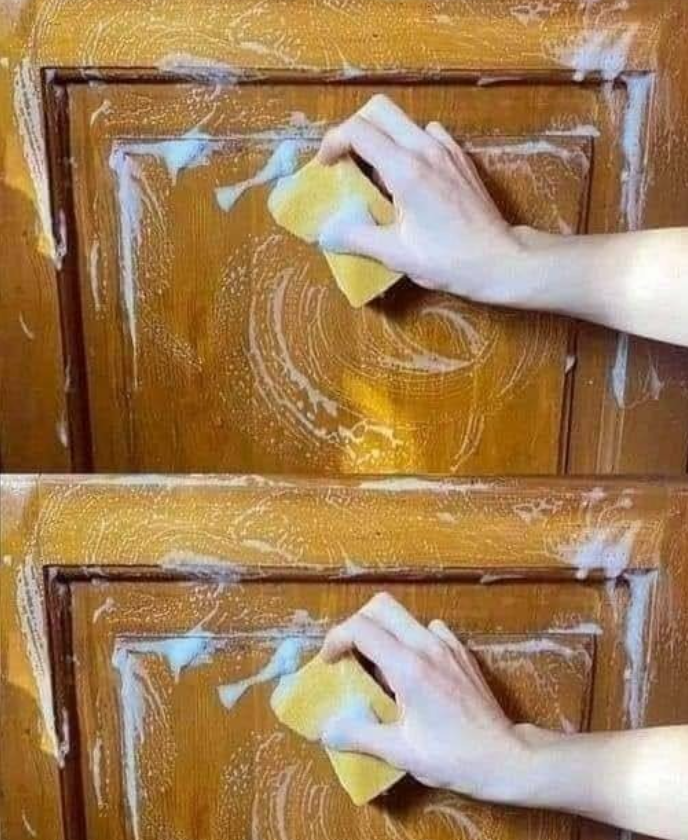
The Genius 2-Ingredient Hack to Remove Grease from Kitchen Cabinets (Without Damaging the Finish)
You wipe your countertops daily. You mop your floors weekly. But your kitchen cabinets? They quietly collect a sticky, yellowish film of grease — especially near the stove — until one day you notice something unsettling:
Your kitchen looks permanently grimy.
The dull finish. The tacky handles. The buildup around corners.
It’s not dirt from neglect — it’s airborne cooking grease that settles over time, bonding with dust and forming a stubborn film that regular wiping won’t remove.
The good news? You don’t need expensive specialty cleaners.
There’s a simple, affordable, two-ingredient method that works incredibly well when done correctly — and safely.
Let’s break down exactly how to do it, why it works, and how to protect your cabinet finish in the process.
Why Kitchen Cabinets Get So Greasy
Every time you cook — especially when sautéing, frying, or roasting — microscopic grease particles become airborne.
These particles:
- Float through the air
- Land on cabinet doors and frames
- Mix with dust
- Oxidize over time, creating a yellowish tint
Cleaning expert Dr. Leila Nour explains:
“Grease buildup isn’t just cosmetic. As it accumulates, it becomes harder to remove because it binds with dust and hardens.”
That’s why quick wipe-downs with plain water don’t solve the problem.
The 2-Ingredient Grease-Removing Hack 🧼
This method uses:
- 1–2 tablespoons mild dish soap (clear, dye-free is ideal)
- Warm water
Dish soap is designed to break down grease on cookware — and it works just as effectively on cabinets when diluted properly.
Step-by-Step Cleaning Method
🧽 Step 1: Remove Loose Dust (Critical Step)
Before adding moisture, wipe cabinets with a dry microfiber cloth.
Why?
Grease + dust + water = sticky paste.
Removing loose dust first prevents smearing.
🧴 Step 2: Make the Cleaning Solution
In a bowl, mix:
- 1–2 tbsp mild dish soap
- 2–3 cups warm water
Stir gently to combine.
Avoid overly concentrated soap — too much can leave residue.
🧼 Step 3: Apply & Let Sit (Don’t Scrub Hard!)
- Dip a damp (not soaking) microfiber cloth into the solution.
- Wring out excess water.
- Gently wipe cabinet doors and frames.
- Focus on high-grease areas: stove splashback, handles, corners.
Let the solution sit for 2–3 minutes.
This softens the grease so you don’t need aggressive scrubbing.
🚿 Step 4: Rinse Lightly
Use a second clean cloth dampened with plain warm water.
Wipe again to remove soap residue.
Residue left behind can attract new dust.
🌬️ Step 5: Dry Immediately
Buff dry with a clean microfiber cloth.
This prevents:
- Water spots
- Wood swelling
- Finish damage
Why This Works (The Science Behind It)
Dish soap contains surfactants — molecules that break down grease by surrounding oil particles and allowing them to mix with water.
In simple terms:
Soap lifts grease off the surface so it can be wiped away.
No harsh chemicals required.
Cleaning Efficiency Comparison
| Cleaning Method | Approx. Cost Per Use | Grease Removal Strength | Surface Safety | Best For |
|---|---|---|---|---|
| Diluted Dish Soap | Under $0.25 | Moderate to Strong | Safe for most sealed finishes | Routine grease buildup |
| All-Purpose Spray | $0.50–$1.00 | Moderate | Varies by formula | Light maintenance |
| Degreaser (Commercial) | $1.00+ | Strong | May damage delicate finishes | Heavy buildup |
| Vinegar Only | Low | Light | May dull some finishes | Minor residue |
Cabinet-Specific Tips 🪵
Wood Cabinets
- Avoid soaking.
- Always dry immediately.
- Test in a hidden area first.
Painted Cabinets
- Use minimal pressure to avoid dulling paint.
- Avoid abrasive pads.
Laminate Cabinets
- Safe with diluted soap.
- Avoid excessive moisture at seams.
Matte Finishes
- Buff gently to avoid streaking.