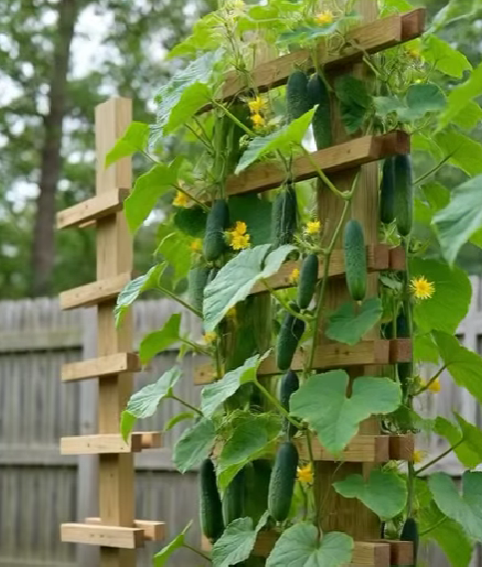
How to Grow Cucumbers Vertically for Double the Harvest (Beginner-Friendly Guide)
If you’re still letting your cucumbers sprawl across the ground, you might be sacrificing more than just garden space. Many home gardeners don’t realize that ground-growing cucumbers often produce smaller harvests, face higher disease pressure, and require more maintenance. 😩
Vertical cucumber growing changes everything.
By training your vines upward on a simple trellis, you can increase sunlight exposure, improve airflow, reduce rot, and potentially double your harvest — even in a small backyard or raised bed. Whether you’re gardening in a suburban yard, a compact urban lot, or containers on a patio, vertical growing is one of the smartest upgrades you can make.
In this complete guide, you’ll learn:
- Why vertical cucumber growing works so well
- How to build a sturdy wooden trellis (step-by-step)
- The best cucumber varieties for climbing
- Watering, feeding, and maintenance strategies
- Common mistakes beginners make
- Cost comparisons and long-term value
- Expert-backed growing insights
Let’s turn those crawling vines into climbing powerhouses. 🌿
Why Growing Cucumbers Vertically Increases Yield 🌞
1. Better Sunlight = More Flowers
Cucumbers thrive in full sun. When vines spread across the soil, leaves overlap and shade one another. Vertical growing allows each leaf better exposure to sunlight, improving photosynthesis and encouraging more flowering.
More flowers generally mean more cucumbers — especially with consistent pollination.
Dr. Leila Nour, a horticulture specialist based in California, explains:
“When cucumber vines climb, their leaf surface is more evenly distributed. That increased light exposure directly supports stronger flowering and fruit development.”
2. Improved Airflow = Healthier Plants
Fungal diseases such as powdery mildew are common in humid U.S. summers. When vines sit on damp soil, moisture lingers around leaves and fruit.
Vertical support improves airflow, helping foliage dry faster after watering or rain. This simple change can significantly reduce disease pressure.
3. Reduced Fruit Rot and Pest Damage
When cucumbers rest on soil, they are more exposed to:
- Soil-borne pathogens
- Slugs and beetles
- Uneven ripening and rot
Hanging fruit stays cleaner, straighter, and easier to inspect.
4. Space Efficiency for Small Gardens
Vertical systems are ideal for:
- Raised beds
- Urban backyards
- Container gardens
- Community garden plots
You can grow more plants per square foot without overcrowding.
How to Build a Simple Wooden Cucumber Trellis (Step-by-Step)
You don’t need an expensive garden system. A sturdy wooden trellis can be built in under an hour.
Materials Needed
- 1 pressure-treated wooden post (6–8 ft tall)
- 4–6 horizontal wooden slats
- Outdoor wood screws
- Drill
- Level (optional but helpful)
Step 1: Secure the Main Post
Insert the main post 12–18 inches deep into the soil. In windy areas, consider digging deeper or setting with packed gravel for stability.
Step 2: Attach Horizontal Slats
Space slats 8–12 inches apart vertically. This allows vines to grab and climb naturally.
Step 3: Check Stability
Test the structure by gently pushing it. It should not wobble — mature vines can become surprisingly heavy.
Step 4: Plant at the Base
Plant seedlings 4–6 inches from the base. Water thoroughly after planting.
Step 5: Train Early
Guide young vines toward the slats while they’re flexible. Within weeks, tendrils will latch on naturally.
Best Cucumber Varieties for Vertical Growing
Not all cucumbers perform equally well on trellises. Look for vining varieties rather than bush types.
- English cucumbers – Long, smooth, and excellent climbers
- Pickling cucumbers – Compact but productive
- Persian cucumbers – Smaller fruits, ideal for small spaces
Prof. Mark Benson, an urban agriculture researcher, recommends selecting varieties labeled “vining” or “climbing” for best vertical performance.
Nutritional Benefits of Homegrown Cucumbers 🥒
| Serving Size | Weight | Key Nutritional Component | Practical Benefit |
|---|---|---|---|
| 1 cup sliced cucumber | ~104g | Hydration (95% water) | Supports daily fluid intake |
| 1 medium cucumber | ~300g | Vitamin K | Supports normal blood clotting function |
| 1 cup chopped | ~120g | Potassium | Supports normal muscle function |
| 1 whole cucumber | ~300g | Fiber (skin-on) | Supports digestive regularity |
Growing vertically helps ensure cleaner fruit, which means less peeling and more retained nutrients.
Vertical vs Ground Growing: Which Is Better?
Yield Comparison
Vertical growing typically produces more marketable fruit per square foot due to better sun exposure and airflow.
Maintenance
Ground vines require more monitoring for pests and rot. Vertical systems simplify harvesting and inspection.
Cost Breakdown
- DIY wooden trellis: $25–$60 depending on lumber prices
- Metal trellis systems: $40–$120
- Ground growing: $0 upfront, but potentially higher losses
Over multiple seasons, a wooden trellis pays for itself in increased harvest and reduced spoilage.