How to Maximize Success If You Try It 🌹
- Use a healthy, disease-free stem (6–8 inches long).
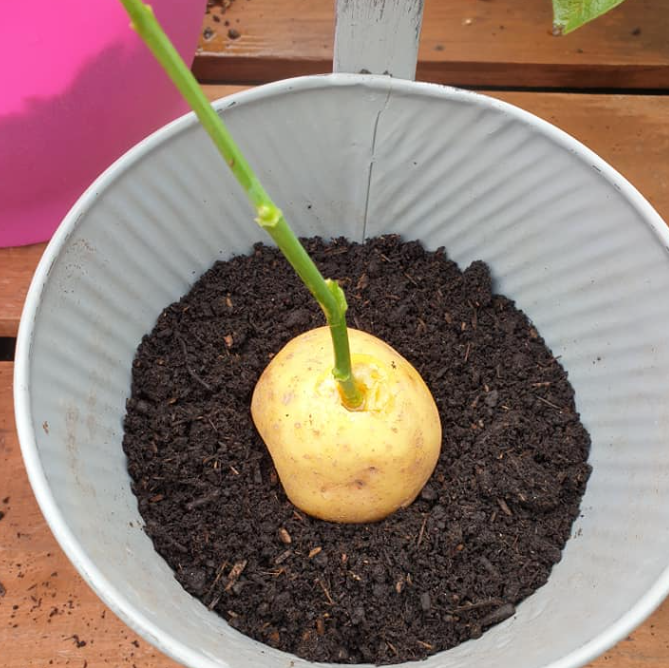
- Cut at a 45-degree angle below a node.
- Use fresh, firm potatoes — not sprouted or soft ones.
- Insert the potato fully into well-draining compost.
- Keep soil moist, not soggy.
- Maintain temperatures above 65°F.
Covering the pot loosely with a clear plastic dome can increase humidity during early stages.
Common Mistakes to Avoid 🚫
- Overwatering (this causes rot quickly)
- Using too much honey (a thin coating is enough)
- Planting during cold weather
- Using dense, poorly draining soil
- Allowing direct scorching afternoon sun
Health & Safety Considerations 🧼
- Wash hands after handling decomposing potatoes.
- Use clean tools to prevent disease transfer.
- Keep gardening materials separate from food prep areas.
- Discard moldy soil promptly.
While honey and potatoes are edible foods, once used for gardening they should not be consumed.
Frequently Asked Questions (10 Detailed FAQs)
1. Will this method guarantee roots?
No method guarantees success. Proper temperature and moisture are more important than honey or potatoes.
2. How long before I see growth?
Rooting typically takes 3–8 weeks.
3. Can I skip the potato and just use honey?
Yes. The potato mainly provides moisture support.
4. Can I use sweet potatoes?
Regular white potatoes are preferred due to structure and moisture content.
5. Is raw honey better?
Raw honey may retain more natural antimicrobial properties.
6. Does this work for all rose varieties?
Some varieties root more easily than others regardless of method.
7. Can I plant directly in the garden?
Yes, but ensure frost risk has passed.
8. Will the potato attract pests?
If buried properly, risk is low. Exposed potato can attract insects.
9. Is compost necessary?
Yes. Compost provides the primary nutrients.
10. Is this better than traditional propagation?
It can work, but commercial rooting hormone remains more reliable.
Final Verdict: Worth Trying or Just a Trend? 🌹
The honey-and-potato rose method isn’t pure myth — but it’s also not magic.
Honey may help protect the cut surface from bacteria. The potato may help maintain moisture. But the real keys to success remain:
- Healthy cuttings
- Warm soil
- Proper drainage
- Consistent care
If you enjoy experimenting and already have the ingredients on hand, there’s little harm in trying it. Just manage expectations.
As Chef Maria Lawson wisely says, “In both cooking and gardening, simple ingredients can support great results — but technique matters most.”
Have you tried it yet? Sometimes the best gardening wisdom comes from testing and observing firsthand. 🌱🌹