Honey & Potato Rose Propagation 🌹🥔🍯: Does This Viral Gardening Hack Really Work?
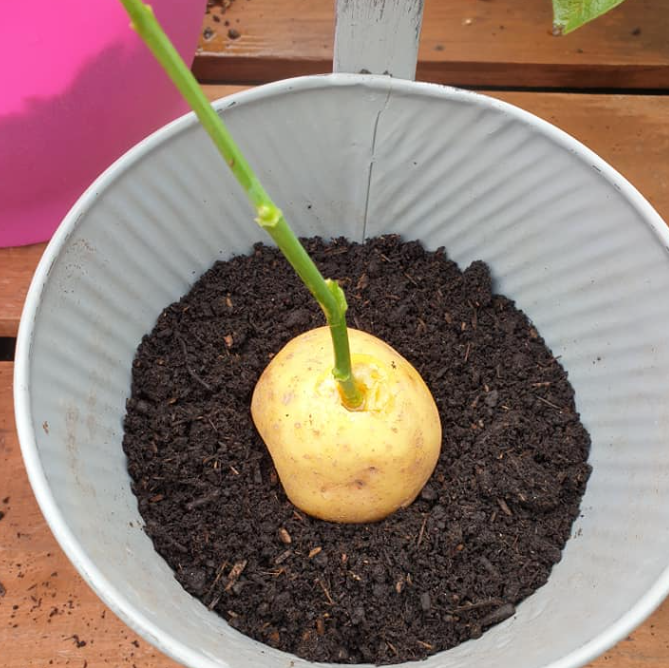
Every gardener has that one neighbor who shares a “can’t-miss” trick that promises bigger blooms, stronger stems, and more roses than ever before. Recently, a fascinating method has been circulating: cut a rose stem, dip it in honey, insert it into a potato, and plant the whole thing in compost. Supposedly, the honey stimulates root growth while the potato fertilizes the cutting.
It sounds almost too simple — and maybe too clever — to ignore. But does it actually work?
In this comprehensive guide, we’ll break down the science, the gardening logic, expert insights, potential benefits, possible drawbacks, and how this method compares to traditional rose propagation techniques. If you’re serious about growing healthier roses — not just experimenting — this article will help you decide whether this kitchen-based hack is worth your time.
Why Roses Can Be Difficult to Propagate 🌿
Roses are among the most beloved garden flowers in the United States. But propagating them from cuttings can be tricky. A cutting needs:
- Consistent moisture
- Protection from rot
- Warm soil (ideally 65–75°F)
- Good airflow
- Patience (3–8 weeks for rooting)
If the stem dries out, it fails. If it stays too wet, it rots. That delicate balance is why many gardeners turn to rooting hormones or controlled greenhouse conditions.
So where do honey and potatoes fit into this?
The Honey Claim 🍯: Can It Stimulate Root Growth?
Honey does not contain natural rooting hormones like commercial products do. However, it does have antimicrobial properties. That’s the key distinction.
Chef Maria Lawson, who maintains both culinary and ornamental gardens, explains: “Honey won’t trigger root hormones the way synthetic products do, but it can act as a protective coating. It may reduce bacterial contamination on the cut surface.”
That means honey might help prevent rot during the vulnerable early days after cutting — but it does not chemically force roots to grow.
Think of honey as a natural protective sealant rather than a growth stimulator.
The Potato Claim 🥔: Does It Fertilize the Cutting?
The potato portion of this method has gained even more attention. The idea is that the potato:
- Provides steady moisture
- Contains small amounts of nutrients (especially potassium)
- Acts as a temporary buffer against soil dryness
Culinary Instructor James Holloway notes, “A potato is mostly water and carbohydrates. It won’t act like fertilizer in the short term, but it can maintain a moist microenvironment around the cutting.”
In reality, potatoes decompose over time. As they break down, they add organic matter to the soil — similar to compost. However, the nutrient release is gradual and relatively minor.
So yes, it may contribute some nutrients, but it’s not a replacement for balanced rose fertilizer.
What’s Actually Happening Scientifically? 🌱
Here’s what this method truly does:
- Honey may reduce surface bacteria on the cutting.
- The potato helps maintain moisture consistency.
- The compost provides the primary growing medium.
- Warm temperatures stimulate root development naturally.
Nutritionist Sarah Coleman adds, “While honey and potatoes are nutritionally dense for humans, their gardening value lies more in structure and moisture support than in powerful plant nutrition.”
In other words: the compost and environmental conditions do most of the real work.
Nutritional & Functional Breakdown of the Potato Medium
| Component | Measurement (per medium potato ~170g) | Approx. Nutritional Value | Functional Gardening Benefit |
|---|---|---|---|
| Water Content | ~130g | Hydration | Maintains moisture around cutting |
| Carbohydrates | 37g | Energy source | Supports microbial soil activity during breakdown |
| Potassium | 897mg | Electrolyte mineral | Contributes small nutrient release as it decomposes |
| Fiber | 4g | Plant structure | Adds organic matter to soil over time |
| Serving Size Equivalent | 1 medium potato | ~170 grams | Temporary moisture reservoir |
Honey & Potato vs Commercial Rooting Hormone ⚖️
Effectiveness
Commercial rooting hormones contain auxins (plant hormones) that actively stimulate root cell development. Honey does not.
Cost
If you already have honey and a potato in your kitchen, this method is essentially free. Rooting powders range from $6–$15 per container.
Predictability
Rooting hormone is more consistent. The honey-potato method is variable.
Eco-Friendliness
The kitchen method is biodegradable and chemical-free.