- Use room-temperature water
- Water from the bottom when possible
- Empty saucers after 20–30 minutes
Consistent moisture allows nutrients like magnesium to be absorbed efficiently.
Soil and Pot Choice Matter
Use soil specifically formulated for African violets. It should be light, airy, and fast-draining.
Pots should be small relative to the plant size. African violets bloom best when slightly root-bound.
Overpotting delays flowering and increases the risk of mineral accumulation.
What to Expect After Using Epsom Salt
Results are gradual. You may notice:
- Deeper green leaves within 2–3 weeks
- Stronger leaf structure
- Increased bud formation over time
Blooming often follows once the plant regains balance.
Common Mistakes to Avoid
- Using Epsom salt too frequently
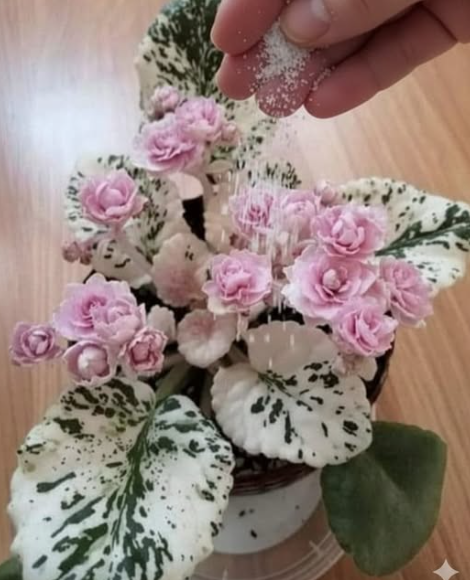
- Applying dry granules directly to soil
- Combining with heavy fertilizers
- Using scented or cosmetic-grade products
Gentle care always outperforms aggressive treatment.
Frequently Asked Questions
Can Epsom salt replace African violet fertilizer?
No. It only provides magnesium and sulfur, not complete nutrition.
Is Epsom salt safe for all houseplants?
Not always. Some plants are sensitive to magnesium buildup.
How long does it take to see blooms?
Depending on conditions, flowering may resume within one or two growth cycles.
Can I use it year-round?
Only during active growth periods, typically spring and summer.
Final Thoughts: Support, Don’t Force
Epsom salt can be a helpful tool when used thoughtfully. It works best as part of a larger care routine focused on light, consistency, and patience.
African violets reward calm, attentive care. When their needs are met, blooming becomes a natural response — not something that needs to be forced.
Trust the process, observe your plant closely, and let gentle adjustments guide it back into bloom.