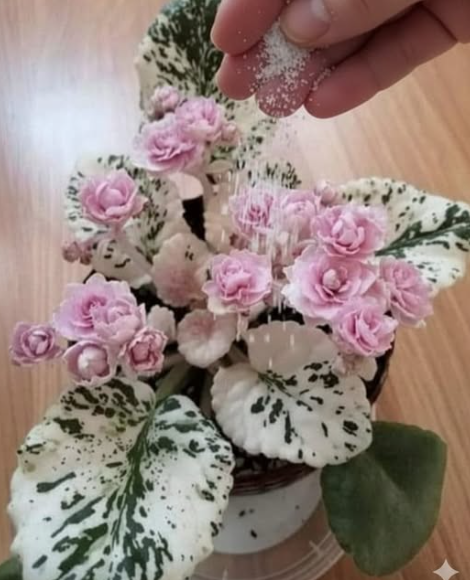
Use Epsom Salt for Your African Violet to Encourage More Blooms
African violets are beloved for their soft leaves and vibrant flowers that seem to glow indoors. When they are happy, they bloom generously and regularly. When something is off, they often stop flowering altogether, even though the leaves may still look healthy.
Many plant lovers search for ways to bring those blooms back. Among the most talked-about natural remedies is Epsom salt. Used correctly, it can support healthier growth and help African violets bloom more reliably. Used incorrectly, however, it can do more harm than good.
This guide explains how Epsom salt works, when it is useful, and how to apply it gently and safely as part of a balanced care routine. No shortcuts, no exaggerated promises — just slow, healthy plant care that respects the natural rhythm of African violets.
Understanding African Violet Blooming Habits
African violets bloom in cycles. Under ideal conditions, they can flower several times a year indoors. Each bloom cycle depends on a delicate balance of light, nutrients, moisture, and root health.
When blooming slows down or stops, it is usually a signal that something in the environment needs adjustment. The most common causes include:
- Insufficient or inconsistent light
- Improper watering habits
- Nutrient imbalances
- Root congestion or compacted soil
- Stress from temperature changes
Epsom salt does not replace proper care, but it can help correct a specific deficiency that interferes with flowering.
What Is Epsom Salt and Why Gardeners Use It
Epsom salt is magnesium sulfate, a naturally occurring mineral compound. Despite the name, it is not table salt and does not behave like sodium-based salts in soil.
Magnesium plays an essential role in plants. It is a core component of chlorophyll, which allows plants to photosynthesize efficiently. Without enough magnesium, plants struggle to convert light into energy.
Sulfur, the second component, supports enzyme activity and overall plant metabolism.
For African violets, magnesium deficiency can quietly reduce flowering even when other care factors appear correct.
Signs Your African Violet May Benefit From Epsom Salt
Not every African violet needs Epsom salt. It is most helpful when specific symptoms appear.
Common Signs of Magnesium Deficiency
- Older leaves turning pale or yellow between veins
- Reduced flower production despite good light
- Slow growth with otherwise healthy roots
- Leaves that appear dull rather than vibrant
If your plant shows these signs and has not responded to light or watering adjustments, magnesium may be the missing piece.
Why African Violets Are Sensitive to Overfeeding
African violets have fine, delicate roots. They thrive on consistency and moderation. Too much fertilizer or mineral buildup can quickly damage roots and stop blooming entirely.
This is why Epsom salt must always be used sparingly. It is a supplement, not a fertilizer.
Excess magnesium can block the absorption of calcium and potassium, creating new problems if applied too frequently.
How to Prepare Epsom Salt Solution Safely
Always use plain, unscented Epsom salt with no added fragrances or oils.
Basic Dilution Recipe
- 1 teaspoon of Epsom salt
- 1 gallon (3.8 liters) of room-temperature water
Stir until completely dissolved. The solution should be clear, not cloudy.
This mild concentration is gentle enough for African violets and minimizes the risk of mineral buildup.
How to Apply Epsom Salt to African Violets
There are two safe methods of application. Choose the one that best fits your regular care routine.
Method 1: Soil Watering
Use the Epsom salt solution as you would regular watering. Water the soil slowly until excess drains from the bottom.
- Do not splash water on leaves
- Ensure the pot drains fully
- Never water dry soil with concentrated solution
Method 2: Occasional Leaf Feeding
Some growers lightly mist the underside of leaves with a very diluted solution. This should be done rarely and only in well-ventilated spaces.
For beginners, soil watering is safer and more consistent.
How Often Should You Use Epsom Salt
Frequency matters more than quantity. African violets respond best to occasional support rather than regular treatment.
- Once every 4 to 6 weeks during active growth
- Do not use during winter dormancy
- Stop immediately if leaf curling or spotting appears
More is not better. One gentle application can support blooming for weeks.
Light Still Comes First
No supplement can replace proper lighting. African violets require bright, indirect light to bloom.
Place them near an east- or north-facing window, or under grow lights designed for flowering plants.
If light is insufficient, Epsom salt will not trigger blooms on its own.
Watering Habits That Support Blooming
African violets prefer evenly moist soil, never soggy and never bone dry.