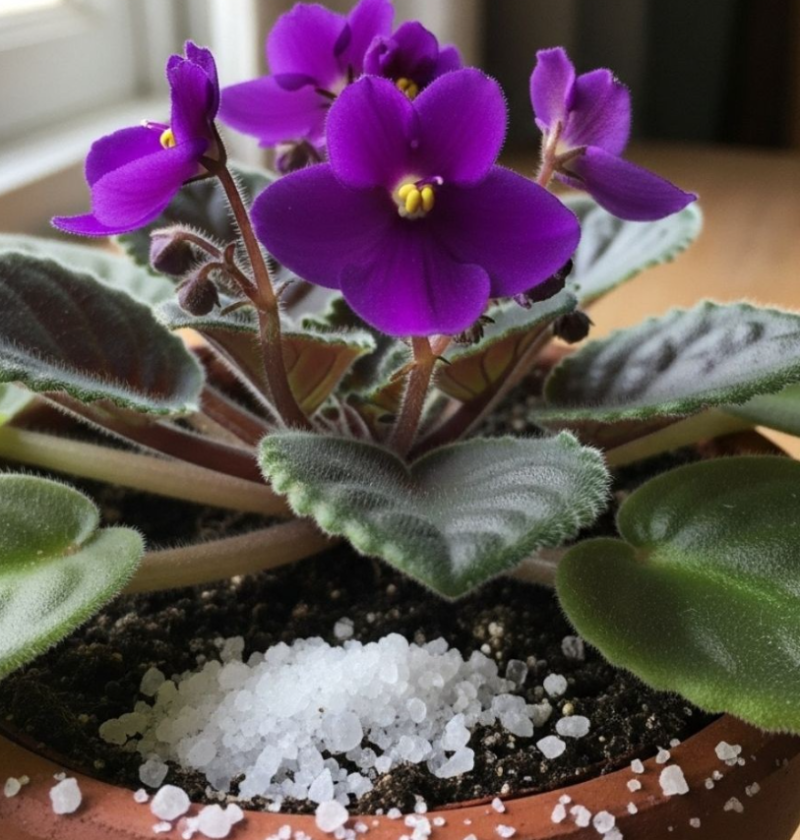
How to Apply It Properly
Soil Watering Method
Use the solution in place of regular watering. Pour slowly into the soil until water drains from the bottom.
- Avoid wetting leaves
- Ensure full drainage
- Never apply to dry, compacted soil
Why Soil Application Is Best
Roots absorb magnesium steadily from the soil, reducing the risk of leaf spotting or residue.
How Often to Use Epsom Salt
Frequency is critical. Overuse can block other nutrients.
- Once every 4–6 weeks during active growth
- Stop during winter or low-light periods
- Discontinue if leaf curl or spotting appears
One gentle application can support blooming for weeks.
Light: The True Foundation of Year-Round Blooms
No ingredient works without proper light. African violets need bright, indirect light for flower production.
Ideal placements include:
- East-facing windows
- North-facing windows with unobstructed light
- Grow lights positioned 12–15 inches above plants
Consistent light allows magnesium to be used efficiently for bud formation.
Watering Habits That Support Blooming
African violets prefer evenly moist soil — never soggy, never dry.
- Use room-temperature water
- Bottom water when possible
- Empty saucers after 20–30 minutes
Stable moisture supports nutrient uptake and root health.
Soil and Pot Size Make a Difference
African violets bloom best when slightly root-bound.
Use:
- Light, airy African violet soil
- Pots one-third the diameter of the leaf span
- Containers with drainage holes
Overpotting delays flowering and increases nutrient imbalance.
What to Expect Over Time
Epsom salt supports gradual improvement, not instant results.
Most growers notice:
- Deeper green leaves within 2–3 weeks
- Stronger leaf structure
- Increased bud formation in following cycles
With stable care, blooming becomes more frequent and reliable.
Common Mistakes to Avoid
- Using Epsom salt too often
- Applying dry crystals to soil
- Mixing with strong fertilizers
- Expecting immediate flowers
African violets reward patience, not force.
Frequently Asked Questions
Can I use Epsom salt year-round?
Only during active growth periods. Avoid use in winter.
Will it harm my plant?
When diluted correctly and used sparingly, it is safe.
Is this suitable for all African violets?
Yes, but only when magnesium deficiency is present.
How soon will I see flowers?
Blooming may resume within one or two growth cycles.
Final Thoughts: Support the Cycle, Don’t Force It
There is no shortcut to year-round African violet blooms. However, correcting small nutrient imbalances can make a big difference over time.
Epsom salt works best as quiet support — not a cure-all. Combined with good light, consistent watering, proper soil, and patience, it can help African violets bloom more reliably throughout the year.
Trust slow care. Let the plant lead. The flowers will follow.