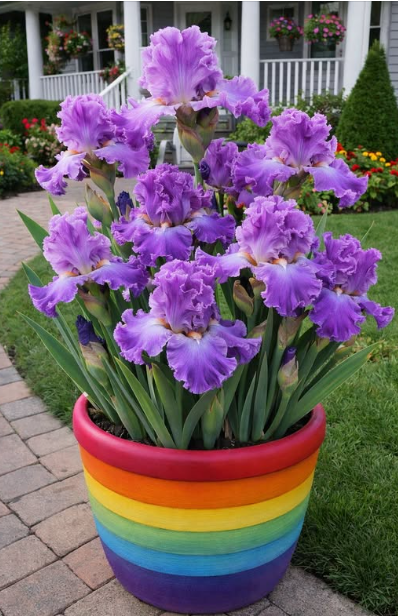
Propagation of Bearded Irises
Bearded irises are propagated mainly through rhizome division:
- Divide in late summer after flowering season.
- Trim leaves back to 6 inches.
- Replant healthy rhizomes in well-prepared soil.
- Water lightly until new growth appears.
Seed propagation is possible but less common because it takes several years for seedlings to bloom.
Companion Planting with Bearded Irises
Certain plants thrive when grown near bearded irises:
- Alliums: repel pests and add vertical contrast.
- Daylilies: similar care needs, complement colors.
- Peonies: bloom timing complements iris flowering.
- Low-growing groundcovers: reduce weeds and retain soil moisture.
Seasonal Care Tips
Bearded irises follow a natural cycle:
- Spring: vigorous growth, blooming, fertilize lightly.
- Summer: dormant after bloom, reduce watering, divide rhizomes if needed.
- Fall: prepare soil for winter, remove dead foliage.
- Winter: minimal care, protect rhizomes in cold climates with mulch.
Frequently Asked Questions
When do bearded irises bloom?
Typically in late spring to early summer, depending on climate and variety.
How long do the blooms last?
Individual flowers last 3–7 days, but each stalk can produce multiple blooms over 2–3 weeks.
Can irises survive winter outdoors?
Yes, in most temperate climates; mulch protects rhizomes in colder regions.
How often should I divide irises?
Every 3–4 years to prevent overcrowding and maintain bloom vigor.
Final Thoughts
Bearded irises are timeless perennials that bring elegance, color, and texture to gardens. With proper sunlight, well-draining soil, careful watering, regular fertilization, and occasional division, these plants reward gardeners with stunning, abundant blooms year after year.
Attention to detail, patience, and seasonal care are the keys to success. Every healthy rhizome has the potential to produce breathtaking flowers that enhance any landscape, making bearded irises a must-have for gardeners who appreciate beauty and reliability.