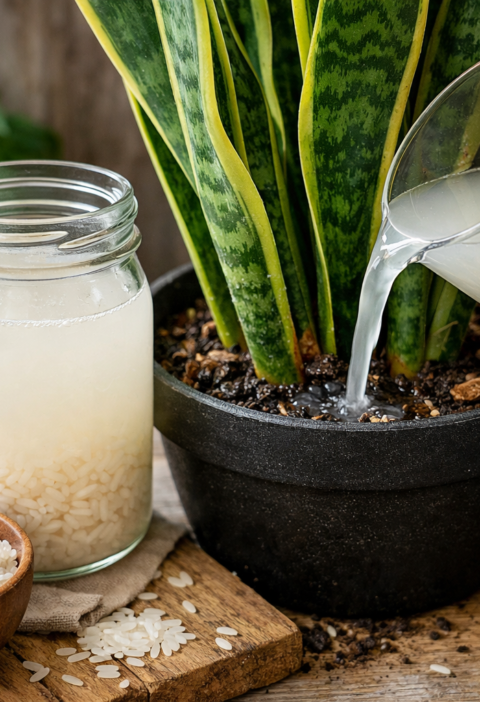
☕ Stop Throwing Away Your Coffee! How Used Coffee Can Help Your Plants Grow Faster — Grandma’s Secret Revealed
Every day, millions of people toss their leftover coffee straight into the trash or down the sink without realizing its hidden value. What most people see as “waste,” my grandma called “liquid gold.” To her, the leftover coffee and grounds from the morning brew were one of the best gifts you could give your garden — if used the right way.
I grew up watching her tend to her garden with the kind of devotion most people reserve for family. But what struck me most wasn’t just the lushness of her plants — it was her belief that ordinary things, like leftover coffee, had extraordinary potential. She refused to waste a single drop of it.
At first, I didn’t understand. Why coffee grounds? Why not compost them with the rest of the kitchen scraps? But over years of observing her process — and a few spills of coffee myself — I began to see something remarkable: her plants always looked greener, stronger, and more vibrant than the neighbors’.
Today, science supports much of what she intuitively knew. Used coffee and coffee grounds contain nutrients that can genuinely benefit plants — when used properly. In this article, we’ll unpack the science, show you how to use coffee safely and effectively, and explore which plants benefit the most.
🌱 The Hidden Nutrient Power in Coffee for Plants
Coffee is more than just a morning pick‑me‑up for humans. Whether you drink it black, with cream, or with sweetener, once the grounds are brewed, they still contain nutrients that are valuable to many plants.
☕ What’s Actually Left in Used Coffee?
Used coffee and coffee grounds contain amounts of:
- Nitrogen — vital for green, leafy growth
- Potassium — strengthens roots and improves overall plant vigor
- Organic matter — improves soil structure and water retention
- Trace minerals — small amounts that help plant functions
These are the same nutrients many fertilizer blends tout — but in a natural, biodegradable form. Because coffee grounds are considered a “slow‑release” source of nutrients, they don’t overwhelm plant roots when used right.
However, the key words here are used coffee grounds and right way. Fresh, undiluted coffee can be too acidic and too strong for plants — something we’ll cover in detail below.
🌼 Why Coffee Isn’t a Miracle — But a Smart Supplement
Before you start pouring coffee into every pot you own, it’s important to understand that coffee is not a **complete fertilizer** on its own. It shouldn’t replace balanced nutrient products, proper watering, sunlight, or soil care.
Instead, coffee can act as a **supplement** to:
- Improve soil quality
- Boost nitrogen levels in small doses
- Encourage microorganisms in soil
- Potentially reduce some pests (light effect)
But if misused — especially when applied directly with too much strength or frequency — coffee can harm plant roots, disrupt pH balance, or even stunt growth. That’s why my grandma had rules.
🌿 Grandma’s Rules for Using Coffee in the Garden
Most people try to use coffee the wrong way — dumping strong brewed coffee directly onto the soil or piling fresh grounds around roots. My grandma knew better. Her approach was simple, careful, and tailored to the needs of plants.
1️⃣ Only Use Used or Diluted Coffee
Never pour strong, fresh coffee directly onto plants. The acidity and strength can stress roots and affect soil balance. Instead:
- Mix fresh coffee with water — about 50% coffee and 50% water.
- Let it cool to room temperature before using it.
This dilution makes the nutrients easier for plants to absorb and prevents shock to roots.
2️⃣ Use Used (Brewed) Coffee Grounds
Used coffee grounds are the superstar of this whole process. They still retain valuable nutrients but have lower acidity than fresh grounds.
- Dry the grounds in a tray first — this avoids mold.
- Sprinkle a thin layer (no more than a tablespoon) around the base of plants.
- Work them lightly into the top soil.
Grounds improve soil texture over time, increasing its ability to hold water and nutrients.
3️⃣ Apply No More Than Once a Week
Too much coffee — even used — can overwhelm soil and roots. My grandma’s rule was always: “Moderation.”
Too frequent application can:
- Lead to nutrient imbalance
- Cause soil acidity to drift too low
- Stress plant roots
A weekly schedule ensures the nutrients are absorbed gradually without stressing the plant.
4️⃣ Know Your Plants
This step is the most important — because not all plants benefit the same way. Coffee works best for **acid‑loving plants** — those that naturally prefer slightly lower pH soils.
Examples include:
- 🌹 Roses
- 🍅 Tomatoes
- 🫐 Blueberries
- 🌸 Azaleas
- 🌿 Camellias