How to Protect Young Plants with a Simple Wire Cage: A Complete Step-by-Step Guide
There’s nothing more frustrating than planting young seedlings only to find them trampled, chewed, or broken the next morning. Whether it’s curious pets, garden pests, or an accidental misstep, young plants are vulnerable and often don’t survive the first few weeks without protection.
The good news? You don’t need expensive tools or harsh chemicals to keep your garden safe. A simple wire mesh cage — made from affordable, reusable materials — can provide the perfect balance of protection and airflow.
In this guide, you’ll learn exactly how to build and use a wire cage to safeguard your plants, what materials to use, and why this method outperforms many commercial alternatives for everyday gardeners.
🌱 Why Young Plants Need Protection
Before plants grow sturdy stems and deep roots, they’re especially sensitive to their environment. Even small disturbances can lead to stunted growth or complete failure.
Common threats to young plants include:
- 🐇 Rabbits, deer, and other small animals
- 🐦 Birds digging for insects or seeds
- 💨 Strong wind or heavy rain
- 🚶♂️ Accidental stepping during garden work
- 🐾 Pets like cats or dogs walking through garden beds
Plant Scientist Prof. Mark Benson explains: “The first 4–6 weeks after planting are critical. If young plants don’t get stable, undisturbed conditions, their roots may not establish properly — and the plant may never fully thrive.”
🛠️ Materials Needed for a DIY Wire Plant Cage
You can build an effective protective cage using simple supplies available at most hardware or garden stores:
- 🔩 Wire mesh or chicken wire – flexible and breathable
- ✂️ Wire cutters or pliers – for cutting and shaping
- 🪴 A young plant – already planted in soil
- 🌱 Soil – to stabilize the base of the cage
💡 Tip: Galvanized wire mesh resists rust and holds its shape better than softer materials.
🔧 Step-by-Step Guide to Building and Using a Wire Plant Cage
Step 1: Plant the Seedling
Choose a healthy young plant and place it firmly into prepared soil. Gently pat down the soil around the base to ensure the roots are supported and the plant stands upright.
Step 2: Prepare the Wire Cage
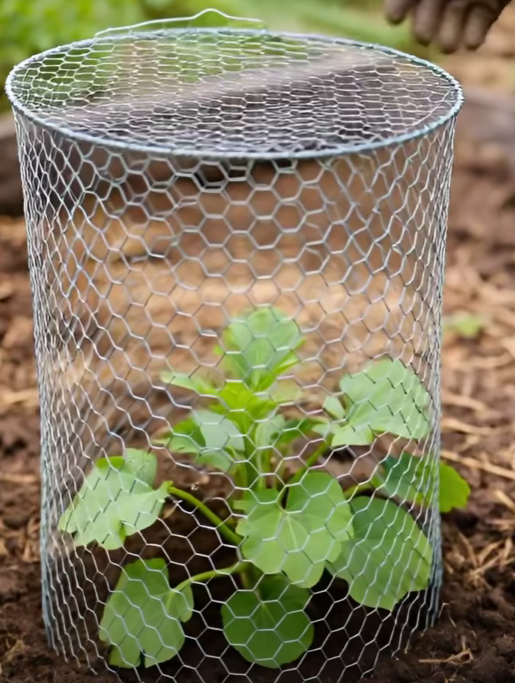
Cut a piece of wire mesh wide enough to form a cylinder around the plant, leaving at least 2–3 inches of space between the wire and the plant on all sides. Height should be at least 12–18 inches for most vegetables.
Step 3: Shape and Place the Cage
Roll the mesh into a cylinder shape and secure the edges by twisting the wire ends or using small clips. Carefully place the cage over the plant and push the bottom edge of the mesh into the soil by 1–2 inches to anchor it.
Step 4: Check Stability
Gently wiggle the cage to ensure it’s firmly placed and won’t blow over or shift in strong wind. You can reinforce it with a garden stake or tie it to nearby support if needed.
🔬 How This Method Works
The wire mesh cage creates a physical barrier that prevents direct contact with the plant while allowing essential elements to pass through. Unlike plastic cloches or covers, it doesn’t trap heat or moisture, which could harm the plant in warmer conditions.
Key advantages:
- 🌞 Allows full sunlight to reach leaves
- 💨 Supports natural air circulation
- 💧 Lets rainwater reach roots without pooling
- 🦌 Blocks most animal contact
📊 Protection and Growth Benefits Table
| Feature | Function | Measurement | Practical Value |
|---|---|---|---|
| Wire Mesh | Physical barrier | 2–4 mm holes | Keeps animals out, allows airflow |
| Height | Vertical protection | 12–18 inches | Prevents deer and rabbits from reaching top leaves |
| Soil Anchor | Holds cage in place | 1–2 inches deep | Stabilizes against wind or movement |
| Material Type | Durability | Galvanized steel | Rust-resistant and reusable |
| Distance from Plant | Prevents damage to leaves | 2–3 inches | Allows growth without interference |
⚖️ Wire Cage vs Other Plant Protection Methods
🧪 Wire Cage
✅ Reusable, breathable, and doesn’t trap heat. Provides consistent protection without blocking sunlight or water.
🌱 Plastic Dome or Cloche
🚫 Can overheat the plant, especially in hot climates. Requires regular monitoring for condensation and pests.
🪵 Wooden Frames or Barriers
✅ Offers structure but often more expensive and permanent. Less flexible for small-space or rotating gardens.
🧪 Chemical Sprays or Repellents
🚫 May pose risks to beneficial insects or nearby plants. Less reliable and requires frequent reapplication.
✅ Benefits of Using a Wire Mesh Cage
- 🛡️ Protects against animal and physical damage
- 🌬️ Ensures full airflow and ventilation
- 🌞 Allows direct sunlight without barrier
- 🌧️ Doesn’t block rainwater or irrigation
- 💲 Affordable and reusable season after season
- 🌱 Encourages strong, undisturbed growth
🌿 Best Plants to Use with This Method
- 🍅 Tomatoes
- 🥒 Cucumbers
- 🌶️ Peppers
- 🥬 Lettuce and leafy greens (early stages)
- 🍓 Strawberries
- 🍑 Young fruit bushes or dwarf trees
💡 Tip: Use taller cages or add mesh extensions as plants grow taller to continue protection during flowering or fruiting stages.
🚫 Common Mistakes to Avoid
- ❌ Making the cage too small — restricts plant growth
- ❌ Forgetting to secure the base — cages may topple in wind
- ❌ Using rusty or old wire — could harm soil and plants
- ❌ Placing mesh too close — leaves may rub and get damaged
- ❌ Ignoring growing plants — check weekly for space needs
❓ 10 Frequently Asked Questions About Wire Plant Protection
- How tall should my wire cage be?
Start with 12–18 inches. For fast-growing vegetables, make it expandable. - What type of wire should I use?
Galvanized chicken wire or mesh with small holes (under 1 inch) works best. - Can I use this for indoor plants?
Yes, for pets or children — just make sure the cage doesn’t trap heat or light. - How do I secure the cage in windy areas?
Bury the base in soil or tie it to a stake for stability. - Is this safe for edible plants?
Yes — just ensure your wire is clean and rust-free. - Can I remove the cage once the plant matures?
Absolutely. Most plants only need protection during the early stages. - Will it keep out all animals?
It deters most small animals. For deer or larger threats, taller fencing may be needed. - Can I paint or decorate the cage?
Yes — use non-toxic paint to match your garden style. - How long do these cages last?
With care, galvanized cages can last 5–10 years or more. - Where can I find other DIY garden ideas?
Explore these natural garden solutions for more eco-friendly tips.
🌼 Final Thoughts: Protect More, Grow Better
Gardening doesn’t always require fancy gadgets or expensive supplies. Sometimes, the simplest methods — like a basic wire mesh cage — offer the biggest impact. By protecting your young plants during their most vulnerable stage, you’re setting the foundation for a healthier, more productive garden season.
Whether you’re growing tomatoes, cucumbers, or young fruit trees, this easy, affordable technique ensures your efforts won’t go to waste — and your plants will thrive, safely.
✨ Give it a try in your garden this week, and share this guide with fellow growers who care about protecting their plants the natural way.