🌿 The Ultimate Guide to Container Depth for Vegetable Gardening: Why Depth Matters More Than Soil Quality
Have you ever spent hours prepping soil, selecting high‑quality compost, and buying premium seeds — only to watch your container garden struggle? 🌱 It’s a frustrating experience that most gardeners have lived through at least once. But here’s the truth that many beginners and even experienced growers overlook:
Container depth often determines harvest success more than soil quality. You can have the richest soil on the planet, but if your containers are too shallow, your vegetables won’t ever reach their full potential.👇
In this long‑form gardening guide, we’ll explore exactly why container depth matters, how specific vegetables respond to different depths, common signs of depth‑related problems, and proven solutions to transform your harvests. By the end, you’ll be able to choose the right container for every vegetable you grow — before planting a single seed. 🌞
🌱 First Things First: Why Container Depth Matters More Than You Think
Most gardening advice focuses on soil quality — and for good reason. Nutrient‑rich, well‑drained soil is essential for healthy plants. But in a container, there’s only so much room for roots to grow. When roots hit the bottom of a shallow container too soon, your plant’s development can stall.
Plants grow roots first. If root growth is restricted by inadequate container depth, several things can happen:
- 📉 Stunted growth: Plants can’t absorb enough water or nutrients.
- 💧 Frequent wilting: Roots can’t reach the deeper moisture in the container.
- 🍅 Small, deformed produce: Restricted roots mean reduced energy for fruits and vegetables.
- 🌬️ Weak support: Tall plants can topple over in light wind because roots can’t anchor properly.
At the same time, containers that are too large for the plant’s root system can waste water and fertilizer, and can even lead to root rot if drainage is poor. So finding the right balance is key.
📏 Minimum Container Depths for Common Vegetables
Below is an easy‑to‑reference guide to help you choose the right container depth for your vegetables, based on tried‑and‑true horticultural experience.
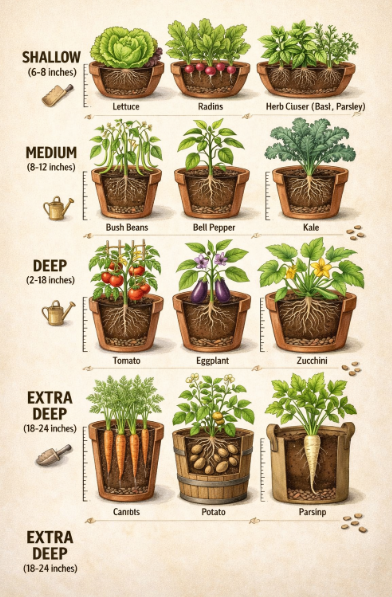
- 🌿 Shallow (6–8 inches): Lettuce, spinach, radishes, green onions, herbs.
- 🍆 Medium (8–12 inches): Bush beans, peppers, cucumbers, Swiss chard, kale.
- 🍅 Deep (12–18 inches): Tomatoes, eggplant, zucchini, broccoli, pole beans.
- 🥕 Extra Deep (18–24 inches): Carrots, potatoes, parsnips, sweet potatoes.
Now let’s take an in‑depth look at why these ranges matter and how to choose wisely.
🌾 Shallow Rooters (6–8 Inches Deep)
Vegetables with relatively shallow root systems can thrive in containers that are just 6–8 inches deep. These are generally fast‑growing, low‑mass crops that don’t require extensive anchoring or deep nutrient access.
- Lettuce & Spinach: These leafy greens grow quickly and are perfect for balcony boxes or window planters.
- Radishes: A favorite first crop for new gardeners — just make sure the container is deep enough to avoid bulb deformities.
- Green Onions & Herbs: Perfect for kitchen gardens. Many herbs can adapt to pots as shallow as 6 inches, though some prefer deeper soil for long‑term growth.
🌻 Medium Rooters (8–12 Inches Deep)
This depth range is versatile and supports many of the vegetables people love most in container gardens.
- Bush Beans: These produce an abundance of beans in a relatively compact space, but need enough depth for steady root growth.
- Peppers & Cucumbers: Sweet peppers to spicy chilies — they all appreciate a solid root zone for water and nutrient uptake.
- Swiss Chard & Kale: These greens develop strong leaves rapidly and need room for both roots and leaves to expand.
🌞 Deep Rooters (12–18 Inches Deep)
Plants in this category are often heavier producers and benefit from more robust root systems.
- Tomatoes: One of the most rewarding container crops, but only if they have enough root space.
- Eggplant & Zucchini: These produce large fruits and require stable root systems for consistent yields.
- Broccoli & Pole Beans: Fast growers that expend a lot of energy into stems and fruit production — they need deep roots.
🌱 Extra Deep Rooters (18–24 Inches Deep)
These vegetables produce underground storage organs or long roots that must be able to extend far into the soil.
- Carrots: From short Chantenay types to long imperators, depth is crucial for straight, healthy roots.
- Potatoes & Sweet Potatoes: These crops produce large tubers that form underground — meaning they need plenty of vertical soil space.
- Parsnips: Similar to carrots, parsnips require deep soil to develop properly.
📊 Container Depth vs Root Growth: What Science & Experience Tell Us
Roots grow in response to available space and moisture gradients. In confined containers, roots can quickly circle the bottom and sides if the soil depth isn’t sufficient. This “root‑bounding” limits access to fresh soil and oxygen, which leads to several problems:
- ⛔ Root circling: Roots spiral around the container base instead of branching outward.
- 💦 Water stress: The container dries out quickly because roots are bunched up at the top.
- ⚠️ Nutrient deficiencies: Less root spread = fewer nutrients absorbed.
Containers designed to encourage downward and outward root growth (like deep and wide pots) help plants access more water and build stronger structures. This translates directly into yield — bigger, healthier vegetables that can stand up to environmental stress. 🌦️
📌 Why Width Matters Too: The Overlooked Dimension
Depth alone isn’t enough. If you’re growing plants with sprawling habits — like cucumbers, squash, or potato vines — they also need width. A narrow but deep container can still restrict root spread laterally, leading to similar problems as a shallow pot.
For sprawling vegetables, aim for containers that are at least 18 inches wide. This gives roots plenty of room to expand and lets the plant balance confidently as vines and leaves grow outward.
📈 Signs Your Container Is Too Shallow
Even experienced gardeners sometimes misjudge container size. Here are unmistakable signs that your container may be restricting your plants:
- ❗ Roots in tight spirals: When you slide the plant out of its pot and see densely coiled roots at the bottom, it’s a clear indicator of a too‑shallow container.
- ☀️ Daily wilting: Plants that wilt every afternoon despite regular watering may be struggling to access deeper moisture.
- 🍅 Small or deformed produce: Restricted roots mean less energy available for growth and fruit production.
- 🌬️ Plants topple easily: If light breezes knock your plants over, they may lack a stable root base.
If you notice one or more of these issues, consider repotting into a larger container before replanting.
📋 Container Depth & Width Table for Common Vegetables
| Vegetable | Minimum Depth | Minimum Width | Why It Matters |
|---|---|---|---|
| Lettuce | 6–8 inches | 8–10 inches | Shallow roots, fast growth |
| Spinach | 6–8 inches | 8–10 inches | Shallow feeder |
| Radishes | 6–8 inches | 6–8 inches | Root formation requires space |
| Peppers | 8–12 inches | 10–12 inches | Needs root support for fruiting |
| Cucumbers | 10–12 inches | 18+ inches | Wide root spread needed |
| Tomatoes | 12–18 inches | 18+ inches | Heavy producer; deep roots |
| Carrots | 18–24 inches | 12–16 inches | Root elongation needs depth |
| Potatoes | 18–24 inches | 16–20 inches | Tubers need room to develop |
🌿 Soil Quality Still Matters — But Depth Comes First
Now that you know how to choose the right container depth and width, don’t forget about soil quality. The best results come from pairing appropriate depth with well‑draining, nutrient‑rich soil and consistent moisture.
Here’s what to focus on:
- 🪴 Organic matter: Use compost‑enriched potting soil to boost nutrients.
- 💧 Drainage: Ensure containers have drainage holes to prevent root rot.
- 🌞 Watering schedule: Deep containers hold more moisture, but still watch daily needs during hot weather.
Soil quality boosts plant health, but it can’t make up for restricted roots. That’s why depth should be your first consideration when selecting or building containers.
🔁 Repotting: The Best Time to Adjust Depth
One of the easiest opportunities to correct depth problems is during transplanting. When seedlings are ready to move from starter pots, use that moment to:
- 📦 Choose a container with appropriate depth and width.
- 💡 Add drainage material like gravel or broken clay pots if needed.
- 🌱 Gently tease root systems before planting to encourage outward growth.
If plants show stress (wilting, leaf drop), repot sooner rather than later. Waiting too long can reduce yields or stress plants beyond recovery.
🌼 Common Mistakes Gardeners Make — and How to Fix Them
Even experienced gardeners fall into common traps when it comes to containers. Here are mistakes to avoid:
- ❌ Choosing containers based on aesthetics alone: Pretty pots are great, but they must be functional first.
- ❌ Using hanging baskets for deep‑rooted plants: Baskets are beautiful, but most aren’t deep enough.
- ❌ Not adjusting depth for plant size: Treating all vegetables as if they have the same needs.
Fixes: Always measure your containers before planting. If a pot is too shallow, either select a deeper one or choose crops suited to that depth.
🌞 Final Thoughts: Measure Twice, Harvest Once
Gardeners often say “measure twice, cut once.” In container gardening, that principle becomes:
Measure twice, plant once.
Taking the time to choose the right container depth and width makes all the difference in the world. Your plants will reward you with steady growth, fewer stress symptoms, and bigger, healthier vegetables. 🌽🍅🥕
Remember:
- 📏 Depth matters as much as — or more than — soil quality.
- 🌿 Match vegetable types to their ideal container dimensions.
- 💧 Pair appropriate depth with quality soil and watering.
If you’re just starting or revamping your container garden, this guide is your roadmap to success. Now it’s time to get growing! 🌞🌱