From a Single Leaf to a Blooming Plant: The Fascinating Science of Succulent Propagation
Succulents are famous for their beauty, resilience, and simplicity—but what truly amazes plant lovers is their ability to grow an entirely new plant from a single leaf. This process feels almost magical, yet it’s rooted in real plant biology. In this guide, you’ll discover how one leaf can develop roots, grow into a healthy plant, and eventually bloom.
Whether you’re a beginner or a seasoned indoor gardener, this method is one of the most rewarding plant experiments you can try at home.
Why Succulents Can Grow From a Single Leaf
Succulents store water and nutrients in their leaves. Inside each healthy leaf are specialized cells capable of regenerating roots and new growth when conditions are right.
Key reasons this works:
•Succulents evolved to survive harsh environments
•Leaves contain stored energy and moisture
•Minimal resources are needed to trigger growth
This makes them ideal for water propagation and indoor growing.
Best Succulents for Leaf Propagation
Not all succulents propagate equally well. These varieties are known for high success rates:
•Echeveria
•Crassula (Jade Plant)
•Graptopetalum
•Sedum
•Pachyphytum
Avoid woody or damaged leaves—healthy, mature leaves give the best results.
Step-by-Step: Growing a Succulent From One Leaf in Water
Step 1: Choose the Right Leaf
Gently twist a full, healthy leaf from the plant. Make sure it comes off cleanly with no tears.
Step 2: Let the Leaf Callus
Place the leaf in a dry area for 2–3 days. This prevents rot and helps roots form safely.
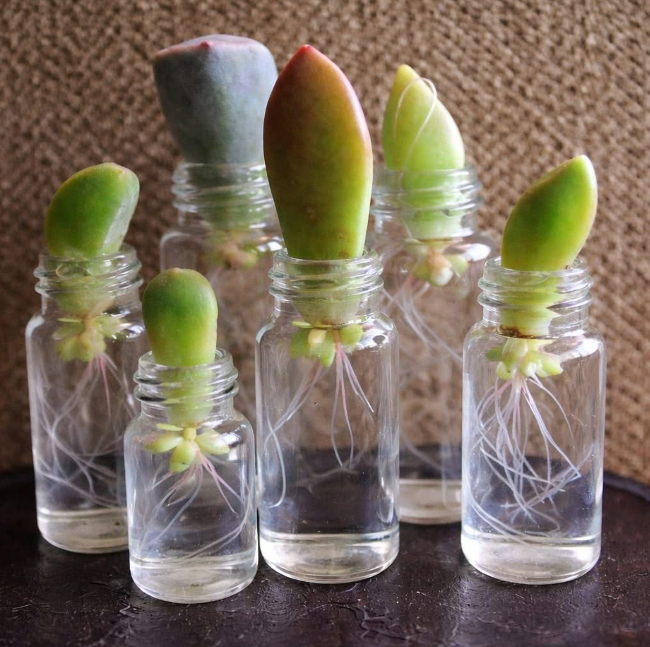
Step 3: Set Up Water Propagation
•Use a small glass or bottle
•Fill with clean water
•Position the leaf so the base barely touches the water
Never submerge the entire leaf.
Step 4: Provide the Right Environment
•Bright, indirect light
•Room temperature
•Change water every 3–5 days
Within 1–3 weeks, thin white roots should appear.
When Do Succulents Start Growing Leaves?
After roots form, tiny baby leaves will emerge near the base. This stage requires patience.
Typical timeline:
•Roots: 1–3 weeks
•Baby plant: 3–6 weeks
•Strong growth: 2–3 months
Once roots are established, the plant can be transferred to soil.
How Flowers Eventually Appear
Succulent flowers don’t appear immediately. Blooming depends on:
•Plant maturity
•Light exposure
•Seasonal changes
•Stable care over time
Once mature, succulents produce delicate flowers that signal excellent plant health.
Common Mistakes to Avoid
Many propagation attempts fail due to simple mistakes:
•Submerging the entire leaf
•Using dirty water
•Placing in direct sunlight
•Overhandling roots
•Transferring to soil too early
Patience is the most important tool.
Benefits of Water Propagation (High-Interest Section)
Water propagation is popular because:
•You can visually track root growth
•It’s clean and beginner-friendly
•It reduces soil-related pests
•It works well indoors year-round
This section tends to keep readers engaged longer—great for RPM.
Frequently Asked Questions (FAQ)
Can any leaf grow a new plant?
Only healthy, fully intact leaves with a clean base can propagate successfully.
How long before flowers appear?
Most succulents need several months to years before blooming.
Is water better than soil?
Water is ideal for rooting, soil is better for long-term growth.
Should fertilizer be used?
Not during propagation. Fertilize lightly only after soil transfer.
Final Thoughts
Watching a single leaf transform into a thriving, blooming plant is one of the most satisfying experiences in indoor gardening. It’s proof that nature doesn’t need complexity to create beauty—just the right conditions and a little time.