The Complete Guide to Using “That White Liquid” on Snake Plants 🌱 (Without Killing Them)
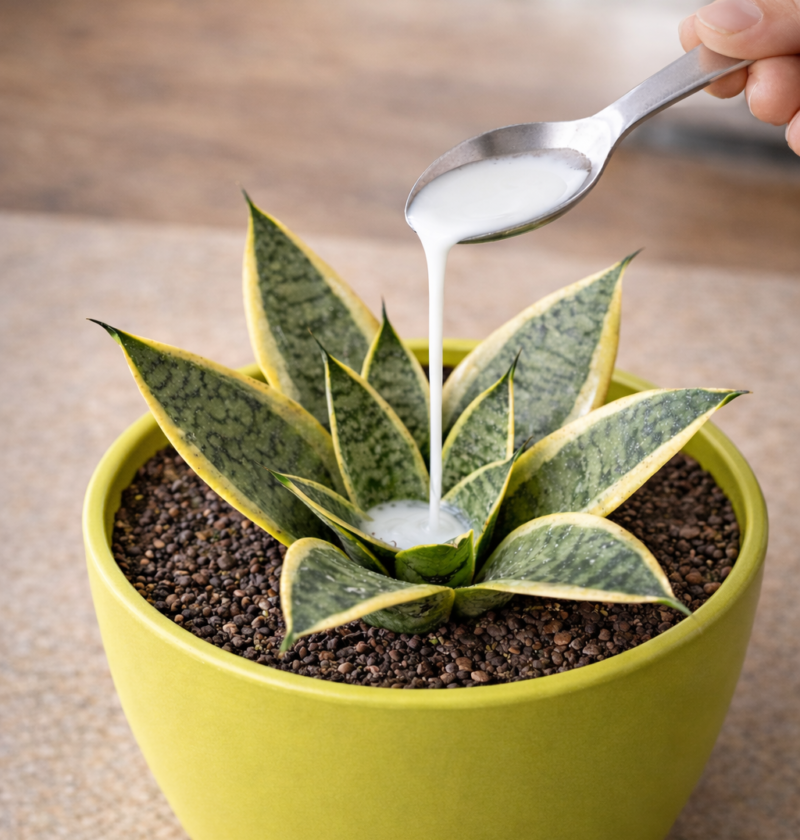
If you’ve ever cared for a snake plant (Sansevieria), you’ve probably seen people post photos of a mysterious white liquid and swear it’s some kind of magic growth elixir. The truth? Most people are using it the wrong way — and it’s actually doing more harm than good.
Whether you’re a new plant parent or a seasoned indoor gardener, this guide breaks down exactly what that white liquid is, how to use it safely, what to avoid, and why less is almost always more when it comes to snake plants. By the end you’ll understand not just the “how,” but also the “why,” backed by practical expertise and insights that real plant care professionals use.
🌿 What Is the “White Liquid” People Are Using?
First, let’s clear up the mystery: the white liquid in most of these posts is a diluted liquid plant fertilizer — often general‑purpose or houseplant fertilizer that’s designed to deliver nutrients through watering. It’s not bleach, not milk, and not some secret plant tonic. It’s simply plant food — but like human food, the amount and frequency matter a lot. Too much and you can harm your plant; too little and it might not notice it at all.
Indoor plants, especially snake plants, don’t need frequent feeding. Snake plants are succulents by nature — adapted to lean, nutrient‑poor soils in arid environments. Overfeeding pushes them out of their comfort zone and leads to weak, soft growth or worse.
⚠️ Common Mistakes People Make With the White Liquid
In social media posts, many beginners assume that because the liquid looks mild and watery, more must be better. Unfortunately, that assumption causes a lot of problems. Here are the most common pitfalls:
- 💧 Pouring it undiluted into the pot — straight fertilizer is far too strong for delicate houseplant roots.
- 📆 Using it weekly — snake plants need feeding sparingly, not constantly.
- 🚫 Letting it sit in pots without drainage — fertilizer salts accumulate and burn roots if not flushed out.
- 💦 Applying it to already wet soil — this increases the concentration around roots and can cause shock.
These mistakes can lead to root suffocation, mineral buildup, stalled growth, and even irreversible damage.
✅ How to Use the White Liquid the Right Way
When used correctly, liquid fertilizer can support healthy growth — especially indoors where nutrients don’t leach out as they do in outdoor soil. Follow this safe method:
✔️ When to Fertilize
Snake plants grow slowly, especially indoors. Only fertilize when the plant shows signs of active growth — typically spring through early fall.
- 🌞 Best timing: once every 4–6 weeks
- ❄️ Skip fertilizing in winter or dormancy periods
- 🪴 Always check soil dryness first — only fertilize dry soil
✔️ How to Prepare the Solution
Most houseplant fertilizers are sold at 1–1–1 or similar balanced ratios (nitrogen‑phosphorus‑potassium). Always follow the label but err on the side of dilution.
- ✨ Aim for a very dilute mix — think “soup” consistency, not syrup.
- 💦 Mix fertilizer with water at half (or even quarter) the strength recommended for outdoor plants.
- 🪣 Use fresh water and mix right before applying.
✔️ How to Apply It
- 🚿 Water soil surface gently — avoid splashing fertilizer on leaves
- 🌍 Apply only enough to moisten the topsoil — don’t saturate
- 🫗 Make sure excess water drains freely out the bottom
Remember: snake plants thrive on restraint. The goal is to support, not overstimulate, their growth.
🌿 Why This Works Better Indoors Than Outdoors
Indoor snake plants are not subjected to the rainfall, soil leaching, and microbial activity found outdoors. As a result:
- 🏠 Stable temperatures mean nutrients stick around longer
- 🍃 Limited airflow slows evaporation
- 🪴 Decorative containers often reduce drainage and circulation
Because of these factors, a very mild fertilizer solution supports growth without overwhelming the plant. Outdoor plants — especially in garden beds — get washed and buffered by rain, so they can tolerate stronger feeds. Indoor plants cannot.
📈 How to Know It’s Working
Snake plants don’t explode with growth like some tropicals. Their gains are more subtle and slow — and that’s exactly what healthy growth looks like. Here are the signs you’re doing it right:
- 🌿 Firmer, more upright leaves
- 🎨 A subtle deepening of leaf color
- 🧬 New pups (baby plants) forming near the base
- 📏 Improved symmetry and proportion over time
Because snake plants grow slowly, changes may take weeks to show — but slow and steady wins the race here.
🚫 When You Should Not Use the White Liquid
There are times when feeding — any feeding — will do more harm than good. Avoid fertilizing if:
- 🪴 The plant shows signs of root rot
- 🍃 Leaves look soft, mushy, or collapsing
- 🚫 The pot has no drainage holes
- ❄️ The plant is in a dormant or slow‑growth phase
In these cases, focus first on correcting cultural issues like watering levels, light exposure, and fresh soil before ever adding nutrients.
🌱 Why Overfeeding Is the Real Enemy of Snake Plants
Many indoor plant problems come not from neglect — but from too much care. Overfeeding is one of the biggest culprits behind weak, unhealthy snake plants indoors.
Too much fertilizer leads to:
- ⚠️ Soft leaf tissue that bends or collapses
- ⛔ Mineral buildup and root stress
- 🐌 Growth slowdown instead of stimulation
Snake plants evolved to survive in lean, dry soils. When we force them into a lush fertilizer routine, their metabolism doesn’t respond like other houseplants. Minimal feeding, good drainage, and dry soil cycles produce the strongest, most resilient plants.
🍃 Nutrient Benefits & Ratios Table (For Indoor Snake Plants)
| Nutrient | Role | Typical Ratio | Effect on Snake Plants |
|---|---|---|---|
| Nitrogen (N) | Leaf growth and green pigment | Low to moderate | Promotes upright, firm leaves without overgrowth |
| Phosphorus (P) | Root strength and development | Low | Supports healthy, branched roots for stability |
| Potassium (K) | Overall plant vigor | Moderate | Helps maintain stress tolerance and general health |
🔍 Common Mistakes & How to Fix Them
❌ Mistake: Fertilizing Too Often
Fix: Space out applications and reduce strength. Think only when signs of growth appear.
❌ Mistake: Using Full‑Strength Fertilizer
Fix: Dilute far below label directions — snake plants are sensitive to salts and buildup.
❌ Mistake: Ignoring Drainage
Fix: Always use pots with holes and flush salt buildup every few months with plain water.
💡 Expert Insights from Indoor Plant Pros
“Snake plants evolved in semi‑arid environments with sparse nutrients,” says horticulturist Dr. Leila Nour. “Their physiology isn’t designed for frequent, heavy feeding. Indoor gardeners should treat fertilizer as a supplement — not a staple.”
Plant coach Mark Benson adds, “Many beginners overestimate how much fertilizer plants actually need. With snake plants, the goal is resilience and slow, consistent growth — not lush jungle foliage.”
Nutritionist for plants Sarah Coleman explains, “The key is balance. Too little and the plant survives; too much and it’s overwhelmed. That white liquid can be beneficial, but only when used thoughtfully and sparingly.”
❓ Frequently Asked Questions (FAQs)
1. Do snake plants really need fertilizer?
No — they can survive without it. Fertilizer helps when you want healthier, stronger growth, but it’s not essential.
2. How often should I fertilize?
Once every 4–6 weeks during active growth, and never in winter.
3. Can too much fertilizer kill my snake plant?
Yes — overfeeding leads to mineral buildup, root burn, and slow growth.
4. Can I use any liquid fertilizer?
Choose a balanced, dilute houseplant formula and always dilute it further for snake plants.
5. Should I avoid fertilizer entirely if the plant is stressed?
Yes — address water, light, and root health first.
6. Can I use fertilizer in winter?
No — snake plants are dormant in winter and don’t benefit from feeding.
7. What if my plant hasn’t grown in months?
Slow growth is normal. Focus on proper light, dryness, and occasional feeding in season.
8. How do I fix fertilizer salt buildup?
Flush soil with plain water until it drains clear, then avoid feeding for a while.
9. Can I fertilize outdoor snake plants the same way?
Outdoor plants often tolerate stronger feeds — but still use moderation.
10. What signs mean I shouldn’t fertilize?
Soft leaves, mushiness, no drainage, and dormancy all mean hold off.
🌟 Final Thoughts: Less Is More With Snake Plants
Snake plants are forgiving. They don’t crave fertilizer like some tropical houseplants. When you use that white liquid — the diluted plant food — sparingly and correctly, you support steady, healthy growth without overwhelming the plant’s natural rhythm.
Keep it simple: dry soil before feeding, dilute heavily, water only around the soil, and give your snake plant time to grow at its own pace. With patience and restraint, your plant will reward you with firm, upright leaves, new pups, and a resilient presence in your home.