Instructions
- Pat the beef chuck roast completely dry with paper towels. Season generously all over with 1 teaspoon salt and 1/2 teaspoon black pepper.
- Heat the olive oil in a large, heavy-bottomed skillet or Dutch oven over medium-high heat until shimmering.
- Carefully sear the beef roast on all sides until deeply browned, about 3-4 minutes per side. This step is crucial for developing rich flavor, so don’t skip it! Remove the seared roast from the skillet and set aside.
- Add the chopped onion, carrots, and celery to the same skillet (no need to clean it). Sauté for 5-7 minutes, scraping up any browned bits from the bottom of the pan, until the vegetables start to soften.
- Add the minced garlic to the skillet and cook for another minute until fragrant.
- Pour in the beef broth and red wine (if using), scraping the bottom of the pan thoroughly to deglaze and incorporate all the flavorful browned bits. Stir in the Worcestershire sauce and dried thyme. Bring the mixture to a gentle simmer.
- Place the quartered potatoes in the bottom of your large slow cooker. Layer the sautéed onion, carrots, and celery mixture over the potatoes.
- Carefully place the seared beef roast on top of the vegetables in the slow cooker. Pour the hot liquid from the skillet over the roast and vegetables. Add the bay leaf.
- Cover the slow cooker and cook on LOW for 7-9 hours, or on HIGH for 4-5 hours, or until the beef is incredibly tender and can be easily shredded with a fork. Avoid opening the lid too frequently, as this releases heat and prolongs cooking time.
- Once the roast is cooked, carefully remove the beef from the slow cooker and transfer it to a large platter or cutting board. Remove and discard the bay leaf.
- Using two forks, shred the beef into large chunks or smaller pieces, as desired. Cover loosely with foil to keep warm.
- To make the gravy: Carefully ladle or pour about 2-3 cups of the cooking liquid from the slow cooker into a medium saucepan. Skim off any excess fat from the surface if desired.
- Bring the liquid to a simmer over medium heat. In a small bowl, whisk together the cornstarch and cold water to create a smooth slurry.
- Slowly whisk the cornstarch slurry into the simmering liquid in the saucepan. Continue to whisk and simmer for 2-3 minutes, or until the gravy has thickened to your desired consistency. Taste and adjust seasoning with additional salt and pepper if needed.
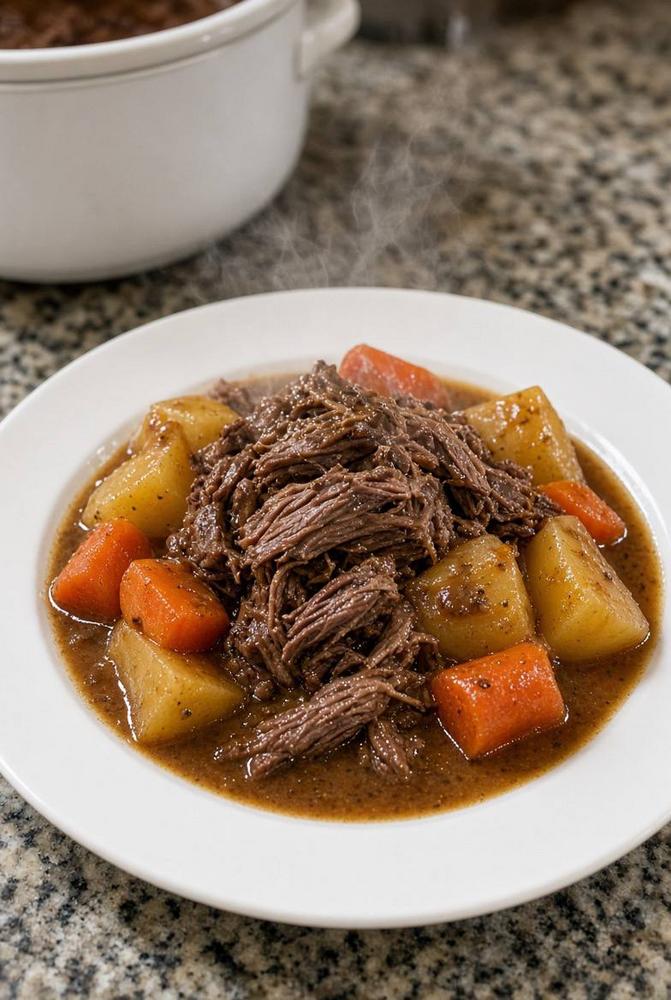
- Return the shredded beef and vegetables to the slow cooker, or serve them separately. Pour some of the hot gravy over the beef and vegetables, or serve it on the side.
- Garnish with fresh chopped parsley, if using, and serve immediately.
Cooking Tips and Variations
Searing is Non-Negotiable (Almost)
While technically you can skip searing the beef, we strongly advise against it. Searing creates a beautiful, caramelized crust on the exterior of the meat, which translates into a much deeper, richer flavor for your entire pot roast and gravy. It locks in juices and adds a layer of complexity that raw meat simply can’t achieve. Think of it as building the foundation for an incredible meal.
Choosing the Right Cut
For a truly fall-apart tender pot roast, chuck roast is your best friend. Its generous marbling (streaks of fat) breaks down during the long cooking process, keeping the meat incredibly moist and flavorful. Other good options include brisket or round roast, but chuck roast consistently delivers the best results for a classic pot roast. Don’t be afraid of a little fat; it’s essential for tenderness and flavor in this dish!
Don’t Overcrowd Your Slow Cooker
While it’s tempting to cram in as many vegetables as possible, resist the urge to overfill your slow cooker. For optimal cooking and even heat distribution, aim to fill your slow cooker no more than two-thirds full. Overcrowding can lead to uneven cooking and can prevent the liquid from reaching a proper simmering temperature, resulting in tougher meat or undercooked vegetables.
Layering for Success
When assembling your slow cooker, place the tougher, denser vegetables like potatoes and carrots at the bottom or around the sides of the slow cooker. This ensures they are submerged in the liquid and cook through properly. The meat should sit on top of or nestled among the vegetables. This layering also allows the meat juices to drip down and flavor the vegetables as they cook.
Seasoning in Layers
Don’t just season at the end! Season the beef generously before searing. Then, lightly season the vegetables as you add them to the slow cooker. Finally, taste and adjust the seasoning of your gravy at the very end. This layered approach ensures every component of the dish is perfectly flavored.
Making the Gravy Extra Rich
For an even richer gravy, after removing the beef and vegetables, strain the cooking liquid through a fine-mesh sieve to remove any small bits of herbs or vegetables. This will give you a smoother gravy. You can also whisk in a tablespoon of butter at the very end for an added touch of richness and shine.
Herb Variations
Feel free to experiment with other herbs. Rosemary sprigs or fresh thyme sprigs added alongside the dried thyme will infuse a wonderful aroma. A bay leaf is essential for depth. For a touch of brightness, stir in some fresh chopped parsley or chives just before serving.
Adding Other Root Vegetables
Beyond carrots and potatoes, consider adding other sturdy root vegetables like parsnips, rutabaga, or even sweet potatoes. Cut them into similar-sized chunks as the carrots and potatoes to ensure even cooking. Pearl onions or quartered mushrooms can also be added during the last hour of cooking for extra flavor and texture.
A Touch of Acidity
The dry red wine adds a fantastic depth of flavor, but if you prefer not to use alcohol, you can substitute it with an equal amount of beef broth and a splash of red wine vinegar or balsamic vinegar (about 1-2 teaspoons) to add a similar acidic brightness.
Storage and Reheating
Storing your Slow Cooker Classic Sunday Pot Roast properly ensures you can enjoy delicious leftovers for days.
Storage:
Allow the pot roast and vegetables to cool completely before storing. Transfer the beef, vegetables, and gravy into airtight containers. You can store them together or separately, depending on your preference. Refrigerate for up to 3-4 days.
For longer storage, pot roast freezes beautifully. Place cooled pot roast, vegetables, and gravy in freezer-safe containers or heavy-duty freezer bags. Remove as much air as possible to prevent freezer burn. It can be frozen for up to 2-3 months. Thaw overnight in the refrigerator before reheating.
Reheating:
Microwave: This is the quickest method for individual portions. Place the desired amount of pot roast, vegetables, and gravy in a microwave-safe dish. Cover loosely and heat on medium power for 2-4 minutes, stirring halfway through, until heated through. Add a splash of broth or water if the gravy seems too thick.
Stovetop: For larger portions or to maintain gravy consistency, transfer the pot roast, vegetables, and gravy to a large pot or Dutch oven. Heat over medium-low heat, stirring occasionally, until warmed through. This method is excellent for preventing the meat from drying out. You may need to add a little extra beef broth or water to thin the gravy if it’s too thick.
Oven: If reheating a large quantity or if you prefer a more even reheat, preheat your oven to 300°F (150°C). Place the pot roast, vegetables, and gravy in an oven-safe dish. Cover tightly with foil to prevent drying. Heat for 20-30 minutes, or until thoroughly warmed through. Check occasionally and stir gently.
No matter the reheating method, ensure the pot roast reaches an internal temperature of 165°F (74°C) for food safety.
Frequently Asked Questions
What kind of potatoes are best for pot roast?
Waxy potatoes like small red potatoes, Yukon Golds, or new potatoes are ideal for pot roast. They hold their shape well during the long cooking process and won’t turn mushy like some starchy varieties. Cut them into large, uniform chunks (about 1.5-2 inches) so they cook evenly and don’t disintegrate.
Can I make this pot roast without a slow cooker?
Absolutely! This recipe can easily be adapted for an oven. After searing the beef and sautéing the vegetables, transfer everything to a large Dutch oven or oven-safe pot with a tight-fitting lid. Cook in a preheated oven at 300°F (150°C) for 3-4 hours, or until the beef is fork-tender. The cooking time will be shorter than in a slow cooker, so check for tenderness around the 3-hour mark.
Why is my pot roast tough?
The most common reason for tough pot roast is not cooking it long enough. Chuck roast is a tough cut of meat, and it needs extended cooking time at a low temperature to break down its connective tissues. If your pot roast is tough, simply continue cooking it for another hour or two (on low in the slow cooker or in the oven) until it’s easily shredded with a fork. Don’t be afraid to let it cook longer than the recipe states if needed, as slow cooker temperatures can vary.
Can I add other vegetables?
Yes, you can! Sturdy root vegetables work best. Parsnips, rutabaga, sweet potatoes, or even quartered turnips can be added along with the carrots and potatoes. For softer vegetables like mushrooms or frozen peas, add them during the last 30-60 minutes of cooking to prevent them from becoming overcooked and mushy.