Instructions
- Preheat your oven to 375°F (190°C). Lightly grease a 9×13 inch baking dish or a 2.5-quart baking dish.
- Prepare the Peach Filling: In a large bowl, combine the sliced peaches, ½ cup granulated sugar, ¼ cup light brown sugar, 2 tablespoons all-purpose flour, 1 teaspoon ground cinnamon, ¼ teaspoon ground nutmeg, 1 tablespoon lemon juice, and 1 teaspoon vanilla extract. Toss gently until the peaches are well coated. Let the mixture sit for about 10-15 minutes to allow the sugars to draw out some of the peach juices, creating a delicious syrup.
- Pour the peach mixture evenly into the prepared baking dish.
- Prepare the Cobbler Topping: In a separate medium bowl, whisk together 1 ½ cups all-purpose flour, ½ cup granulated sugar, 1 tablespoon baking powder, and ½ teaspoon salt.
- Add the cold, cubed butter to the dry ingredients. Using a pastry blender, two knives, or your fingertips, cut the butter into the flour mixture until it resembles coarse crumbs with some pea-sized pieces of butter remaining. The colder the butter, the flakier your topping will be.
- In a small bowl, whisk together the ½ cup milk and 1 teaspoon vanilla extract.
- Pour the wet ingredients into the dry ingredients and mix with a fork until just combined. Be careful not to overmix; a few lumps are perfectly fine and will lead to a tender topping. The dough will be soft and slightly sticky.
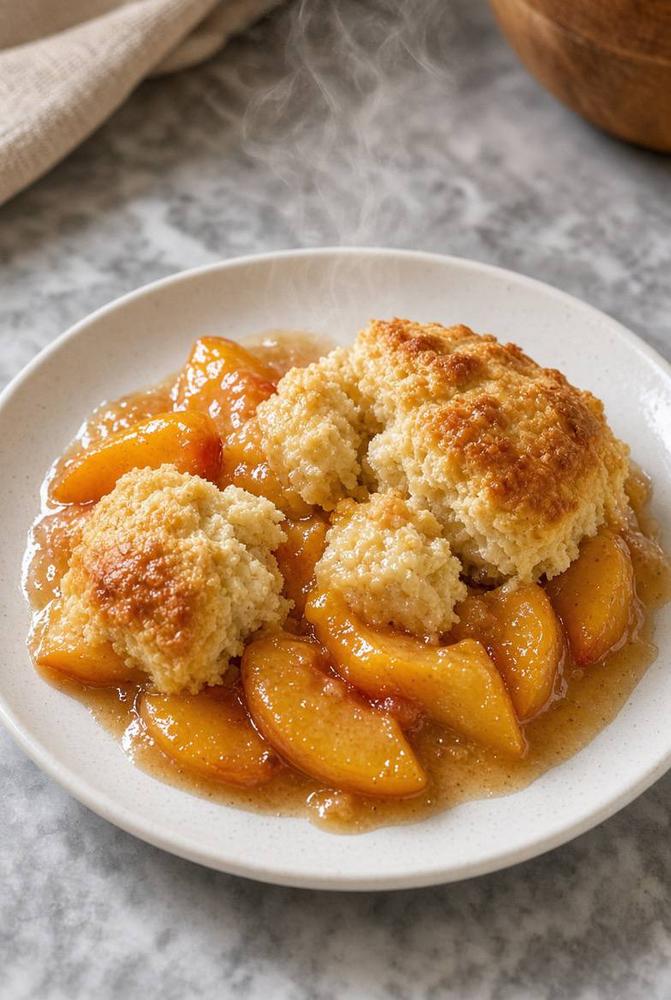
- Assemble the Cobbler: Drop spoonfuls of the cobbler topping over the peach mixture in the baking dish. You don’t need to cover the entire surface; leave some gaps for the peaches to bubble through. This rustic look is part of the charm of a cobbler.
- If desired, sprinkle the top of the cobbler with 1 tablespoon of turbinado sugar for extra crunch and sparkle.
- Bake the Cobbler: Place the baking dish on a baking sheet (to catch any potential drips) and bake in the preheated oven for 35-45 minutes, or until the peach filling is bubbly and the topping is golden brown and cooked through. To check for doneness, you can insert a toothpick into a thicker part of the topping; if it comes out clean, it’s ready. If the topping starts to brown too quickly, you can loosely tent it with aluminum foil.
- Remove the cobbler from the oven and let it cool for at least 15-20 minutes before serving. This allows the filling to set slightly and prevents it from being too runny.
Cooking Tips and Variations
Achieving the perfect homemade peach cobbler involves a few key techniques and offers plenty of room for creative variations. For the best flavor, always opt for ripe, fragrant peaches. If they are slightly firm, let them ripen on the counter for a day or two. Peeling peaches is optional; some prefer the texture of the skin, but for a smoother filling, blanching them briefly in boiling water and then shocking them in ice water makes peeling a breeze. When making the topping, ensure your butter is very cold. Cold butter creates pockets of steam during baking, resulting in a tender, flaky crust. Avoid overmixing the topping dough; just combine until the ingredients are moistened, as overworking develops gluten and can lead to a tough crust.
To prevent a soggy bottom, ensure your peach filling isn’t too watery. The initial resting time for the peaches with sugar helps draw out juice, which then thickens during baking with the added flour. If your peaches are exceptionally juicy, you can increase the flour in the filling by half a tablespoon. For an extra layer of flavor in the topping, you can add a pinch of cinnamon or a touch of almond extract to the milk mixture. If you prefer a richer, more biscuit-like topping, you can use buttermilk instead of regular milk. For a truly golden crust, brush the top lightly with a little milk or cream before baking.
Experiment with variations to suit your taste. For a mixed berry peach cobbler, substitute 1-2 cups of sliced peaches with an equal amount of fresh or frozen (thawed and drained) berries like blueberries, raspberries, or blackberries. A hint of cardamom or a tiny bit of ground ginger can also complement the peaches beautifully. For a citrusy twist, add the zest of half an orange or a whole lemon to the peach filling. If you like a nuttier flavor, sprinkle some chopped pecans or walnuts on top of the peaches before adding the topping. For a slightly different topping texture, you can roll out the dough and cut it into shapes or strips to create a lattice effect, though the drop biscuit method is classic for cobblers.
For dietary adaptations, a gluten-free version can be made by substituting all-purpose flour with a 1:1 gluten-free baking blend that contains xanthan gum. Ensure your baking powder is also gluten-free. For a dairy-free cobbler, use a plant-based milk (like almond or oat milk) and a plant-based butter alternative for both the filling and the topping. Adjust sugar levels based on the ripeness of your peaches; very sweet peaches might require slightly less sugar, while tarter ones might need a bit more. Always taste your peach mixture before baking and adjust accordingly. Serving warm with a scoop of vanilla bean ice cream or a dollop of fresh whipped cream is highly recommended to complete this comforting dessert experience.
Storage and Reheating
Homemade Peach Cobbler is best enjoyed warm and fresh from the oven, but leftovers can be stored and reheated to maintain most of its delicious qualities. Once the cobbler has cooled completely to room temperature, cover the baking dish tightly with plastic wrap or aluminum foil. It can be stored at room temperature for up to 1 day. For longer storage, refrigerate the cobbler for up to 3-4 days. While technically safe to store longer, the topping can start to lose its crispness and the peaches may become too soft.
To freeze peach cobbler, it’s best to do so before baking or after it has been fully baked and cooled. If freezing before baking, assemble the cobbler as directed, cover tightly with a double layer of plastic wrap and then aluminum foil, and freeze for up to 3 months. When ready to bake, remove from the freezer, uncover, and bake from frozen at 375°F (190°C) for about 60-75 minutes, or until bubbly and golden, covering loosely with foil if the topping browns too quickly. If freezing a baked cobbler, allow it to cool completely, then wrap individual portions or the entire dish tightly in plastic wrap and foil. Freeze for up to 2-3 months. Thaw overnight in the refrigerator before reheating.
For reheating, the oven is the best method to revive the cobbler’s texture. Preheat your oven to 300°F (150°C). If reheating a whole cobbler, cover it loosely with foil to prevent the topping from drying out or burning, and bake for 20-30 minutes, or until heated through and the filling is bubbly. For individual slices, place them on a baking sheet and heat for 10-15 minutes. The microwave can be used for a quicker reheat, especially for single servings, but it will make the topping softer rather than crisp. Microwave individual portions on medium power for 1-2 minutes, checking at 30-second intervals until warmed through. Regardless of the method, reheating will bring back much of the cobbler’s comforting warmth and flavor, making those leftovers just as delightful.
Frequently Asked Questions
Can I use canned or frozen peaches for this recipe?
Yes, you absolutely can! If using canned peaches, opt for peaches packed in juice or light syrup, not heavy syrup. Drain them very well and pat them dry to remove excess moisture. You might also want to reduce the granulated sugar in the peach filling by a couple of tablespoons, as canned peaches are often sweeter. If using frozen peaches, there’s no need to thaw them first; you can add them directly to the mixing bowl with the other filling ingredients. They might release more liquid during baking, so you may want to increase the flour in the peach filling by an extra half tablespoon to ensure the sauce thickens properly. The baking time might also be slightly longer to account for the frozen fruit.
How do I make sure the cobbler topping is tender and not tough?
The key to a tender cobbler topping lies in two main things: cold butter and minimal mixing. Ensure your butter is very cold, cut into small cubes, as this creates pockets of steam during baking, leading to flakiness. Use a pastry blender or your fingertips to work the butter into the dry ingredients until it resembles coarse crumbs with some pea-sized pieces remaining. When you add the wet ingredients, mix just until everything is combined and no dry streaks of flour remain. Overmixing develops gluten, which makes the topping tough. A slightly lumpy dough is perfectly fine and often preferred for a tender result.
My cobbler filling is too runny. What went wrong?
A runny cobbler filling can happen for a few reasons. First, ensure your peaches aren’t overly watery; if they are exceptionally juicy, you might need to increase the flour or cornstarch in the filling by an extra tablespoon. Second, make sure you let the cobbler rest for at least 15-20 minutes after baking before serving. The filling continues to thicken as it cools. If you cut into it too soon, it will appear much runnier than it actually is. If you consistently find your filling too thin, try reducing the amount of sugar slightly next time, as sugar can draw out more moisture from the fruit.
Can I make peach cobbler ahead of time?
You can prepare components of the peach cobbler ahead of time. The peach filling mixture can be assembled and stored in an airtight container in the refrigerator for up to 24 hours. The dry ingredients for the topping can be mixed and stored in a separate airtight container at room temperature. The butter can be cut and kept cold. When you’re ready to bake, combine the wet ingredients with the dry topping ingredients, assemble, and bake. If you want to fully assemble it ahead of time, you can prepare the entire cobbler and refrigerate it unbaked for up to 12 hours. Let it sit at room temperature for about 30 minutes before baking, and add an extra 5-10 minutes to the baking time.