Instructions
- Lightly grease the inside of a 6-quart (or larger) slow cooker with butter or cooking spray to prevent sticking.
- Add the uncooked elbow macaroni to the prepared slow cooker, spreading it evenly across the bottom.
- Pour the whole milk and evaporated milk over the macaroni.
- Sprinkle in the dry mustard powder, garlic powder, black pepper, and salt. Stir gently to combine all the ingredients, ensuring the macaroni is mostly submerged in the liquid.
- Layer half of the shredded cheddar cheese and half of the Monterey Jack cheese over the macaroni and milk mixture. Do not stir in the cheese at this point, as it helps create a protective layer for the pasta.
- Distribute the small pieces of butter evenly over the cheese layer.
- Cover the slow cooker and cook on LOW for 2 to 3 hours, or on HIGH for 1.5 to 2 hours. The cooking time will vary depending on your slow cooker, so it’s essential to monitor it.
- After about 1.5 hours on LOW (or 1 hour on HIGH), carefully remove the lid and stir the mac and cheese thoroughly. This helps prevent the pasta from sticking, distributes the melting cheese, and ensures even cooking.
- Add the remaining shredded cheddar and Monterey Jack cheeses to the slow cooker. Stir again until the cheese is fully melted and the sauce is smooth and creamy.
- Continue cooking for another 30-60 minutes on LOW (or 15-30 minutes on HIGH), or until the pasta is tender and the sauce has thickened to your desired consistency. The pasta should be tender, and the sauce thick and creamy. Be careful not to overcook, as this can lead to mushy pasta.
- Taste and adjust seasoning with additional salt and pepper if needed.
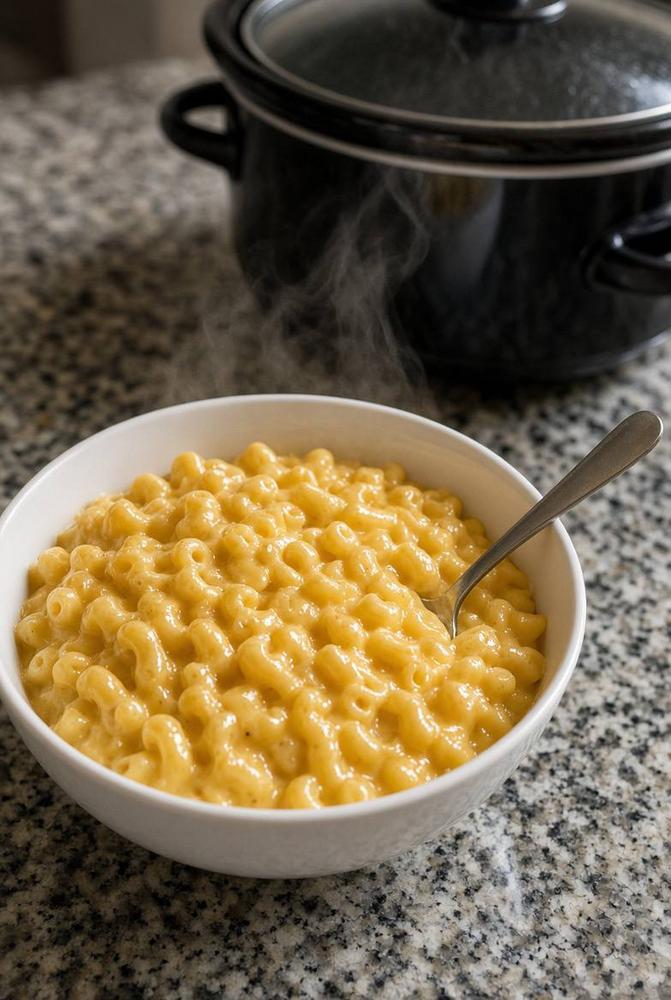
- Serve hot directly from the slow cooker and enjoy your effortless, comforting mac and cheese!
Cooking Tips and Variations
Achieving the perfect slow cooker mac and cheese is incredibly easy, but a few insider tips can elevate it from great to absolutely legendary. First and foremost, resist the urge to overcook the pasta. While slow cooking is forgiving, pasta can become mushy if left too long. Start checking for tenderness around the minimum cook time specified, stirring gently to gauge its doneness. The pasta should be al dente, offering a slight bite, rather than being completely soft. Another crucial tip for that silky-smooth sauce is to use freshly shredded cheese. Pre-shredded cheeses often contain anti-caking agents like cellulose, which can prevent them from melting smoothly and can result in a grainy or clumpy sauce. A block of cheese shredded at home will melt beautifully and integrate seamlessly into your sauce.
When it comes to the liquid, milk fat matters! Using whole milk, or even a combination of whole milk and heavy cream, will contribute significantly to a richer, creamier sauce. The higher fat content prevents the sauce from breaking and gives it that luxurious mouthfeel. Similarly, evaporated milk is a secret weapon in many mac and cheese recipes because its concentrated nature and lack of water help create an incredibly stable and creamy sauce. Don’t underestimate the power of a good stir; while it’s a “dump-and-go” recipe, a few stirs during the cooking process, especially after adding the second batch of cheese, help distribute heat, prevent sticking, and ensure all that cheesy goodness is perfectly incorporated.
Now for variations! This recipe is a fantastic canvas for customization. For a bolder flavor profile, experiment with different cheese blends. Smoked gouda adds a wonderful depth, Gruyère brings a nutty complexity, or a touch of cream cheese can enhance the overall creaminess. To prevent a grainy sauce, especially with harder cheeses, consider stirring in the final batch of cheese during the last 30 minutes of cooking, once the pasta is mostly tender and the liquids are hot. If your sauce ends up too thick, a splash of warm milk can thin it out; if it’s too thin, a quick trick is to remove a ladleful of the liquid, mix it with a tablespoon of cornstarch, then stir it back into the slow cooker and cook for another 15-20 minutes until thickened. For a protein boost, stir in cooked, diced ham, crispy bacon bits, shredded rotisserie chicken, or even a can of drained tuna during the last 30 minutes of cooking. Vegetables like frozen peas, steamed broccoli florets, or sautéed mushrooms can be added for extra nutrition and color. And for a little kick, a dash of hot sauce, a pinch of cayenne pepper, or a teaspoon of smoked paprika can add a delightful warmth. Finally, for serving, this mac and cheese pairs wonderfully with grilled chicken, a simple green salad, or as a hearty side to BBQ ribs or pulled pork. Don’t forget a sprinkle of fresh parsley or chives for a pop of color before serving!
Storage and Reheating
This Slow Cooker Dump-and-Go Mac & Cheese is so delicious, you might not have many leftovers, but if you do, proper storage and reheating will ensure you can enjoy its cheesy goodness again. To store, allow the mac and cheese to cool completely to room temperature. Transfer it to an airtight container and refrigerate for up to 3-4 days. It’s important to cool it quickly to prevent bacterial growth, so avoid leaving it out on the counter for too long.
When reheating, the key is to restore its creaminess without drying it out or making the pasta mushy. For individual portions, the microwave is your best friend. Place a serving in a microwave-safe bowl, add a splash of milk (about 1-2 tablespoons per serving) to help rehydrate the sauce, and stir. Heat on medium power for 1-2 minutes, stir again, and continue heating in 30-second intervals until warmed through, stirring between each interval. The added milk will help the sauce loosen up and become creamy again.
For larger quantities, the stovetop or oven works well. On the stovetop, transfer the mac and cheese to a large saucepan or pot over low heat. Add a generous splash of milk (1/4 to 1/2 cup for a large batch) and stir continuously until it’s heated through and the sauce is creamy again. Be careful not to scorch the bottom. If using the oven, transfer the mac and cheese to an oven-safe dish, add a splash of milk, and cover tightly with foil. Bake at 300°F (150°C) for 20-30 minutes, or until heated through, stirring halfway. The foil helps trap moisture and prevents it from drying out. Avoid reheating in the slow cooker, as it can overcook the pasta and dry out the sauce.
Frequently Asked Questions
What kind of pasta works best in the slow cooker?
Elbow macaroni is ideal for slow cooker mac and cheese because its small size and curved shape allow it to cook evenly and absorb the sauce beautifully without becoming mushy. Other small, sturdy pasta shapes like ditalini, small shells, or cavatappi can also work, but avoid very thin or delicate pastas that might break down too quickly.
Can I use pre-shredded cheese to save time?
While convenient, pre-shredded cheese is generally not recommended for slow cooker mac and cheese. It often contains anti-caking agents like cellulose or potato starch, which can prevent the cheese from melting smoothly and result in a grainy or clumpy sauce. For the creamiest, silkiest sauce, it’s always best to shred your own cheese from a block.
My mac and cheese is too thick/thin. How can I fix it?
If your mac and cheese is too thick, simply stir in a splash of warm milk (whole milk or evaporated milk works best) a tablespoon at a time until it reaches your desired consistency. If it’s too thin, you can try removing the lid for the last 30 minutes of cooking to allow some liquid to evaporate. Alternatively, you can mix 1 tablespoon of cornstarch with 2 tablespoons of cold milk, stir this slurry into the mac and cheese, and continue cooking for another 15-20 minutes on high until it thickens.
Can I add meat or vegetables to this recipe?
Absolutely! This mac and cheese is very versatile. For a heartier meal, stir in cooked, diced ham, crispy bacon bits, shredded rotisserie chicken, or even cooked ground beef during the last 30 minutes of cooking. For vegetables, frozen peas, steamed broccoli florets, or sautéed mushrooms can be added during the final hour of cooking to ensure they are heated through but not overcooked.